
Apple Files Patent to Tuck Eye-Tracking Cameras Into the Nose Bridge of Smart Glasses
Apple has filed a patent for an eye-tracking module small enough to hide in the nose bridge of a headset or pair of glasses. The filing is mostly about packing, wiring and holding the parts in place, which is where thin eyewear designs tend to get stuck.
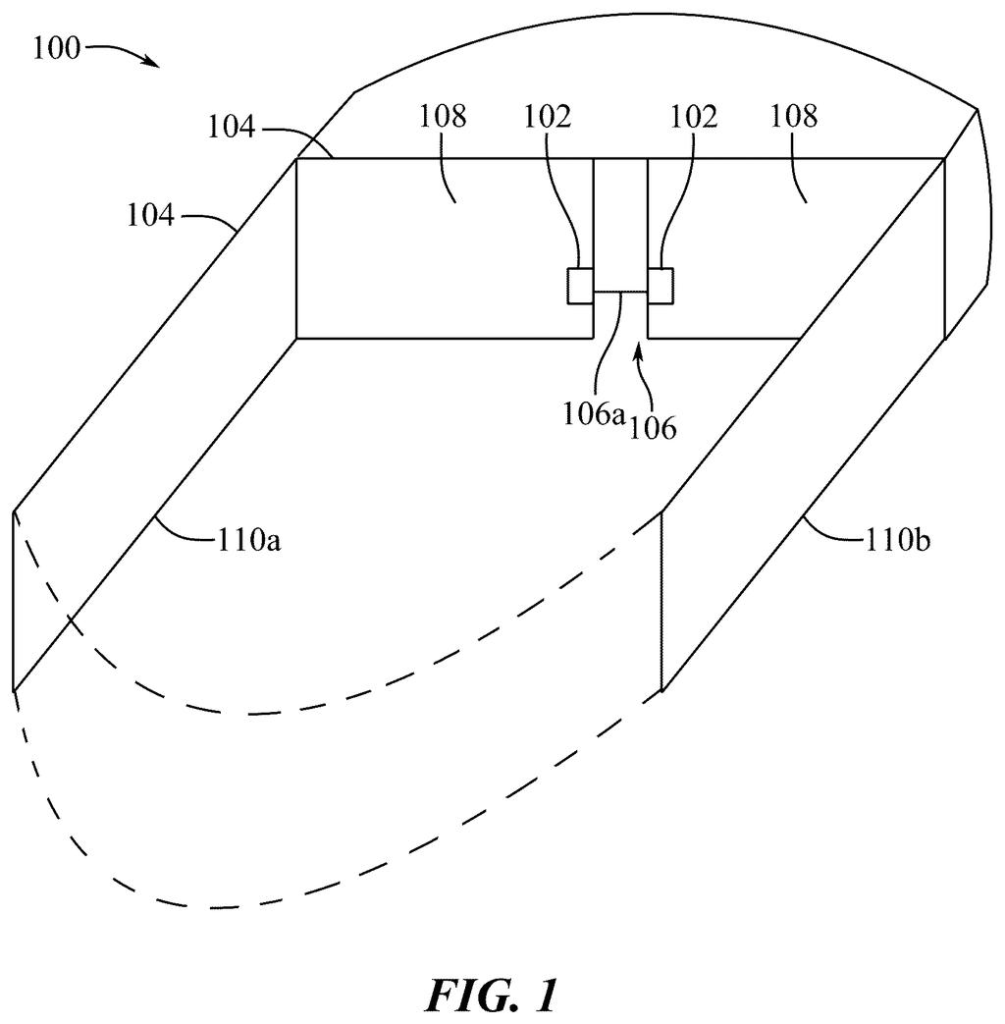
What Apple's nose-bridge eye tracker does
You slip on a pair of glasses and glance at a floating menu. Somewhere near your nose, a tiny camera is watching your eyes so the device knows exactly what you're looking at.
The trouble, according to Apple's filing, is that eye-tracking hardware tends to be bulky, hard to build and unattractive. It can crowd the display, get in your line of sight, or force a thick frame or an awkward lump on the nose bridge.
Apple's answer is a thin stack of parts that tucks into the nosepiece: a camera, a small light that shines on your eye, and a motion sensor, all wired together on a circuit board and a bendable strip. In some versions the whole thing is under 3 millimeters thick.
… a gaze tracking system disposed in the housing and comprising: a printed circuit board including a first side and a second side opposite the first side; a camera coupled to the first side; an illuminator coupled to the first side and electrically coupled to the camera; …
Translation: The nose bridge contains a camera and a light source mounted on a circuit board to track where the user is looking.
How the camera, light and motion sensor stack
The claims describe three versions of one idea, all built around a small housing in the nosepiece of a headset or glasses. Inside sits a printed circuit board (the rigid board that connects the parts in most electronics). The camera and an illuminator (a light, such as an infrared LED, that lights up your eye so the camera can see it) mount on one side. A flexible circuit (a bendable strip of wiring) attaches to the other side, and a motion sensor such as a gyroscope sits on the board or the strip.
Placement of the light matters. The camera and the light each project a cone, and if the two cones overlap before they pass through the small window in the housing (about 0.3 millimeters thick in one example), reflections inside the housing can make the camera work poorly or stop. So the window sits between the parts and the spot where the cones meet.
To keep everything steady, a stiffener is cantilevered (fixed at one end and sticking out, like a diving board) into the frame, so the camera stays put even after a drop. The gyroscope is rigidly attached to the camera, and the filing says it can help line the camera up with your eye across different face shapes and sizes.
Assembly is simple: a pre-built board goes into the housing, the flexible strip is bent out of the way and then folded back, and the rear wall is sealed. Optional extras include a foam light seal and a shield against electrical interference.
The flexible circuit can be coupled to the second side. The motion sensor can be coupled to the first side or to the flexible circuit. The motion sensor can be electrically coupled to the camera and to the illuminator.
Translation: A flexible ribbon cable connects the components to a motion sensor that tracks head or device movement.
Why thinner eye tracking matters for headsets
If you wear a headset or glasses, eye tracking is how the device knows what you're looking at, so you can pick things with a glance. The catch has been size. Parts that look at your eye have to sit near your eye, and that can mean a thicker frame or a bump on the nose bridge. A module this thin, with only a tiny window facing you, could help eyewear look and feel more ordinary.
The filing also pushes on cost and manufacturing, saying the design is easy to build and fits different frame sizes and shapes. That is the quiet work behind lighter, cheaper headsets and glasses. The patent names no product and gives no accuracy numbers, so it describes how to build the hardware and says nothing about how well it tracks.
Apple's 105th filing we've tracked in our AR glasses work since May covers new ground beyond faster-dimming lenses and heat shielding for electronics.
This filing is about packaging and assembly, which puts it closer to something you could build than most patents. It needs no new software and no new kind of sensor. A camera, an infrared light and a motion sensor are parts eye-tracking headsets already use, and the filing is about fitting them into a thin space.
What has to exist first is a frame with a nosepiece to hide the module in and a display for the tracking to serve. The description covers headsets, goggles and glasses, so the shortest route to a product is any device with a nose bridge, built around this stacked layout and a window facing the eye.
The gap is proof. The filing gives no tracking accuracy, no test results and no drop-test numbers, only thickness figures of under 5 and under 3 millimeters. It reads as sound engineering for a very specific problem, and that problem decides whether a headset looks like eyewear.
Get our take in your Top Stories
Liked this breakdown? Add Patentlyze as a preferred source on Google, and our plain-English take shows up more often in your Top Stories the next time Apple patent news breaks.
There are more where this came from
We read every patent application Big Tech publishes and send you the ones worth knowing. Plain English, free, every week.
The drawings
11 drawing sheets from US 2026/0329078 A1 · click any drawing to enlarge


Show the other 3 sheets


Want this weekly breakdown for a company we don't cover? Patentlyze Pro →
Be the first to weigh in