
Apple Files Patent for a Headset That Leaves Its Computer in Your Pocket
Apple's filing aims at a headset light enough for an eight-hour workday. It moves the computer, battery and cooling fans off your face and into a unit you carry in a pocket.
What Apple's pocket-computer headset does
Today's headsets pack the screens, batteries, speakers and computer chips into the part you wear on your face. Apple's own filing says all that extra weight wears you out, and that the bridge of your nose ends up carrying most of it. So wearing one through a full eight-hour work shift is a stretch.
This patent describes a headset that leaves the computer behind. The part on your head holds only the two displays and their lenses. A cable runs through one arm, like the arm of a pair of glasses, and plugs into a small external unit. The filing suggests a puck or square shape that fits in a pocket or sits on a desk.
With no processor on board and no cooling fans, the headset has less to carry and less to power. The idea is that you could keep it on all day, whether you're at a desk or out for a walk.
… a data transmission cable electrically coupled to the first display and extending through the first securement arm; and an electrical port electrically coupled to the first display and the second display via the data transmission cable …
Translation: A hidden wire runs through the headset strap to connect the screens to an external plug.
How the cable runs through the headset frame
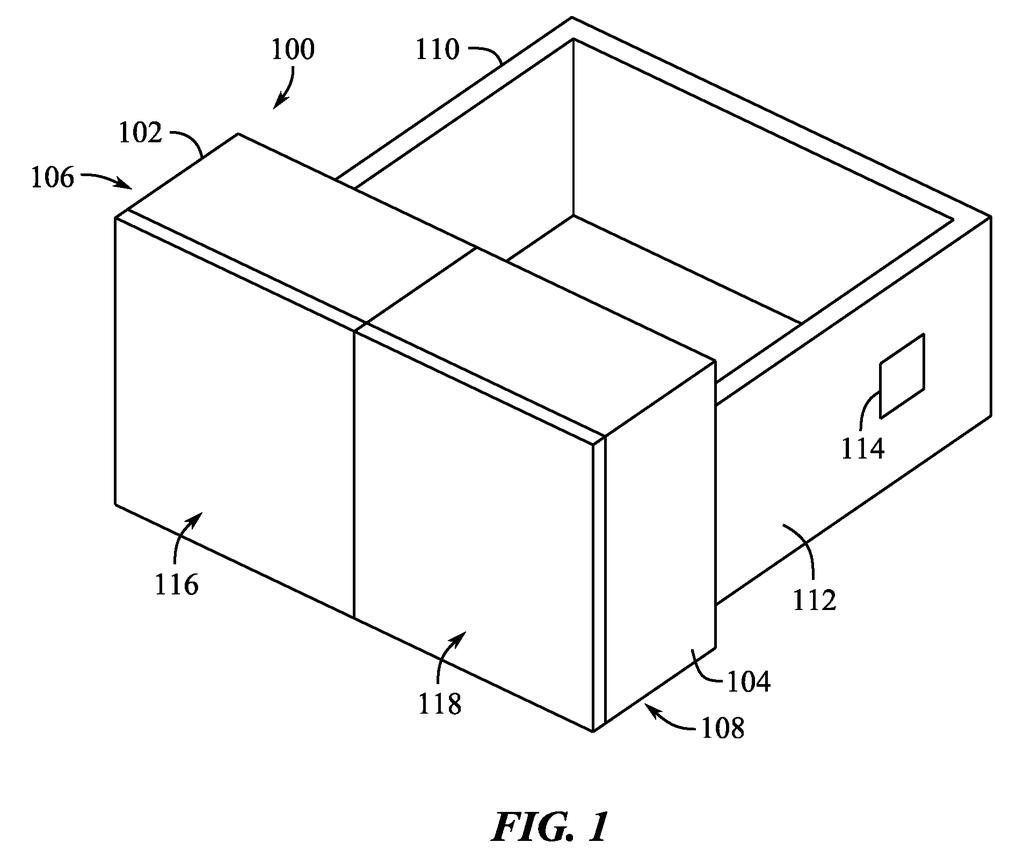
The device in the claims is a head-mounted display built from two separate display assemblies, one per eye. Each has its own display and its own housing. Each housing has a "securement arm," which is basically an eyeglass-style arm that rests on your ear. A bridge piece can join the two housings and sit on your nose.
The key claim is the wiring. A data cable connects to the first display and runs through the first arm. An electrical port links both displays through that cable. The cable runs "uninterrupted" between the port and the display, meaning no processing chip sits in the middle. The port plugs into an external computing unit that controls what both displays show. A separate power cable can run through the second arm.
The filing also describes several supporting details:
- Each housing is sealed off from the other, with its own lens and screen inside.
- An opaque cap on the front blocks outside light, so you see only what's on the screens.
- Vents in the housings let air cool the small circuit board inside, so no fans are needed.
- The external unit holds the processor, memory and battery.
The description says the cable between the headset and the external unit could be short at a desk and longer for a pocket.
… the electrical port is configured to connect to an external computing unit configured to control visual output of the first display and the second display.
Translation: The plug hooks up to a separate computer that handles all the graphics and processing.
Why a lighter headset matters for all-day use
If you've ever taken off a headset after an hour with a sore nose, this is the complaint Apple is going after. Pulling the computer, battery and fans off your head could make a headset you'd actually wear through a work day. The filing also lists walking, exercising and even mountain biking as uses.
The tradeoff is a cable and a second thing to carry. The filing says the comfort gain comes "without sacrificing any performance," because the heavy computing still happens in the pocket unit. The patent doesn't name a product, so it shows a design direction rather than a launch.
Apple's 107th filing we've tracked since May on our Apple AR glasses watch builds on earlier applications like live navigation highlights and nose-bridge eye cameras.
Headset weight is a real problem. If a device drags on your nose and ears after an hour, the quality of the screens stops mattering because you take it off. Apple's own filing sets the target at a full eight-hour work shift, a high bar that heavy headsets don't clear today.
The fix is as big as the problem. It takes the heaviest, hottest parts off your head entirely. Moving the processor, battery and fans into a pocket unit is a blunt way to shed weight, and it also removes the need for fans on your face.
The cost is a cable you have to live with. The claims focus on housings and wiring, so the real test is whether people will accept a tether in exchange for a headset they forget they're wearing.
Get our take in your Top Stories
Liked this breakdown? Add Patentlyze as a preferred source on Google, and our plain-English take shows up more often in your Top Stories the next time Apple patent news breaks.
There are more where this came from
We read every patent application Big Tech publishes and send you the ones worth knowing. Plain English, free, every week.
The drawings
5 drawing sheets from US 2026/0329337 A1 · click any drawing to enlarge


Want this weekly breakdown for a company we don't cover? Patentlyze Pro →
Be the first to weigh in