
Samsung Files Patent to Slow Any Video Moment While You Press and Hold
Press and hold on a video and your phone slows that moment down, even if the footage was never shot in slow motion. Samsung's filing says the phone makes the missing frames on the spot.
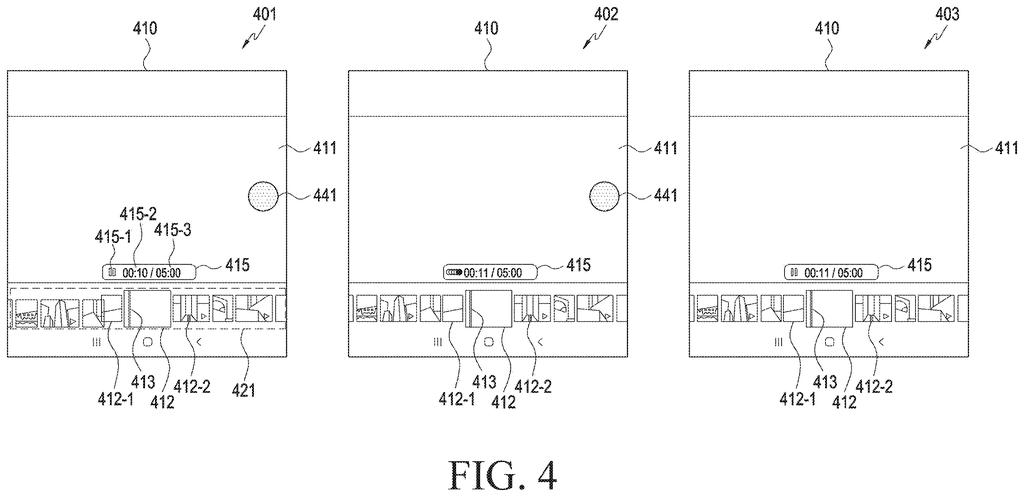
What Samsung's hold-to-slow-motion gesture does
You're watching a clip of your kid blowing out birthday candles, and the best second flies by in a blink. You press and hold a finger on the screen, and the video drops into slow motion right there. Lift your finger and it picks up at normal speed.
Samsung's patent application describes this press-and-hold gesture for a phone's video player. The clip doesn't need to be shot in a special slow-motion mode. While you hold, the phone makes up extra in-between pictures, so the slowed-down part looks smooth instead of choppy.
The filing also covers pressing harder for slower motion, choosing whether the slowed part plays forward or backward, and saving just the slowed section as its own clip.
… while the second user input is maintained on the touch display, generate interpolation frames by performing a frame rate conversion (FRC) operation for corresponding frames included in the video …
Translation: Holding your finger down creates extra frames so the video slows down smoothly.
How the phone invents frames while you hold
The claims cover a simple loop. While a video plays normally, a touch on the screen switches it into slow-motion mode. As long as the finger stays down, the device runs a frame rate conversion (FRC, a way of creating new in-between frames by working out how things moved from one frame to the next) and plays the original frames and the new ones together. When you let go, normal playback resumes at the frame right after the last one shown.
Samsung calls this a "temporal zoom." The description says the in-between frames can come from an AI model that estimates motion vectors (the direction and distance objects moved between two frames). A neural chip can do that estimate and the graphics chip can draw the new frames. The extra frames sit in a temporary buffer and are deleted after they play. The phone only remembers the start and end times.
The filing also describes optional variations:
- Pressure: a harder press means more extra frames, so slower motion.
- Position and drag: touching one half of the screen, or dragging one way, plays forward, while the other half or direction plays in reverse. A longer drag adds more frames.
- Saving and sharing: the phone rebuilds the slowed clip from the stored times when you save or share it.
- Zoom: a pinch can enlarge part of the picture while it plays slowly.
Presets of 1, 3 or 7 extra frames are shown, and 7 gives roughly one eighth speed. The filing also mentions PCs, VR headsets and turning burst photos into a GIF.
… based on the second user input being released from the touch display, resume playing back the video in the normal mode through the touch display …
Translation: Lifting your finger makes the video immediately return to its normal speed.
What this means for ordinary phone videos
Most of us shoot ordinary video and wish we'd caught the moment in slow motion. Under this filing, you could press on the screen during playback, slow just the part you care about, and save or share only that clip. You wouldn't plan ahead or switch camera modes.
For Samsung, the appeal is that it adds a trick to footage people already have. The filing's own background says recording super slow motion needs a high-spec camera, extra storage and more processing time, and it limits how long you can record. Here, the extra frames get made only for the seconds you ask for.
That makes this Samsung's 1554th filing in our Samsung coverage since May, adding to work like the charging ring and the twice-folding phone.
The shortest road to a product here is a short one. It needs a touchscreen and a chip that can estimate motion, and the filing says that can be the phone's AI processor or its graphics chip. No new sensor, no special camera.
The building blocks are already in a phone: a gallery app, a video player, and a way to fill in extra frames, which the filing's own background says phones use for super slow motion shot at 240 frames per second. What remains is software work, mainly making the new frames fast enough to appear the moment your finger lands. The document does not say how fast that must be.
If the speed works out, the whole feature fits inside a gallery app update. That makes it a believable idea for a phone you may already own.
Get our take in your Top Stories
Liked this breakdown? Add Patentlyze as a preferred source on Google, and our plain-English take shows up more often in your Top Stories the next time Samsung patent news breaks.
There are more where this came from
We read every patent application Big Tech publishes and send you the ones worth knowing. Plain English, free, every week.
The drawings
27 drawing sheets from US 2026/0341307 A1 · click any drawing to enlarge


Show the other 19 sheets


Want this weekly breakdown for a company we don't cover? Patentlyze Pro →
Be the first to weigh in