
A New Apple Patent Blurs Added 3D Objects to Match Fuzzier Headset Video
A new Apple patent application does something that sounds backwards: it makes virtual objects look worse on purpose, so they stop looking fake next to blurry camera footage.
What Apple's blurred virtual objects actually do
Imagine you're watching a 3D video of a forest clearing in a headset, and a virtual campfire flickers on the ground in front of you. The video was shot with cameras, so it's a little soft. The campfire, drawn by a computer, is razor sharp. Your brain spots right away that one of them doesn't belong.
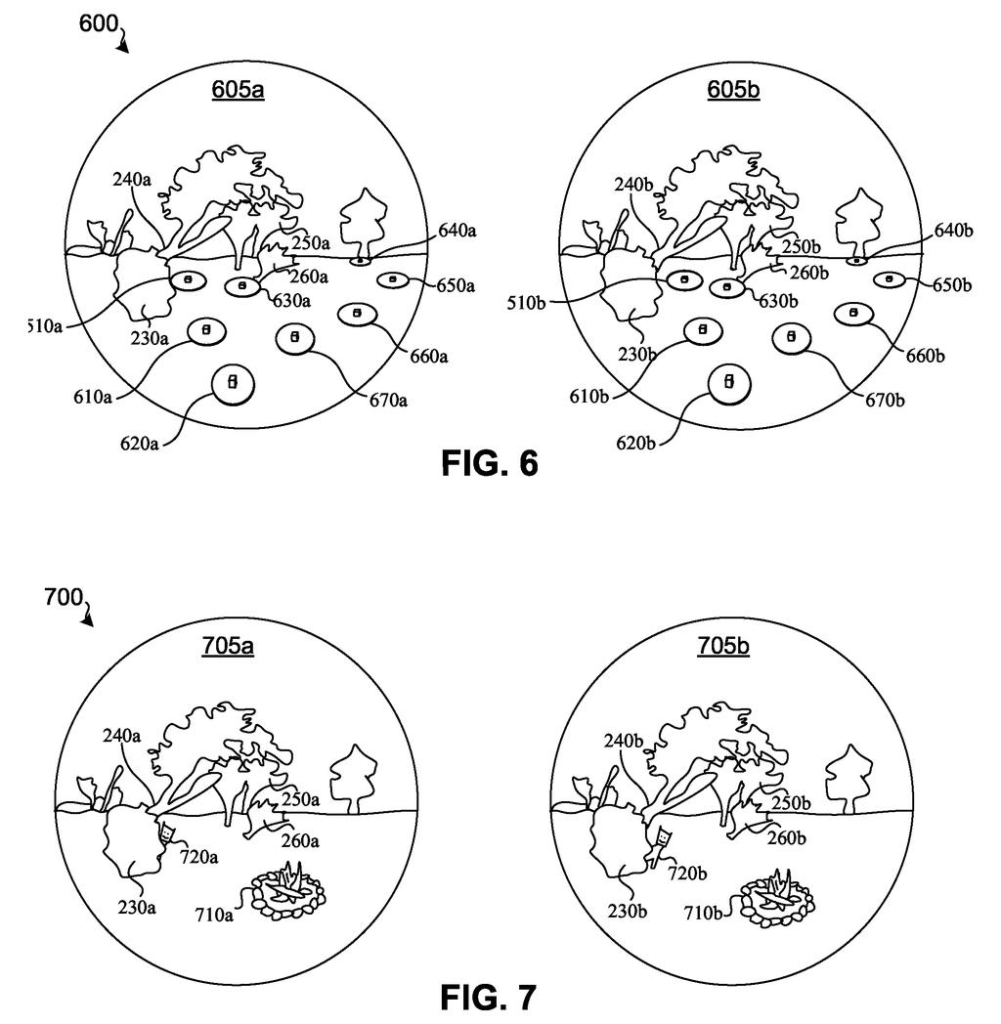
Apple's patent application describes a fix: blur the added object on purpose so it matches the footage around it. The device works out where the object sits in the scene, estimates how fuzzy the video is at that distance, and softens the object to match. It does this separately for your left and right eye, since each eye sees the scene from a slightly different angle.
Objects behind a chosen focal point get blurred, and in one example nothing in the foreground is touched.
… integrating the 3D object content into the stereo image content, wherein the 3D object content is altered based on a blur quality associated with at least a portion of the stereo image content …
Translation: The headset matches the blurriness of virtual objects to the surrounding video.
How Apple matches blur to each eye's view
The claims cover a method run on a device with a processor. It takes stereo image content (a pair of pictures, one for the left eye and one for the right, that together create a sense of depth) of a real place, plus 3D object content such as a fire, an animal or a nest. It places the object in the scene by detecting flat surfaces or depths in the footage, then shows the combined result as a 3D environment.
The key step is that the object is altered based on a blur quality of the footage, meaning how soft the camera capture is. The filing says that blur level can come from known camera details and capture conditions like light levels, or from an algorithm or machine learning model (software trained on examples) that predicts it from the footage itself. The object's depth helps decide how much blur to add.
The filing also describes several related pieces:
- Rendering and blurring each eye's image separately, because small viewpoint differences can call for quite different blurring.
- Finding a focal point and blurring added content judged to be in the background behind it. One example does no foreground blurring at all.
- Working out what should hide part of the object (occlusion) and showing the object's shadow in the footage.
- Handling objects that move across video frames, and wide 180-degree stereo video stored as flat projections.
Blurring may be done per eye since the slight differences in viewpoints may require significant differences in blurring.
Translation: Each eye gets a customized level of blur because left and right camera views differ.
Why added objects in headset video need blur
If you watch recorded 3D video in a headset, computer-made extras only work if they look like they were filmed in the same place. A razor-sharp creature in soft footage looks pasted on. Blurring to match could make added campfires, animals or characters feel like part of the scene, which matters to people making immersive video and to people watching it.
The filing frames the problem as a resolution mismatch: cameras capture less detail than a computer can draw. The fix works on the software side, softening the added object until it matches the footage. Apple's claims mention head-mounted devices, so immersive video on a headset is the obvious home for it, though the filing names no product.
This is the 110th Apple filing we've tracked since May on our Apple AR glasses watchlist, following work on windows clipping into furniture and sensing when the frame bends.
The problem here is small but easy to see. Put a perfectly sharp virtual fox into slightly soft video, and your eye catches the mismatch right away. The illusion that the fox was there when the camera rolled falls apart.
Few people will ever think about this, yet it decides whether added effects look believable or pasted on. Matching blur to depth, eye by eye, fits the size of that problem well. It is a finishing touch, and finishing touches are what make a scene convincing.
The audience is narrow. It only matters for recorded 3D footage with objects added afterward, so mostly people making or watching immersive video. For them, it targets a real flaw.
Get our take in your Top Stories
Liked this breakdown? Add Patentlyze as a preferred source on Google, and our plain-English take shows up more often in your Top Stories the next time Apple patent news breaks.
There are more where this came from
We read every patent application Big Tech publishes and send you the ones worth knowing. Plain English, free, every week.
The drawings
6 drawing sheets from US 2026/0340950 A1 · click any drawing to enlarge


Want this weekly breakdown for a company we don't cover? Patentlyze Pro →
Be the first to weigh in