
Qualcomm Files Patent to Stop Strangers' Items From Landing in Your Cart
Qualcomm's filing tackles a small but real checkout headache: someone else's item ending up in your cart. Its answer is to check whether your phone was standing near the cart when the item went in.
What Qualcomm's phone-and-cart pairing does
Ever had another shopper reach past you and drop something into your cart? In a store with no cashiers, that stray item could land on your bill, and nobody would be there to catch it.
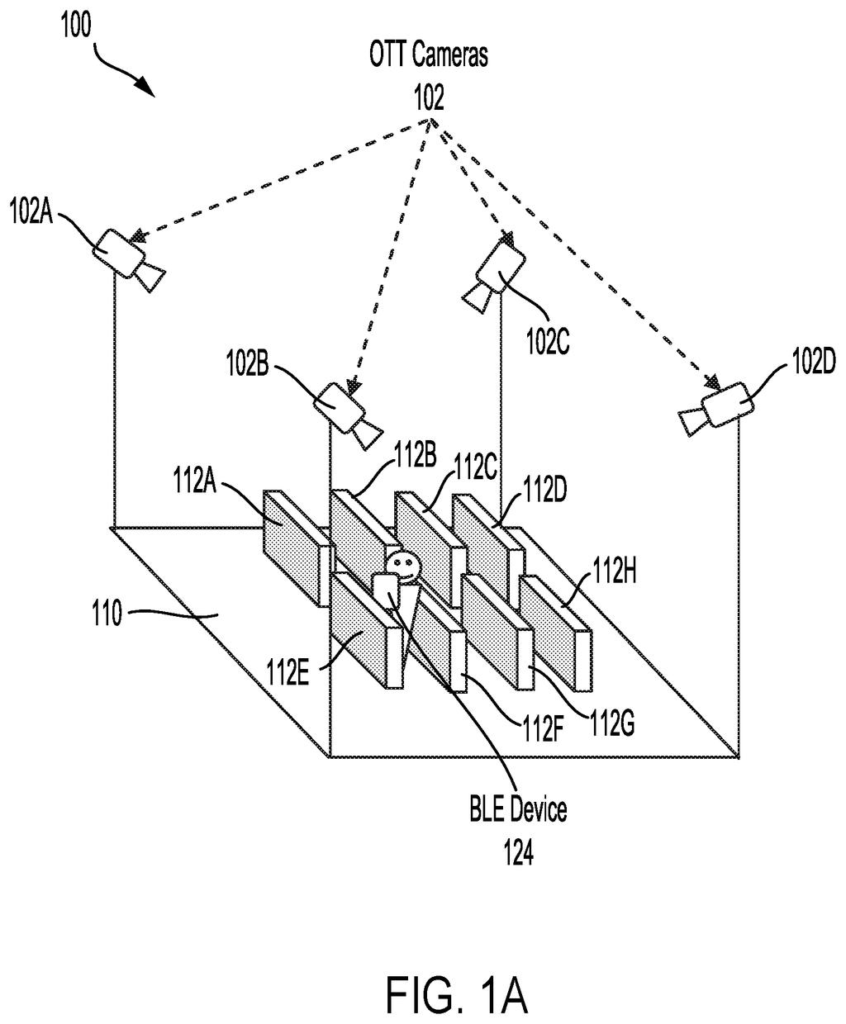
Qualcomm's patent application describes a way to prevent that. You would pair your phone with a shopping cart that carries its own wireless device, and the store's wireless network would then track where both of them are. When a camera or a shelf scale notices that someone took a product, the system checks whether your phone was close to the cart at that moment.
If your phone was nearby, the item counts as yours. If it was far away, the system assumes you did not put it there and sends your phone an alert about the odd item.
… determining, by the server, whether the first potential product selection meets one or more criteria involving the first location and the second location.
Translation: The system checks if a product added nearby actually belongs to your specific cart.
How the store tracks your cart and phone
The claimed method runs on a server that the store controls. It estimates where a shopping cart is by reading RF measurements (readings of radio signals, such as how long a signal takes to travel or the angle it arrives from) sent by a wireless device on the cart. It also receives the location of a second device, usually your phone, that has been paired with the cart.
Next, the server works out which products sit in the area around the cart, using a store database that lists shelves and what is on them. When a sensor covering that area, either a surveillance camera or a weight sensor on the shelf, reports that someone may have picked something up, the server checks that potential product selection against a set of criteria.
The main criterion in the dependent claims is distance: the pick counts as valid if the cart and the phone are within a threshold distance. If the phone is farther away, the server looks at the region around the phone and the sensors there instead. The cart can also report when its camera sees an item go in, and the server then alerts the phone.
The filing describes the radio network as the one that runs electronic shelf labels (small battery-powered price displays on shelves), using Wi-Fi, Bluetooth Low Energy or ultra-wideband. It also says a cart camera can be aimed at the basket only, to limit privacy worries.
What this means for cashier-free grocery trips
If you have used a checkout-free store, you know the worry: nobody is there to fix a wrong charge. This filing goes after one specific cause, a stray item from the next shopper over, by comparing where your phone is with where the cart is. It also relies on store radio hardware rather than cameras alone, and the description says cart cameras can be limited to the basket.
The application is early in its life. The examiner's first review rejected the claims as filed, which is routine and usually followed by amendments. Even so, the idea shows how a store could tie a shopper, a cart and a shelf together using the same wireless network that runs its electronic price labels.
That makes this Qualcomm's 563rd filing we've tracked in our Qualcomm coverage since May, a body that includes work on shrinking VR images and fitting photo AI on phones.
The failure this prevents is easy to picture: you get a receipt with an item you never wanted because someone else tossed it in your cart. A store with no cashiers has nobody to argue with, so a wrong charge feels worse there than at a regular register.
You would only notice this system when something goes wrong, and that is its job. The check runs in the background using your phone and the cart, and the filing says the alert goes to your phone, so you get a chance to spot the odd item.
The tradeoff is that the system relies on your phone being paired and staying with you, since the distance check compares the two locations. For a real checkout headache, it is a sensible fix.
Get our take in your Top Stories
Liked this breakdown? Add Patentlyze as a preferred source on Google, and our plain-English take shows up more often in your Top Stories the next time Qualcomm patent news breaks.
There are more where this came from
We read every patent application Big Tech publishes and send you the ones worth knowing. Plain English, free, every week.
The drawings
8 drawing sheets from US 2026/0340709 A1 · click any drawing to enlarge


Want this weekly breakdown for a company we don't cover? Patentlyze Pro →
Be the first to weigh in