
Apple Files Patent to Cut Battery Drain When Your Phone Runs a Headset
A headset with no brain of its own leans hard on the phone that feeds it, and that costs battery and builds heat. Apple's filing has the phone ease off whenever you're sitting still.
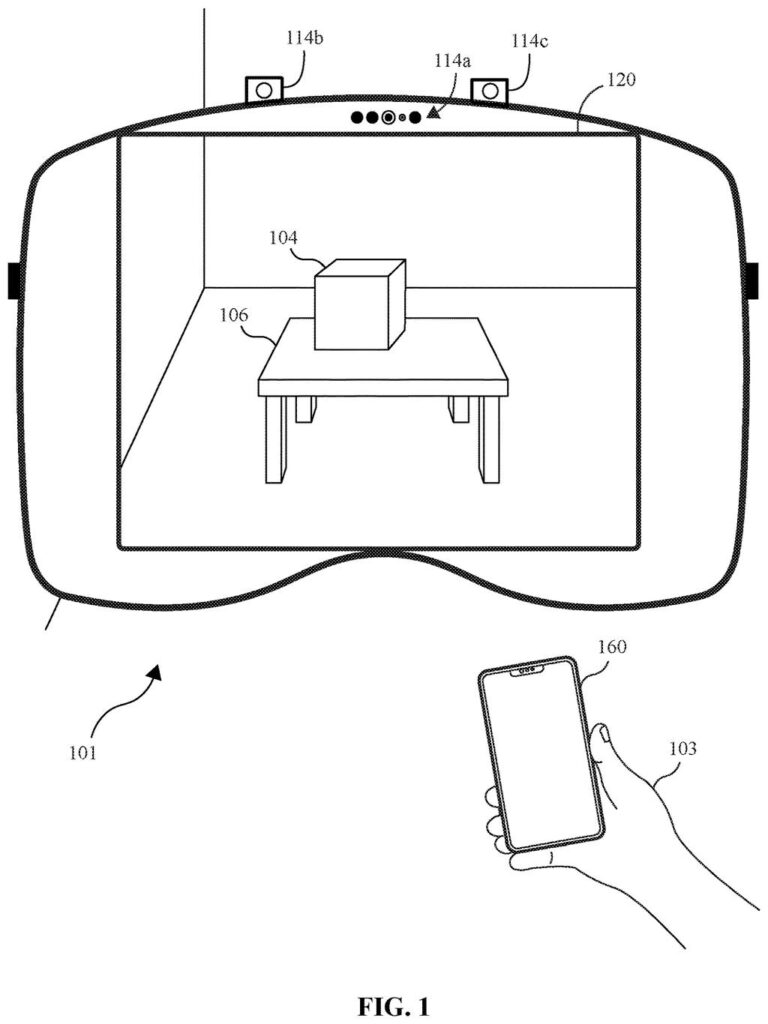
What Apple's phone-to-headset power saver does
Every time you sit down with a headset to watch a movie, the phone in your pocket does the heavy lifting, redrawing the picture dozens of times a second. That drains the battery fast, even when you're sitting perfectly still.
Apple's filing describes a phone that watches for clues about what you're doing. If you're moving around, playing a game, or looking at the phone's screen, it stays in high power mode. After you've been still for a while, it drops to low power mode: the movie shrinks into a smaller window that stays fixed in your view, and the picture refreshes less often.
The filing also covers the phone itself. If you aren't looking at the phone, its own screen has no reason to light up. And while the phone is charging and running the headset, it can slow its charging to keep from overheating.
… selectively activating a high power mode based on input data allows the electronic device to preserve power and improve power and thermal performances.
Translation: Turning on high power mode only when needed saves battery and keeps the device from getting too hot.
How the phone decides when to ease off
The filing describes a companion device (its examples include a smartphone, tablet, smart watch or laptop) that does the processing for a head-mounted display with no processor of its own. The companion collects data from sensors on itself and on the headset, such as orientation, whether each screen is on, how much you're moving, and which app is open. It then checks that data against a set of criteria.
Meet the criteria and it runs in high power mode. Miss them and it switches to low power mode:
- High power: content stays anchored to the room or to your torso (world locking and body locking), face tracking runs more often (400 times a second in one example, versus 100), and the picture runs at about 90 frames per second at a larger, more immersive size.
- Low power: content is head locked (glued to one spot in your view, like a heads-up display), runs at roughly 45 to 60 frames per second, shrinks to a smaller window, and leans more on reprojection (frames generated from motion data and earlier frames instead of being fully redrawn).
The switch isn't instant. In the examples, the phone waits through a stretch of stillness (anywhere from 5 seconds to 10 minutes) before dropping down. Climbing back up takes less movement than staying up does, so it wakes quickly. Games get a higher movement threshold, since players move more.
One more piece covers charging: when the phone is plugged in and actively driving the headset, it slows its charging speed to prevent overheating, and it charges faster otherwise.
Why headset battery life depends on this
If you wear a headset that leans on your phone, this is about how long a session lasts and how hot the phone gets. By dropping to low power when you sit still, the phone can stretch your battery through a long movie, then switch to full quality when you stand up or start a game.
The charging detail matters too. Plug your phone in while it runs a headset and it could slow its own charging to stay cool, then charge faster once it's not actively driving the headset. The filing names no product and gives no battery numbers, and it lists a smartphone as just one possible companion device, so treat it as a look at how Apple thinks about power for head-worn screens.
That makes this Apple's 614th filing in our Apple coverage since May, adding to a run that includes the headset fit alert and the fingertip passcode idea.
Battery and heat are the daily limits on any screen you wear on your face. A headset has to stay light, so the heavy computing moves to a phone, and that phone then has to get through a long movie without draining or overheating.
Apple's answer is modest and well matched to that. It watches a few obvious signals (are you moving, are you looking at the phone, is a game running) and turns down the expensive extras when you're sitting still. Waking up with less movement than it takes to stay awake is a thoughtful touch, since the picture catches up quickly when you start moving.
The filing gives no battery numbers, so how much you'd save stays unknown. The rules are simple enough to work in real life, though, and that counts for a lot.
Get our take in your Top Stories
Liked this breakdown? Add Patentlyze as a preferred source on Google, and our plain-English take shows up more often in your Top Stories the next time Apple patent news breaks.
There are more where this came from
We read every patent application Big Tech publishes and send you the ones worth knowing. Plain English, free, every week.
The drawings
11 drawing sheets from US 2026/0339418 A1 · click any drawing to enlarge


Show the other 3 sheets


Want this weekly breakdown for a company we don't cover? Patentlyze Pro →
Be the first to weigh in