
Qualcomm Files Patent to Let Your Phone Do the Heavy Lifting on a Headset's Video
A headset on your face has to be light and cool, yet it also has to shrink a constant stream of video. Qualcomm's filing has your phone guess the next video frame, work out how to compress it, and send those answers back to the headset.
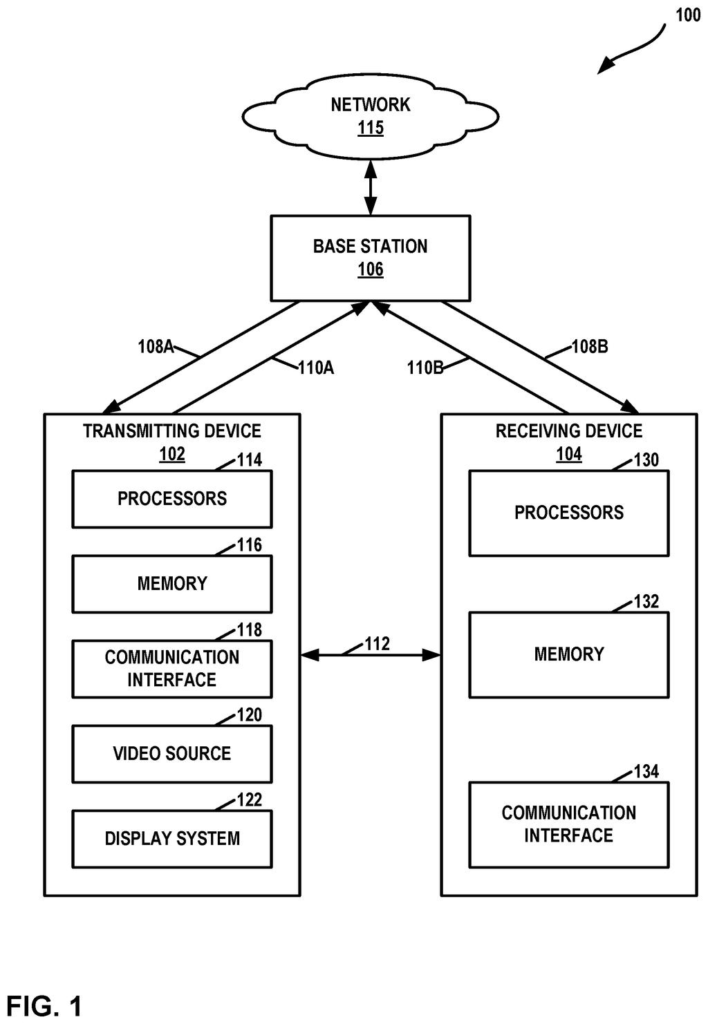
What Qualcomm's phone-assisted headset video does
A mixed-reality headset sits on your face all afternoon, filming the room in front of you. Everything it films has to be shrunk and sent to your phone, and shrinking video takes real processing power, which means heat, weight and battery drain right on your head.
Qualcomm's filing splits the job. After the headset sends one frame, your phone predicts what the next frame will probably look like and works out the best way to compress that guess: which pieces of the picture moved, and in which direction. Then it sends those choices back to the headset.
The headset uses them as a cheat sheet when it compresses the real next frame, so it skips the slow part of the job, which is searching for those choices itself. The phone, with its bigger battery, does the thinking. The headset follows the notes.
… receive, from the receiving device, encoding selection data for a second picture of the video data, wherein the encoding selection data for the second picture indicates encoding selections used to encode an estimate of the second picture and comprises prediction parameters for blocks of the second picture …
Translation: The phone gets feedback from the headset on how to efficiently compress the next frame of video.
How the phone's guessed frame guides the headset
Video compression works picture by picture. For each block of a picture, the encoder picks a "recipe": how that block moved since the last picture (motion parameters), or how to build it from neighboring blocks in the same picture (intra prediction parameters). Finding the best recipe is the expensive part.
The claims cover both ends of the link. The transmitting device (a headset in the examples) encodes a first picture and sends it. The receiving device (such as a phone) rebuilds that picture, estimates the next one from recently rebuilt pictures, and encodes its own guess. Its per-block choices go back to the transmitter as encoding selection data.
- The transmitter then encodes the real second picture using those choices, for example by shifting blocks according to the received motion parameters (motion compensation).
- The video it sends does not need to carry the choices themselves, because the receiver already has them.
- If the choices do not arrive before a time limit, the transmitter encodes that picture without them.
Other claims describe sending only error-correction data (extra bits that let a receiver repair damaged or missing data) while holding back part of the video itself, and an XR headset that receives virtual element data from the phone and displays it in the scene.
… encode the second picture based on the encoding selection data for the second picture to generate second encoded video data; and transmit the second encoded video data to the receiving device.
Translation: The transmitting device compresses the next video frame using that feedback and sends it over.
What this means for battery-hungry XR headsets
If you have worn a headset for more than a few minutes, you know the trade-offs: heat, weight and a battery that fades fast. Moving the hardest part of video compression to your phone could let a headset get by with lighter hardware, run cooler and last longer, while keeping the delay between what you see and what is shown low. The filing names low delay, low weight and low power use as its goals.
The setup trades some extra wireless back-and-forth for less work on your head. Results would hinge on how often the phone's guess about the next frame lands close, and the filing handles part of that risk by letting the headset carry on without hints that arrive late.
Qualcomm's 56th filing we've tracked in the AR glasses race since July adds to a growing set of applications that includes one on freezing apps to save battery and one on using spare memory for sharper video.
Claim 1 is written broadly. It never mentions a headset, a phone or a particular video format. It describes any device that sends one frame, then gets back per-block compression choices that another device made on its own guess of the next frame, and uses those choices to compress the real one. The headset only appears in a later claim (claim 9).
That wide wording matters in practice. Any pair of devices sharing video over a wireless link, such as a wearable sensor and a phone, would fit the same description, as long as the receiver sends back choices made from a predicted frame. The matching receiver-side claims (10 and 15) cover the phone's half of the exchange too.
The idea is easy to follow and sensible for a device worn on the head. The open question is whether the phone's guess is close enough, often enough, to save real work. The claims include a fallback for hints that arrive late, a practical touch that suggests the design expects some misses.
Get our take in your Top Stories
Liked this breakdown? Add Patentlyze as a preferred source on Google, and our plain-English take shows up more often in your Top Stories the next time Qualcomm patent news breaks.
There are more where this came from
We read every patent application Big Tech publishes and send you the ones worth knowing. Plain English, free, every week.
The drawings
27 drawing sheets from US 2026/0332834 A1 · click any drawing to enlarge


Show the other 19 sheets


Want this weekly breakdown for a company we don't cover? Patentlyze Pro →
Be the first to weigh in