
IBM Patents Technology That Loads the Next Computing Job Before the Current One Finishes
IBM's patent application goes after a dull but costly quantum computing problem: the dead time between jobs, when the machine waits for its next set of instructions. The fix is to load the next job while the current one is still running.
What IBM's quantum task preloading does
A quantum computer finishes one job, then sits idle while the instructions for the next one are copied into its control equipment. That wait can be long, and in a quantum machine the wait is costly. You may never run one of these, but the delay affects how many experiments a lab can fit in and how accurate the results are.
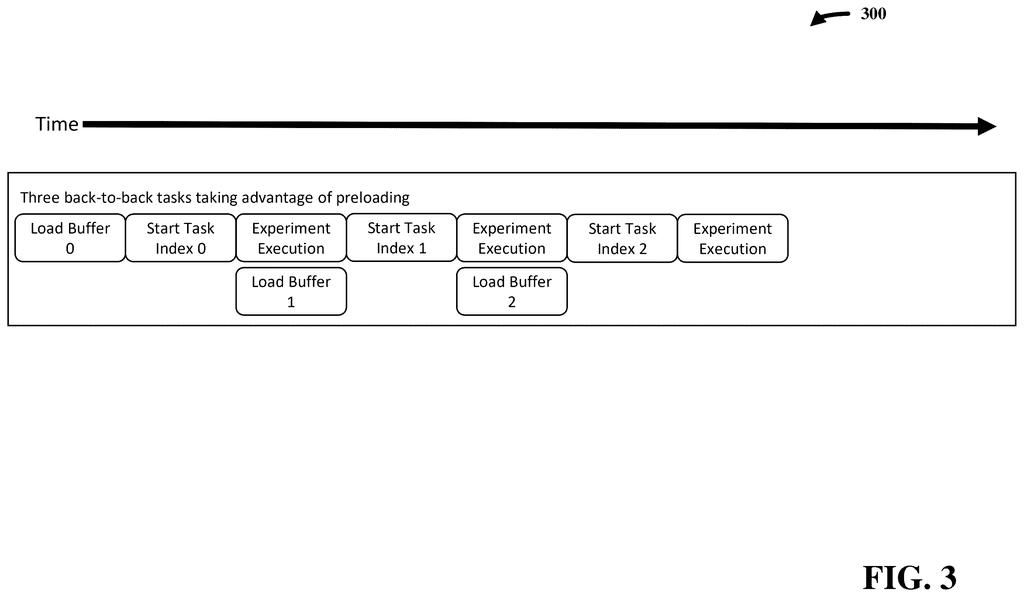
IBM's patent application describes a fix: start loading the next job's instructions while the current job is still running. If both jobs use the same instruction, such as the same signal pattern, the system skips it and reuses the copy already loaded. Only the new pieces get copied in, and the system keeps track so it never overwrites something the running job still needs.
The payoff is less downtime. The filing also says a fast handoff matters because the fragile quantum state a job produces fades quickly, so the next job can start on those results before they decay.
… prevents redundant loading of the one or more commands shared between the first quantum computing task and the second quantum computing task …
Translation: It stops the system from reloading instructions that are already there.
How shared commands get loaded only once
Before a quantum computer runs a job (the filing calls it a task, meaning one quantum circuit), its control electronics need commands loaded into memory buffers, which are holding areas. There are separate buffers for instructions, scratch space and waveforms (the electrical pulses sent to the qubits, the quantum computer's basic units). The filing says these loads are a major bottleneck, and systems often have three buffers of each type.
The claims cover two pieces working together:
- Task comparison: finds commands the current task and the next task share, such as an identical waveform, and prevents loading them twice. The shared command is marked as already loaded, and its buffer location is recorded for the second task.
- Task management: while the first task runs, loads the second task's remaining commands into the control electronics.
The filing also describes variations. Commands can go into one specific buffer, such as a third waveform buffer when the first two are busy. They can fill the leftover space in a partly used buffer. Space can be freed as commands finish, and an index tracks what has been used so in-use data is never overwritten. If the first task is long enough, several later tasks can be preloaded.
In the filing's example charts, execution time dropped 1.56%, 2.23% and 3.33% for small, medium and large payloads, with bigger payloads saving more.
… loads, during execution of the first quantum computing task, commands for the second quantum computing task that are not shared by the first quantum computing task into control electronics …
Translation: It preloads new instructions into the hardware while the old job is still running.
Why idle time matters to a quantum machine
If you run a quantum computer, idle time is expensive. Cutting the wait between jobs means more experiments per hour, and the filing says the extra time can go to calibration runs (routine checks that keep the machine tuned), which improves the accuracy of results. For most readers the effect is indirect, but faster and more accurate machines are what move quantum computing from lab demos toward useful work.
The speedup also changes what is possible. A quick handoff lets one job start on the leftover quantum state of the last before it decays, which opens the door to loops, where a job repeats with small tweaks using its own earlier output. The example numbers are modest, 1.56% to 3.33% of time saved, though the filing says the gain grows with larger payloads.
IBM's 26th application we've tracked since May in our quantum computing buildout work follows earlier ones like sharing a quantum computer and catching quantum errors.
Of all the quantum filings you could read, this one sits close to something shippable, because it asks for no new hardware. The filing describes bookkeeping: track which commands sit in which memory buffer, spot repeats, and fill free space early. That is a control-software update for a machine that already has several buffers of each type.
What has to exist first is a working quantum computer whose control electronics have spare buffer room, which is a big requirement on its own. The shortest path to use is a software release on a machine that already has those parts.
The example figures show savings of 1.56% to 3.33%, which is modest. The idea pays off for labs running long chains of jobs, where small savings add up and calibration checks fit in. Expect a practical tweak that quantum engineers will appreciate, with little for everyone else to notice.
Get our take in your Top Stories
Liked this breakdown? Add Patentlyze as a preferred source on Google, and our plain-English take shows up more often in your Top Stories the next time IBM patent news breaks.
There are more where this came from
We read every patent application Big Tech publishes and send you the ones worth knowing. Plain English, free, every week.
The drawings
11 drawing sheets from US 2026/0350445 A1 · click any drawing to enlarge


Show the other 3 sheets


Want this weekly breakdown for a company we don't cover? Patentlyze Pro →
Be the first to weigh in