
IBM Patents a New System for Finding and Fixing Quantum Computer Mistakes
Quantum computers make mistakes constantly, and fixing those mistakes fast enough to be useful is one of the field's hardest unsolved problems. IBM is filing patents on a specific mathematical shortcut that could make that error-correction step faster and more reliable.
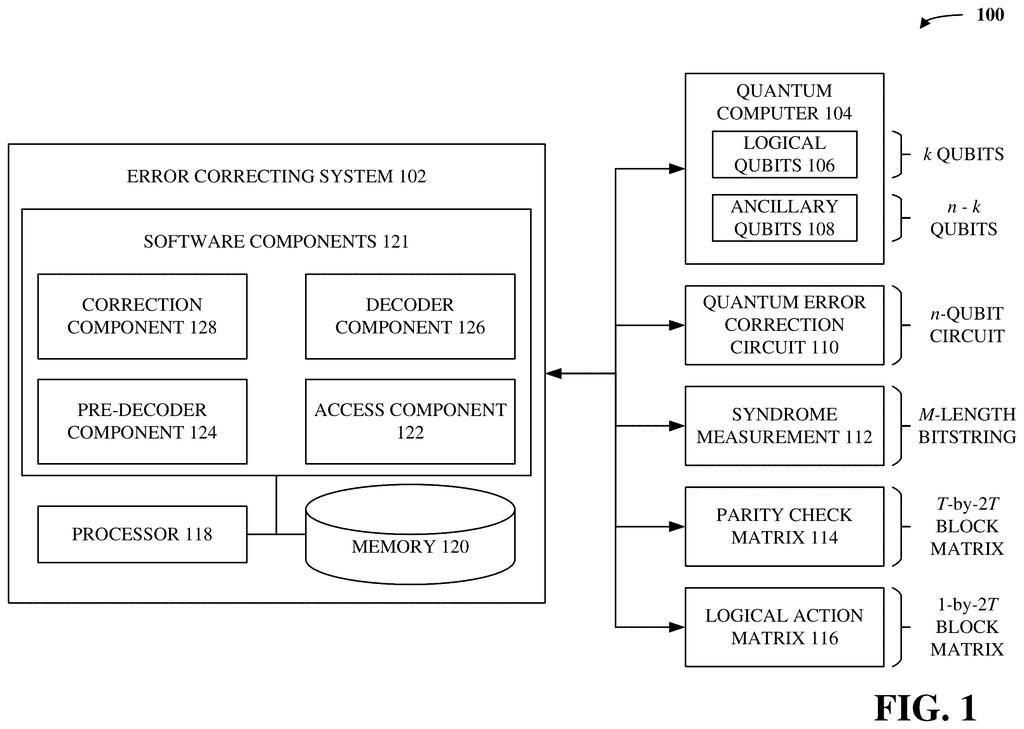
What IBM's quantum error-checking system actually does
Imagine you're playing a game where the board occasionally flips random pieces on its own, and you have to figure out which pieces moved and put them back before your next turn. That's roughly the situation a quantum computer faces constantly: tiny physical disturbances flip its calculations, and the system has to detect and undo those flips faster than they pile up.
IBM's patent describes a method for doing exactly that detective work more efficiently. When a quantum computer registers that something went wrong (via a signal called a "syndrome measurement"), IBM's approach runs a structured math check to figure out what kind of error occurred and which correction to apply. The goal is to reverse the mistake before it corrupts the rest of the computation.
This matters because quantum computers today spend enormous effort on error correction, and slow or inaccurate decoding can make the whole system unusable. A faster, more accurate approach could help bridge the gap between today's noisy prototype machines and the reliable quantum computers researchers are working toward.
an access component that measures a syndrome measurement associated with a quantum error correction circuit and a parity check matrix; and a decoder component that identifies a logical action caused by an error afflicting the quantum error correction circuit …
Translation: The system reads system errors and figures out what went wrong in the quantum circuit.
How block-and-cycle checking finds the right fix
At the core of any quantum computer is a fragile physical system (superconducting circuits, trapped ions, or similar hardware) where even a stray vibration or electromagnetic fluctuation can flip a qubit from the right value to the wrong one. Quantum error correction is the discipline of detecting and reversing those flips before they snowball.
The detection step produces what's called a syndrome measurement: a pattern of yes/no signals that tells you something went wrong but doesn't directly tell you what. To go from that pattern to the actual correction, you need a decoder, an algorithm that maps the syndrome onto the most likely error and its fix.
IBM's patent describes a decoder built around block-and-cycle feasibility checking. This is a structured way of solving a system of linear equations (a set of math constraints that describe which errors are consistent with the observed syndrome pattern). Rather than searching exhaustively, the algorithm checks whether a proposed solution is feasible by examining blocks and cycles within the constraint graph, narrowing the answer space quickly.
Once the decoder identifies the logical action (the net effect the error had on the computation's outcome), the system applies the inverse of that action: essentially running the correction that undoes the mistake. The patent covers both the detection logic and the correction step as a unified pipeline.
… the system can identify a logical action caused by an error afflicting the quantum error correction circuit, based on performing block-and-cycle feasibility checking on a first linear system derived from the syndrome measurement and from the parity check matrix …
Translation: It uses mathematical checks on error data to pinpoint the exact mistake.
What this means for the future of working quantum computers
Quantum error correction is arguably the most important bottleneck standing between today's experimental machines and ones that can actually outperform classical computers on real problems. Every microsecond a decoder spends figuring out what went wrong is time the quantum system is sitting idle or accumulating more errors, so decoding speed and accuracy are not abstract concerns.
IBM's interest in quantum error correction has been a defining thread of its hardware roadmap for years. A patent on a specific, tractable decoding algorithm suggests the team is moving from broad architectural claims toward the kind of detailed engineering that production-grade quantum systems will require. For anyone watching quantum computing timelines, this kind of incremental, concrete progress is what actually moves the needle.
IBM's 22nd filing we've tracked since May on our quantum computing buildout watch builds on earlier work like a control system at scale and a switch for linking components.
Block-and-cycle feasibility checking trades flexibility for speed by committing to a specific mathematical structure. That means when real hardware produces errors in unusual combinations that fall outside the assumed pattern, the method can fail in ways a looser approach would survive.
Whether that cost is acceptable depends on how reliably quantum hardware misbehaves in predictable ways. For well-behaved error patterns, the speed advantage likely matters enormously, since correcting errors in quantum computers only works if it happens fast enough to keep up with the machine itself.
The filing names a specific algorithm rather than claiming ownership over quantum error correction broadly, which is a sign the inventors understand exactly what problem they are solving and where their solution stops. That focus makes the approach credible and testable as machines grow larger and the unusual cases multiply.
There are more where this came from
We read every patent application Big Tech publishes and send you the ones worth knowing. Plain English, free, every week.
The drawings
18 drawing sheets from US 2026/0300797 A1 · click any drawing to enlarge


Want this weekly breakdown for a company we don't cover? Patentlyze Pro →
Be the first to weigh in