
IBM Files Patent for Catching the Mistakes Quantum Computers Leave Behind
Quantum computers are noisy, and the tricks used to clean up their answers still leave a hidden, unmeasured error behind. IBM's new patent application describes a way to estimate that leftover error and subtract it, using easy test problems a regular computer can solve exactly.
What IBM's quantum error-correction check does
Imagine you're using a bathroom scale that you know runs a little off. You've already applied a fudge factor to fix it, but you have no idea how much error is still left. You'd feel better if you could weigh a few objects of known weight on the same scale and see how far off it still is.
That's the basic idea of this IBM patent application. Quantum computers make plenty of mistakes, and there are existing tricks to clean up their answers. Those tricks usually can't say how wrong the cleaned-up answer still is.
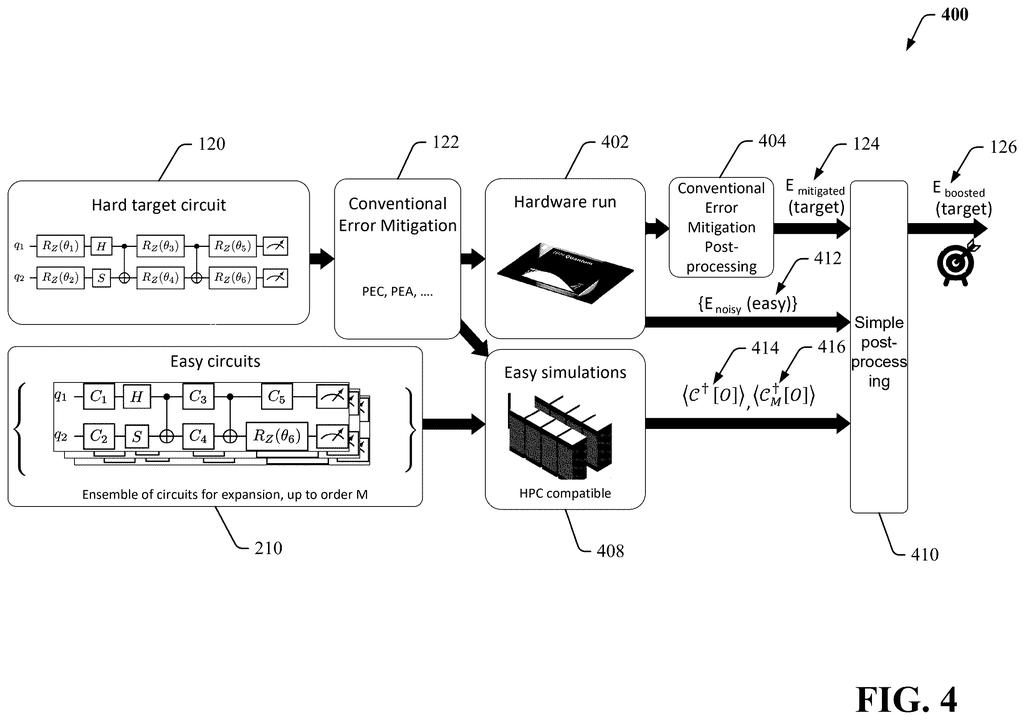
IBM's approach breaks the real problem into a batch of simpler look-alike problems. Your regular computer can solve those exactly, while the quantum machine runs them too. Comparing the two shows how far off the quantum side still is, and that gap gets used to correct the final answer.
an access component that receives a mitigated expectation value of a target circuit using an error mitigation protocol; a correction component that corrects a residual bias error of the mitigated expectation value for the error mitigation protocol using classical executions and quantum executions of an ensemble of circuits.
Translation: It grabs quantum error data and fixes remaining inaccuracies using both regular computers and quantum computers.
How IBM checks quantum answers against exact math
The filing is about error mitigation, a family of techniques that reduce the effect of noise on quantum hardware by running modified circuits (the quantum equivalent of a program) and then cleaning up the results on a normal computer. The cleaned-up answer is called a mitigated expectation value (an averaged measurement result). The patent focuses on the residual bias error, meaning the systematic gap between that cleaned-up number and the true answer.
The claims cover a correction step that takes any mitigated result and fixes this leftover gap. The target circuit is broken into an ensemble of circuits, a set of related circuits that a classical computer can simulate exactly. Each one is run two ways:
- On the quantum processor, with the same error mitigation applied
- On a classical computer, as an exact simulation that gives the ideal answer
The difference between the two sets of results becomes an error term, written as a series sum (an adding-up of small pieces) over the ensemble. Adding it to the original result gives a second value with a bounded bias, meaning there is a way to estimate the worst-case error. The filing says using more circuits pushes the method toward asymptotically bias-free results, where leftover error shrinks toward zero.
One version, called CAESER in the description, runs the target and ensemble circuits together and skips the usual separate stage of learning the machine's noise. It rescales the raw results with a single parameter instead. The filing shows simulations of 5-qubit and 7-qubit models.
Why IBM's fix matters for trusting quantum results
The practical payoff is trust. Today a quantum computer can hand back a number with no good way to say how far off it still is. A method that puts a ceiling on that error would matter to anyone, such as chemists or financial modelers, who wants to know whether a quantum result is safe to use. Because the correction works with any existing mitigation method, it could in principle be bolted onto what researchers already run.
There's a cost: the filing admits that using every circuit is inefficient, so accuracy depends on how many extra runs you can afford. The application is early in review, and the examiner's first pass rejected the claims as filed, which is routine and usually followed by amendments.
IBM files its 24th patent application we've tracked since May in our quantum computing buildout, following work like sharing quantum hardware and catching quantum errors.
The tradeoff is built into the design. You get a tighter, checkable error bound, but you pay for it with extra circuit runs, and the filing says outright that using the whole set is inefficient. How much accuracy you really get per extra run is the question the patent leaves open, and the simulations shown are small (5 and 7 qubits).
The method also leans on the test circuits being solvable exactly by a regular computer. If a real problem can't be split that way, the correction has nothing to compare against. Still, trading some computing time for an honest estimate of how wrong you are reads as a good bargain.
It's a specialist's patent, with no product attached. If it holds up on bigger machines, though, it addresses one of the most basic complaints about quantum results: nobody knows how much to believe them.
Get our take in your Top Stories
Liked this breakdown? Add Patentlyze as a preferred source on Google, and our plain-English take shows up more often in your Top Stories the next time IBM patent news breaks.
There are more where this came from
We read every patent application Big Tech publishes and send you the ones worth knowing. Plain English, free, every week.
The drawings
16 drawing sheets from US 2026/0350454 A1 · click any drawing to enlarge


Show the other 8 sheets


Want this weekly breakdown for a company we don't cover? Patentlyze Pro →
Be the first to weigh in