
IBM Files Patent for Letting Several People Share One Quantum Computer at Once
Quantum computers are so scarce that most run one person's job at a time, even when that job needs only part of the machine. IBM's patent application describes a way to pack several users' jobs onto one chip without redoing the costly error cleanup each time.
What IBM's quantum job-sharing patent does
Today, quantum computers mostly work through jobs one at a time, even when a job uses only a slice of the machine's qubits (the basic building blocks that hold information). The rest of the chip sits idle while everyone else waits in line. Worse, each job needs a time-consuming measurement of the machine's noise, the random errors that creep into results.
IBM's patent application describes a scheduler that looks down the waiting line and bundles compatible jobs into a single run. It keeps a cache (a short-term memory) of noise measurements it already took, and it favors jobs that can reuse them. The filing also mentions price rebates for users who agree to share the machine.
Because the hardware's noise drifts over time, the system also tracks how long each saved measurement stays good, and drops the ones that go stale.
… executing a portion of the plurality of quantum circuits concurrently based on the noise model for each of the plurality of quantum circuits.
Translation: Running multiple tasks at the same time by adjusting for errors in each program.
How IBM matches jobs to saved noise readings
The core claim has three steps. The system receives a batch of quantum circuits (the step-by-step recipes a quantum computer runs), works out a noise model for each one (a map of how the hardware tends to make mistakes), and then runs some of them at the same time based on those models.
Much of the detail concerns error mitigation, a cleanup method that measures the machine's noise for each pattern of operations (a "layer of gates") and uses it to correct results. The filing stores each layer as a string of 1s and 0s showing which links between qubits are in use. These models sit in a cache and expire, because noise drifts. A saved model only applies to a layer that uses exactly the same links.
A scheduler scans the queue and builds a list of jobs that could merge, checking two things:
- Space: do the jobs fit together on the chip, given user preferences and a buffer of unused qubits to limit interference?
- Time: can a job fill an idle gap without making the combined run longer?
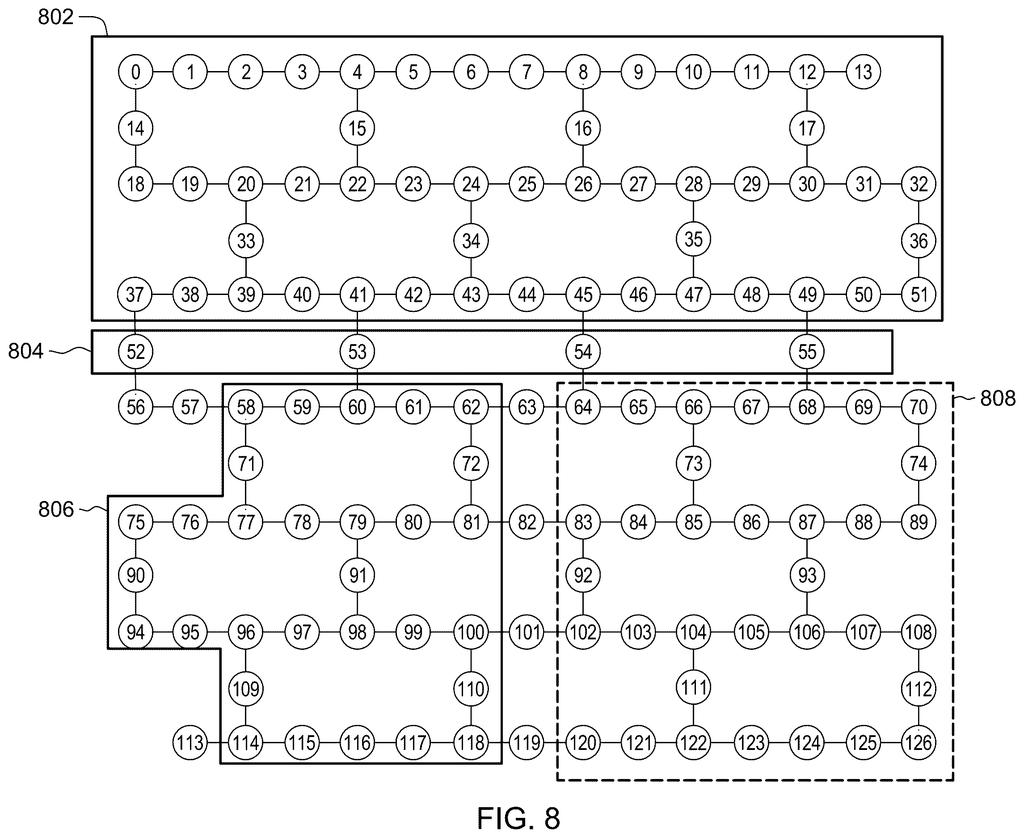
Merging can be strict (only layers already in the cache), strict with learning (measure the missing layers and save them), or lenient (estimate a missing layer from a similar saved one). In one example, a 52-qubit job and a 30-qubit job share a 127-qubit machine with four spare qubits between them. Results are then split back out so each user gets only their own.
In an approach to improve quantum computing systems embodiments receive a plurality of quantum circuits and determine a noise model for each of the plurality of quantum circuits.
Translation: The system first looks at how errors affect different programs before running them together.
Why shared quantum machines could cut waits
If you ever want to run something on a quantum computer, the queue and the bill are the practical hurdles. Letting several users share one machine could shorten waits, and the filing describes price rebates for people who agree to share. It names IBM's Qiskit programming library as one way programs reach the machine.
For IBM, the appeal is getting more work out of expensive hardware while full error correction is still out of reach. Sharing brings risks the filing itself admits, including interference and information leaking between users, so the details matter. As a patent application, it describes an idea, not a product.
IBM's 25th filing we've tracked in our quantum computing buildout since May builds on earlier work like one catching quantum errors and one sharing quantum hardware between programs.
Quantum machines are rare and costly, and the filing says a single user often needs only part of one. Leaving the rest idle is like booking a whole restaurant for a table of two. The cleanup step adds to the waste, since the machine has to keep re-measuring its own noise as it drifts.
Reusing those measurements across jobs goes straight at that waste, and offering rebates for sharing is a sensible way to spread the cost. The approach fits the size of the problem: a practical scheduling fix for a bottleneck that will last until quantum machines get much better.
The filing gives no measured results, so we can't say how much time it would save. Packing jobs together also invites interference between them, which the document flags as a challenge. The first claim is also very short and broad, so the specific merging rules in the later claims are where the substance sits.
Get our take in your Top Stories
Liked this breakdown? Add Patentlyze as a preferred source on Google, and our plain-English take shows up more often in your Top Stories the next time IBM patent news breaks.
There are more where this came from
We read every patent application Big Tech publishes and send you the ones worth knowing. Plain English, free, every week.
The drawings
9 drawing sheets from US 2026/0350448 A1 · click any drawing to enlarge


Show the other 1 sheets

Want this weekly breakdown for a company we don't cover? Patentlyze Pro →
Be the first to weigh in