
Sony Files Patent for Headset That Fades Virtual Objects Blocking Your Real Hand
In many headsets, a virtual window floats in front of your real hand and hides it completely. Sony's patent application fades only the patch that covers your hand.
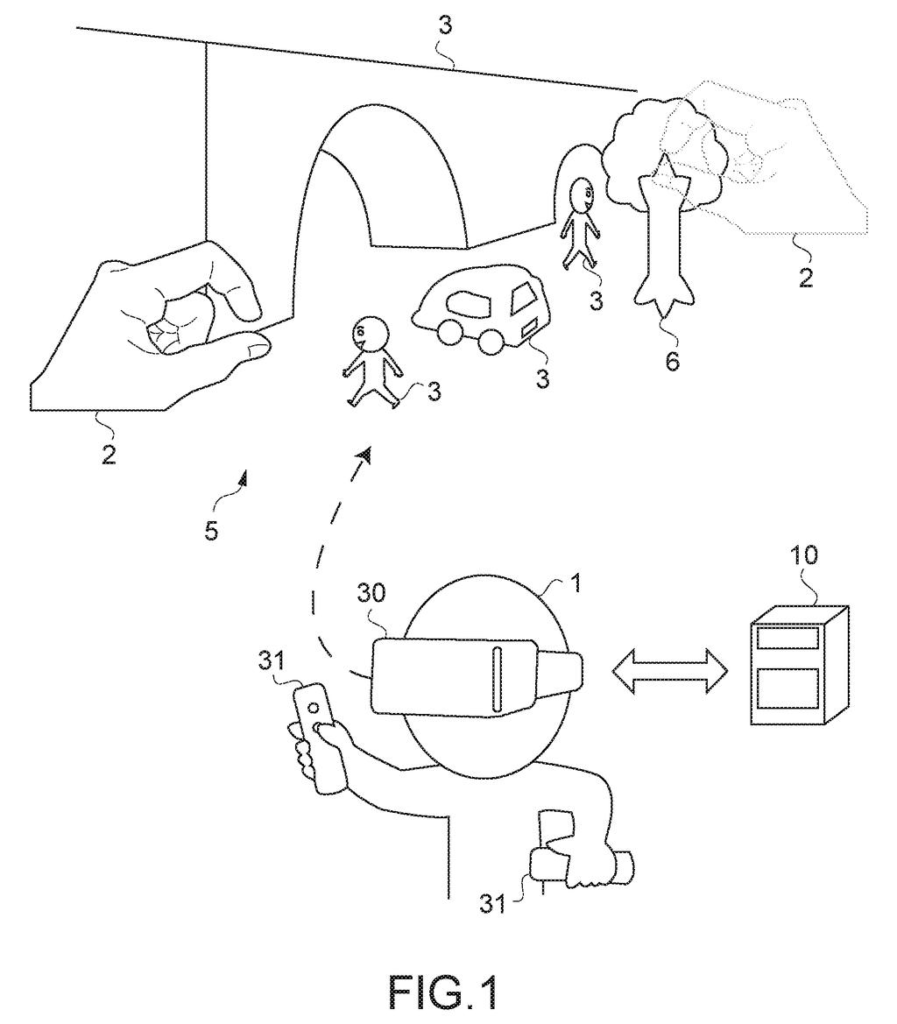
What Sony's see-through-window fix does
You're wearing a headset with a virtual window floating in front of you, and you reach out to tap it. Your real hand slides behind the window and vanishes. You know it's there, but you can't see it, so you're poking blind.
Sony's patent application fixes that with a simple check. The headset works out whether a virtual object sits between your eyes and your hand, and whether the two overlap in what you see. If both are true, it makes just the overlapping patch of the object see-through, so your real hand shows through.
The rest of the window stays solid. The edge of the see-through patch can also fade out gradually, so it doesn't look like someone cut a hole in the screen.
… determine whether the virtual object is positioned between the viewpoint of the user and the position of the operating part, determine whether a display region of the virtual object overlaps a display region of the operating part when viewed from the viewpoint of the user …
Translation: The system checks if a digital object is blocking your hand from your line of sight.
How the headset spots what is blocking your hand
The system tracks three things: the user's viewpoint (where their eyes are looking from), the position of an "operating part" such as a hand, and the position of a virtual object in the virtual space. The claims describe a headset with passthrough, meaning cameras show you the real room on the screens inside the headset. In that setup, virtual objects are normally drawn on top of everything, which hides your real hand.
The claimed method works in three steps:
- Depth check: it compares how far away the virtual object and the hand are from your viewpoint, to see if the object is in front.
- Overlap check: it tests whether the two shapes cover the same area of your view.
- Fade: if both checks pass, it changes the object's transparency in the overlapping area, using alpha blending (mixing two images at a set see-through percentage).
The dependent claims add details. The overlapping patch can be semi-transparent while the rest of the object stays more solid. A gradient can soften the edge of the patch. The amount of fade can change with the distance between the hand and the object. The object can be a user-interface window.
The description also covers other variations: an invisible zone around the object that triggers the effect, gestures or a long stare to switch it, and drawing a virtual hand or tool over the real one.
… when approaching the virtual object which is the operation target and operating the virtual object, the transparency of the operating part is controlled, such that the operation target can be carefully checked. Accordingly, operation time and operation mistakes can be reduced.
Translation: Fading things out when your hands get close helps you see what you are touching and prevents mistakes.
Why this matters for working inside a headset
If you use a headset for work or games, you'll know the feeling of reaching for something you can't see your hand touching. Hands vanishing behind menus, panels and 3D objects makes precise tasks like tapping small buttons, dragging items or lining things up harder than they need to be.
The approach here keeps the object in view and gives you your hand back only where it matters. That could make headset interfaces feel more natural. It would matter most for anything with floating windows, which the claims name as an example. The filing is a continuation of an earlier application, so it extends an existing family of Sony work on VR and AR display control.
Sony's 45th filing we've tracked since July in the AR glasses race adds to a run that includes one boosting light into eyes and one pausing VR near walls.
The benefit here is easy to feel. Your hand stays visible when it reaches behind a floating panel, so you stop guessing where your fingers are. You'd notice it in the first minute of using a headset for anything that needs a steady touch, like arranging windows or tapping small buttons.
The idea is simple, and that is its strength. Fading only the overlapping patch, with a soft edge, keeps the virtual object readable while giving your hand back. If it works as described, you would mostly notice the absence of an annoyance.
The filing is a practical fix for a common irritation. It won't change what headsets can do, but it could make everyday use less clumsy.
Get our take in your Top Stories
Liked this breakdown? Add Patentlyze as a preferred source on Google, and our plain-English take shows up more often in your Top Stories the next time Sony patent news breaks.
There are more where this came from
We read every patent application Big Tech publishes and send you the ones worth knowing. Plain English, free, every week.
The drawings
19 drawing sheets from US 2026/0349507 A1 · click any drawing to enlarge


Show the other 11 sheets


Want this weekly breakdown for a company we don't cover? Patentlyze Pro →
Be the first to weigh in