
Sony Files Patent to Sharpen Holographic Projector Images Using Cheaper Parts
Sony's patent application teaches a holographic projector to predict its own blur and cancel it before the picture reaches the wall. The payoff is a sharp image from a cheaper, lower-resolution panel.
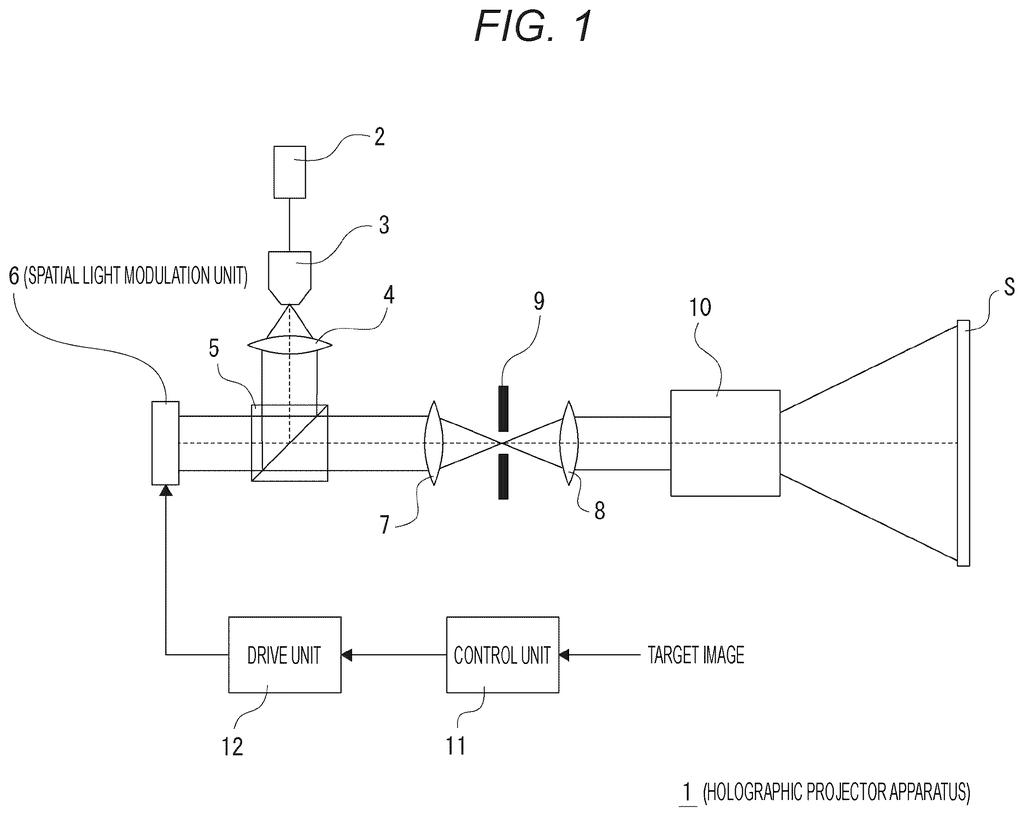
What Sony's blur-canceling projector does
A holographic projector sends laser light through a liquid crystal panel, a pair of lenses and a filter before a picture lands on the wall. Every one of those parts blurs the image a little. If you have ever squinted at a cheap projector, you know how that ends.
The obvious fix is a pricier panel with more pixels, and the filing says that drives up cost. This patent application takes another route: the projector works out ahead of time how much blur its own parts will add, then pre-corrects the image so the blur cancels out. The correction is done in software, so the hardware can be cheaper.
It also shows four slightly shifted copies of each frame in quick succession, each nudged by half a pixel, so your eye blends them into one sharper picture.
… calculates a correction hologram for correcting degradation of the reproduced image on a basis of a target image and degradation element information …
Translation: It figures out how to fix image flaws by comparing the intended picture against known hardware imperfections.
How Sony stacks four half-pixel images
The projector shines laser light onto a spatial light modulator (a liquid crystal chip that bends light pixel by pixel to form a hologram), then sends the result through lenses and a filter that strips out stray light. Each stage costs some sharpness: the filter narrows the image, the panel's pixel edges interfere with their neighbors (called disclination), and the projection lens distorts the picture.
A control unit stores measurements of those losses, taken ahead of time by experiment or simulation. For every frame it runs these steps:
- Calculate the hologram for the target image as if nothing went wrong.
- Apply the stored blur to predict the degraded picture.
- Compare the prediction with the target and build four correction images from the difference.
- Turn each into its own hologram and show them one after another.
The four images are offset by half a pixel, a trick called shift multiplexing (a form of super-resolution, where overlapping shifted pictures add up to more detail than any single one). Because the shift comes from the holograms themselves, no vibrating mount is needed, and the filing says even quarter-pixel shifts are possible.
The filing also describes correcting only the area you are looking at, picked by a camera or by you, plus versions for bumpy screens, color images and other panel types.
… performs control such that the spatial light modulation unit is driven by a spatial light modulation pattern based on the correction hologram calculated …
Translation: It adjusts the projector's main display chip using that custom correction pattern to make the final picture sharper.
Why Sony wants cheaper holographic panels
For you, the payoff would be sharper holographic images from hardware that costs less. The filing says the old routes were a larger or higher-pixel panel, which raises price and size, or an expensive lens that fixes distortion. Moving that work into software could make a projector smaller, lighter and cheaper to build.
The catch is computing. Each frame needs several holograms calculated, which is why the filing suggests correcting only the part of the picture you are looking at. The filing covers flat screens and textured ones, color and 3D images, so it reads as a general cleanup layer for holographic display rather than a fix for one specific device.
Sony's 102nd filing in the Display patents we've tracked since May follows work like one on backlight flashing for 3D and one on motion in camera images.
The trade here is simple: Sony swaps expensive glass and silicon for math. That usually pays off, since computing keeps getting cheaper while precision lenses and big, high-pixel panels stay costly.
The costs show up elsewhere. Each frame needs four extra calculations and four quick flashes, so the projector needs enough processing power and a panel fast enough that your eye blends them without flicker. The correction also depends on blur measurements taken ahead of time, so a part that behaves differently than measured would leave some blur behind.
The filing's option to correct only the part of the picture you are looking at trims that math bill. That makes the trade look worthwhile for a projector aimed at lower prices.
Get our take in your Top Stories
Liked this breakdown? Add Patentlyze as a preferred source on Google, and our plain-English take shows up more often in your Top Stories the next time Sony patent news breaks.
There are more where this came from
We read every patent application Big Tech publishes and send you the ones worth knowing. Plain English, free, every week.
The drawings
14 drawing sheets from US 2026/0349386 A1 · click any drawing to enlarge


Show the other 6 sheets


Want this weekly breakdown for a company we don't cover? Patentlyze Pro →
Be the first to weigh in