
Sony Files Patent for Camera Lenses That Get Ready Faster at Power-On
Switch on a camera with two focus lenses and they can end up taking turns to find their starting spots, because neither knows where the other one is. Sony's patent application describes a way for both to move at once without crashing into each other.
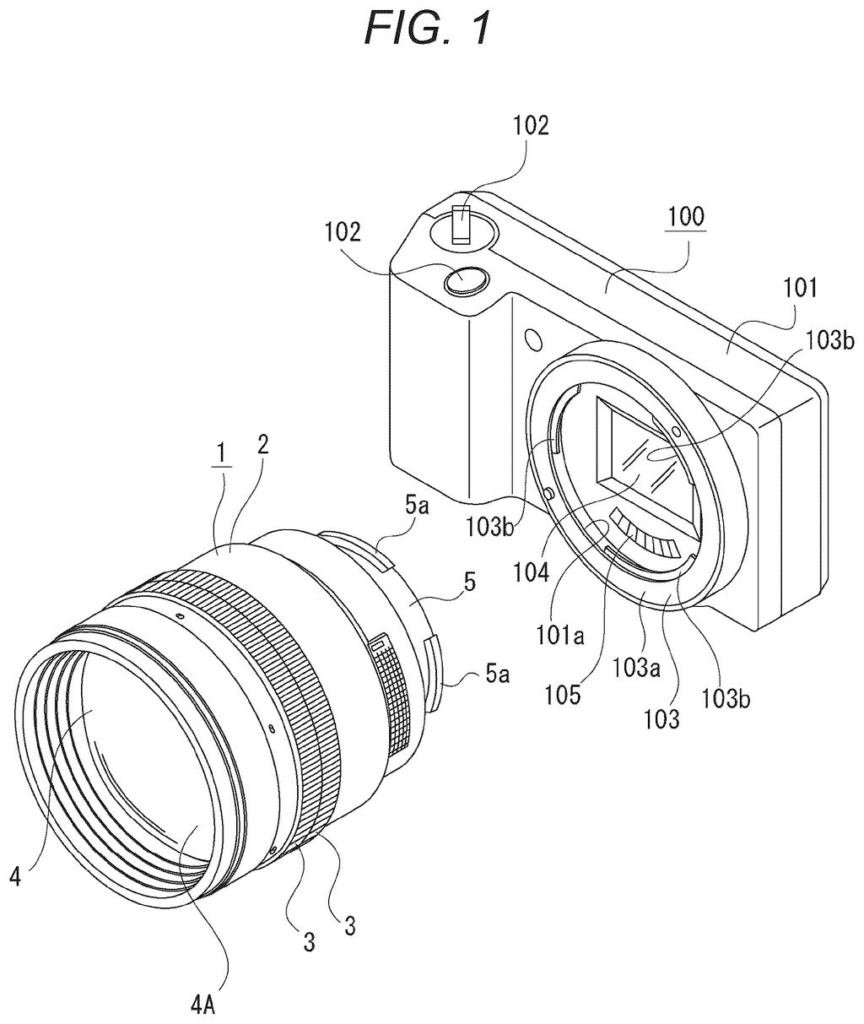
What Sony's two-lens startup shortcut does
Switch on a camera with a high-end autofocus lens and the lens has to get its bearings before you can shoot. Inside, two focus lenses slide along the same magnetic rod, and at power-up the camera doesn't know where either one is sitting. To keep them from bumping into each other, the safe move is to send them to their starting spots one at a time. That waiting adds up.
Sony's patent application describes a shortcut. Each lens carries a simple sensor that tells the camera only whether the lens is in front of or behind a set mark. From those two rough answers, the camera looks up a pair of starting spots in a stored table, chosen so the two lenses can't collide. Then both lenses move at the same time.
The filing's own pitch is short: less time staring at a camera that isn't ready, and a better shot at catching a moment when you switch on in a hurry.
… simultaneously moving the first movable coil and the second movable coil for a certain period of time in the initialization control …
Translation: The lens groups move at the exact same time when starting up.
How the table picks safe starting spots
Each lens group sits in a holding frame attached to a movable coil, a loop of wire wrapped around a shared rod. The rod is built from magnets alternating with iron pieces (called inner yokes, which help steer the magnetic field). Run current through a coil and it slides along the rod, carrying its lens with it. Because one rod serves both coils, their travel ranges overlap.
Before a coil can be steered precisely, the controller has to line up its internal position count (the electrical angle, a number that tracks where the coil sits among the magnets) with where the coil physically is. That is the initialization step. Since the starting positions are unknown, the filing says the obvious safeguard is to do one coil at a time.
Here, a light-beam sensor on each coil gives a High or Low reading, depending on which side of a set mark the coil is on. Two sensors give four combinations. For each one, a table stored in the lens's own memory lists target spots for both coils. In one example, if both coils start toward the front, the first goes to minus 90 degrees and the second to minus 45. If both start toward the rear, the second goes to 90 and the first to 45.
In the dependent versions, targets are picked so a coil lands where the drive signal gives its strongest push (the maximum thrust angle), which makes it move faster.
… determined on the basis of a first pre-control position, which is a position of the first movable coil relative to a fixed rod before execution of the initialization control, and a second pre-control position, which is a position of the second movable coil relative to the fixed rod before execution of the initialization control …
Translation: Their starting spots depend entirely on where they were parked before power on.
Why a faster lens startup helps you shoot
The practical payoff is a shorter wait between flipping the power switch and being able to shoot. The filing points to a photographer who spots a fleeting moment and needs the camera ready now. It gives no time savings, so how much you would notice is unknown. Still, the pitch is simple: a lens that gets ready sooner is one you are less likely to miss a shot with.
There is a design angle too. Two focus lens groups sharing one rod keeps the lens body smaller, but it creates the collision risk this patent addresses. Using a stored lookup table instead of heavy calculation also keeps the processing load and power use low, which matters inside a lens running off the camera's battery.
Sony's 87th filing in the camera patents we've tracked since May adds to a run that includes one on lensless camera tuning and one on a drone mic avoiding the camera.
Claim 1 covers any lens device that uses two coils sliding along a shared magnetic rod, where a controller moves both coils at the same time during startup and picks their landing spots based on where each coil was sitting before startup began. That scope is real but bounded: it protects the startup routine for one specific type of motor, leaving other ways of building autofocus systems entirely untouched.
In practice, the claim would let Sony block rivals who build that same rod-and-coil arrangement and initialize it the same way, which is a meaningful grip on a narrow slice of lens hardware.
The dependent claims add details like lookup tables and rough position sensors, but those are optional refinements. The core protection sits in claim 1, and it is focused enough to matter to lens engineers and broad enough to cover the whole category of devices built around that motor.
Get our take in your Top Stories
Liked this breakdown? Add Patentlyze as a preferred source on Google, and our plain-English take shows up more often in your Top Stories the next time Sony patent news breaks.
There are more where this came from
We read every patent application Big Tech publishes and send you the ones worth knowing. Plain English, free, every week.
The drawings
20 drawing sheets from US 2026/0349216 A1 · click any drawing to enlarge


Show the other 12 sheets


Want this weekly breakdown for a company we don't cover? Patentlyze Pro →
Be the first to weigh in