
Sony Files Patent for a VR Headset That Blows Wind at Your Face
Sony has described a VR headset add-on with small fans that blow wind at the front and sides of your face. In its example game, that breeze is how you find the way out of a cave.
What Sony's headset-mounted wind fans actually do
Ever walked through a stuffy building and felt a cool draft that told you exactly where the exit was? Your skin picks up that kind of clue without any help from your eyes.
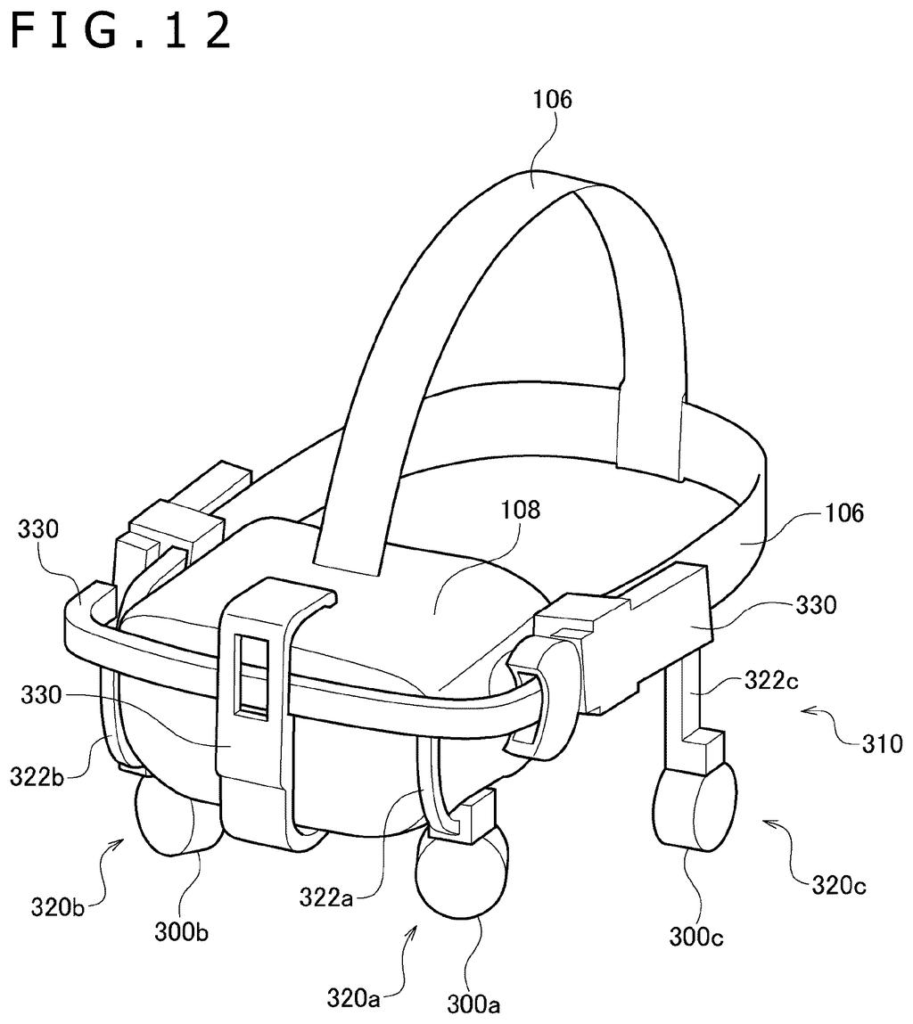
Sony Interactive Entertainment's patent application brings that idea to virtual reality. It describes small fans that attach to a VR headset: one aimed at the front of your face, one at the left side and one at the right. The game controls how fast each fan spins, so the breeze seems to come from a particular direction.
In the example game, you are lost in a cave maze and racing the clock. The wind inside the cave points toward the opening, so you can feel which tunnel to take at each fork before you choose one.
A fan device comprising: a first fan coupled to the fan device at a first position and configured to supply airflow in a first direction; a second fan coupled to the fan device at a second position and configured to supply airflow in a second direction …
Translation: The system uses multiple fans positioned to blow air in different directions.
How the game steers wind with three small fans
The filing covers both the hardware and the software that runs it. The hardware is at least three small fans on a head-worn device such as a VR headset. The middle fan sits between the other two and blows in a direction between theirs, so together they can cover the front, left and right of your face. One fan mounts near the housing over your eyes, and the other two mount on the head strap.
The filing also describes some optional extras:
- Fans that can tilt or slide closer to or farther from your face (closer feels sharper, farther feels softer and wider)
- A fourth fan between the front and side fans, or fans aimed at the back of your head or neck
- Fans that can blow warm air, using a heating element
On the software side, the game tracks where your character stands. Developers set a wind direction at two points in each area, such as the entrance and exit. The game then blends between them (a smooth in-between calculation called interpolation) as your character walks through.
Next, it compares that wind direction with where your character is looking and sets each fan's speed to match. If a fan's result comes out negative, it can spin backward. For example, the left fan can blow forward while the right fan runs in reverse at the same moment, which makes wind from the left feel clear. The game can also vary wind strength, since real caves tend to have faster wind in narrow passages.
The fan device includes fans for supplying wind to a front of a face of the user, a fan for supplying wind to a left side of the face of the user, and a fan for supplying wind to a right side of the face of the user.
Translation: Air is directed at the front, left, and right sides of the user's face.
Why wind could become a game clue you feel
For you, the pitch is simple: VR could stop being something that only reaches your eyes and ears. A breeze that shifts as you turn a corner or step through a doorway adds a physical cue that a screen and speakers can't give you. In the filing's example, it even works as a puzzle hint.
For Sony Interactive Entertainment, it points to a game-maker looking at small, cheap add-ons that make existing headsets feel more real. The fans clip on rather than requiring a new device, and they're driven by the same game software that already controls the character. Whether players want extra gear on their heads is the open question.
Sony's 693rd filing we've tracked since May in our Sony coverage follows work on faster camera lens startup and sharper hologram optics.
The problem here is small but real. VR fills your eyes and ears with a whole world while the rest of your body sits in a living room. A breeze on your face is one of the cheapest ways to close that gap, and a few light fans go straight at it.
The fix is about the same size as the problem. Three small fans and some wind math will not change how most people play, and every extra gram on a headset is something players notice. Whether anyone buys a fan add-on depends on games that make wind matter, like the cave hint in the filing.
Bottom line: a modest idea for a modest gap, and a fun accessory concept. The broad three-fan claim covers the basic layout, so the game ideas are where it will succeed or fail.
Get our take in your Top Stories
Liked this breakdown? Add Patentlyze as a preferred source on Google, and our plain-English take shows up more often in your Top Stories the next time Sony patent news breaks.
There are more where this came from
We read every patent application Big Tech publishes and send you the ones worth knowing. Plain English, free, every week.
The drawings
18 drawing sheets from US 2026/0348399 A1 · click any drawing to enlarge


Show the other 10 sheets


Want this weekly breakdown for a company we don't cover? Patentlyze Pro →
Be the first to weigh in