
Sony Files Patent for Virtual Concert Crowds Where Computer-Controlled Fans Copy Real Ones
What do you do when your virtual concert has too few fans? Sony's answer is to invent some, with computer-controlled spectators that copy the moves of real people so the crowd looks alive.
What Sony's virtual concert crowd actually does
Ever walked into a concert hall that's half empty? The music might be great, but the mood just isn't there. Sony Interactive Entertainment has filed a patent application aimed at that problem for concerts held in virtual worlds.
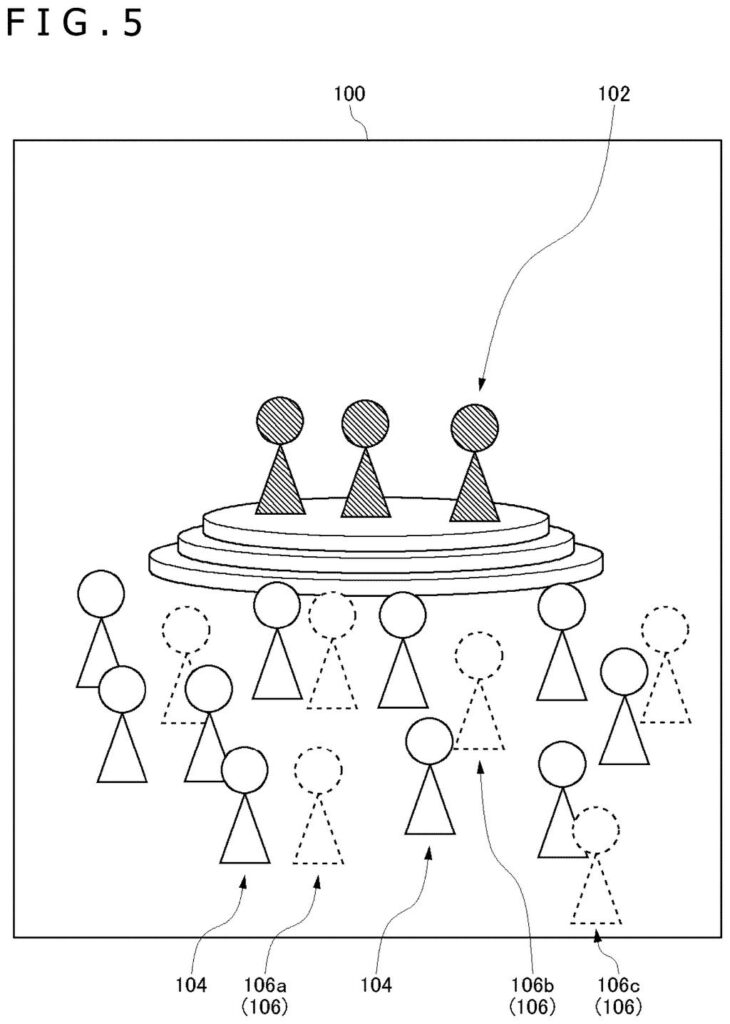
The idea is to fill the audience seats with computer-controlled characters (the filing calls them non-player characters) that look like regular fans and move like them. Some copy the band's avatars, some copy what real attendees are doing, and some simply sway to the beat. Closer to the stage, the crowd gets denser, the way it does at a real show.
The goal, according to Sony, is a lively atmosphere that draws in more people, without the fake fans feeling out of place to the real ones.
a non-player character placement section configured for placing, at a venue for an event in a virtual space, a non-player character as a participant in the event; and a non-player character control section configured for controlling the non-player character to perform movements that mimic movements of a participant in the event corresponding to a person in a real world.
Translation: Sony wants to put computer-controlled digital fans into virtual concert venues that copy the physical actions of real people.
How the crowd copies performers and real fans
The system runs on a metaverse server (the central computer that tracks everything happening in a shared virtual world). When a virtual concert starts, it places users' avatars on stage and in the seats. A separate piece of software then fills extra seats with non-player characters, or NPCs (characters the system controls automatically instead of a person).
Each NPC copies someone real. The server reads skeleton data (a stick-figure map of an avatar's joints) from a performer or audience avatar and replays the same movements, such as raising a hand, clapping, jumping or swaying. In one version, an NPC copies whichever real avatar is within a set distance of it. In another, it copies the most common move among the real people around it.
To keep the crowd from looking like clones, the filing splits NPCs into groups:
- One group mirrors the performers' avatars.
- One mirrors nearby audience avatars.
- One moves to the music, based on an analysis of rhythm and tempo. A slower beat gets side-to-side swaying, a faster one gets up-and-down.
The example ratio is 2:1:1, so the largest share follows the performers.
Placement matters too. The filing describes one NPC per square meter near the stage, one per two square meters in the middle, and one per four square meters farthest back. A second example copies moves from video of a real concert, with software estimating what the performers and fans on screen are doing.
Why empty virtual venues are Sony's problem
If you've ever joined a virtual concert and found yourself in a half-empty arena, this is the problem Sony is trying to fix. A crowd that cheers, sways and raises its hands makes an event feel worth attending, and the filing argues that a lively room draws more people, which makes it livelier still.
The stated goal is also believability. Because the fake fans copy real ones, the seat next to you shouldn't stand out as a bot, which helps keep you immersed. The filing centers on a concert with a headset and game-console-style setup, but says the same idea could apply to other events in virtual worlds. It is a patent application, so it says nothing about a product on the way.
Sony's 617th filing in our Sony coverage since May adds to a run that includes game streaming focus tricks and drone obstacle sensing.
Claim 1 is short and wide. It covers any computer-controlled character placed at an event venue in a virtual space that moves the way a real participant in the event moves. Concerts show up only in the description, so a sports match or a conference in a virtual world would fit the same wording.
The narrower ideas sit in the dependent claims: copying avatars within a set distance, giving different groups different movement patterns, packing more characters near the stage, and copying whatever most people are doing. If granted as written, claim 1 would reach any virtual event that seats a bot audience mirroring someone real, with no ratio or distance rule required.
Broad claims like this often get narrowed during review, so the final version may look closer to the dependent claims. The core idea is simple, and the claim language is where its reach gets decided.
Get our take in your Top Stories
Liked this breakdown? Add Patentlyze as a preferred source on Google, and our plain-English take shows up more often in your Top Stories the next time Sony patent news breaks.
There are more where this came from
We read every patent application Big Tech publishes and send you the ones worth knowing. Plain English, free, every week.
The drawings
6 drawing sheets from US 2026/0315927 A1 · click any drawing to enlarge


Want this weekly breakdown for a company we don't cover? Patentlyze Pro →
Be the first to weigh in