
Apple Files Patent for a Headset Forehead Pad That Slides to Fit Your Face
Apple's headset filing goes after a plain problem: heads come in different shapes, so one fixed forehead pad can't put the screen the right distance from everyone's eyes. Its answer is a pad that slides in and out.
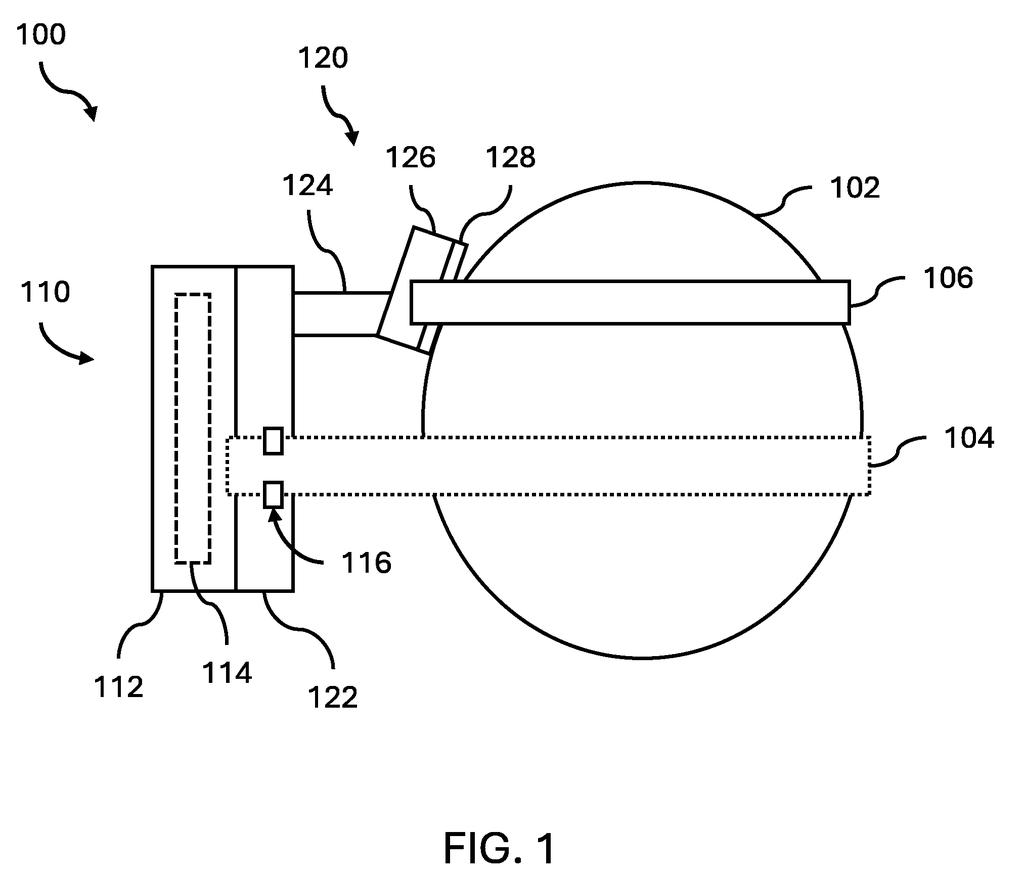
What Apple's adjustable forehead pad does
Ever borrowed a friend's ski goggles and found they sat too far from your face, or pressed too close? Headsets have the same problem, and it matters more because the screen has to sit at just the right spot in front of your eyes.
Apple's filing describes a forehead pad that slides in and out. The distance between your eyes and your forehead differs from person to person, so moving the pad moves the whole headset a little closer to or farther from your face. The filing gives about 10 millimeters as one example, within a range of 5 to 30.
You would change it with a simple control, such as a dial, a thumbscrew or a button, and a lock keeps it where you set it. The filing says this could make a headset more comfortable, easier to wear for longer, and easy to share between people with different face shapes.
… an adjustable forehead pad system, comprising: a forehead pad frame coupled to the display frame; an extension member coupled to the forehead pad frame; and a forehead pad support coupled to the extension member; …
Translation: The headset uses a sliding pad setup connected to the frame to rest comfortably against the user's head.
How the sliding pad and its dial work
The filing covers a headset with an adjustable forehead pad system. A pad frame attaches to the headset's main frame. An extension member (the part that slides in and out) links it to a forehead pad support (the piece that rests on your forehead). Moving the extension changes how far the pad sits from the frame, which changes how far the lenses sit from your eyes.
The three independent claims take three angles:
- Claim 1: the basic setup, including an optical module (the lens assembly that sends light from the displays to your eyes) and a securement arm (the arm that holds the headset on your head).
- Claim 10: the arm attaches to the extension member, so it moves with the pad. The description says this keeps the arm snug during adjustment.
- Claim 16: a bistable link (a linkage that rests firmly in two positions, like a light switch) moves the pad between retracted and extended.
Later claims add ways to drive it: paired rack and pinion gears (a toothed bar and small wheel that turn spinning into straight movement) linked by a timing mechanism so both sides move evenly, or a dial that turns a lead screw (a threaded rod) through a gearbox. A lock can hold the setting.
… the adjustable forehead pad system can be configured to modify a distance between the forehead pad support and the forehead pad frame.
Translation: The pad moves back and forth so people with different facial shapes can get a proper fit.
Why headset fit decides how long you wear it
If you have ever worn a headset that felt a little off, you know fit decides everything. Heads vary in size and shape, and so does the depth between your eyes and your forehead. A pad that slides lets you set the screen distance yourself, and the filing says a good setting can ease eye strain and let you wear the headset longer. It also notes that farsighted people may need prescription lenses to see close objects clearly, which makes depth harder to get right.
The filing adds that adjustment makes a headset easy to share, since each person can set their own depth. Optional features include an app or the headset itself suggesting a pad position, or even adjusting automatically and remembering you. None of that appears in the claims, so treat it as extras the filing mentions.
Apple filed its 126th application we've tracked in our AR glasses watch since May, building on work like lag-free head-turn images and self-sliding lenses.
Claim 1 is wide. It asks for a headset frame, a lens module, a head arm, and a forehead pad system whose pad can move closer to or farther from its frame. It says nothing about how the pad moves, how far, or how it locks, so a dial, a lever, a spring-loaded slide or a motor would all fit the wording.
The later claims fill in detail. Claim 10 ties the head arm to the sliding part, and claim 16 swaps in a snap-action linkage with two resting positions. If granted, the broadest claim language would reach any headset built from those parts with a pad that changes its distance, however the adjusting is done.
The idea is a modest one, a sliding forehead rest, and the self-adjusting and face-sensing features from the description appear in no claim. Whether it matters comes down to comfort: a headset that fits more faces is a headset more people can wear.
Get our take in your Top Stories
Liked this breakdown? Add Patentlyze as a preferred source on Google, and our plain-English take shows up more often in your Top Stories the next time Apple patent news breaks.
There are more where this came from
We read every patent application Big Tech publishes and send you the ones worth knowing. Plain English, free, every week.
The drawings
7 drawing sheets from US 2026/0344816 A1 · click any drawing to enlarge


Want this weekly breakdown for a company we don't cover? Patentlyze Pro →
Be the first to weigh in