
IBM
IBM · AR / VR · Filed May 8, 2025 · USPTO published Nov 12, 2026 · This week's release
IBM Patents a VR Headset That Shows Your Real Room When Danger Nears
IBM has filed a patent application for a VR meeting system that watches your real room, and when something risky is heading your way, it fades the real world back into view.
- Publication number
- US 2026/0360088 A1(US20260360088A1)
- Applicant
- INTERNATIONAL BUSINESS MACHINES CORPORATION
- Filed · Published
- May 8, 2025 · Nov 12, 2026
- Inventors
- MARTIN G. KEEN, SARBAJIT KUMAR RAKSHIT, CAROLINA GARCIA DELGADO, TUSHAR AGRAWAL
- Status when we published
- Examiner raised objections; the company can respond
- Document
- 20 claims
- US classification
- 345/633
- Examiner
- HAKALA, ALAN GREGORY (Art Unit 2617)
What IBM's VR safety-fade patent actually does
A coworker joins a virtual team meeting from her kitchen, headset on, fully absorbed. She has no idea something is moving toward her. That blind spot is the problem IBM is going after in this patent application.
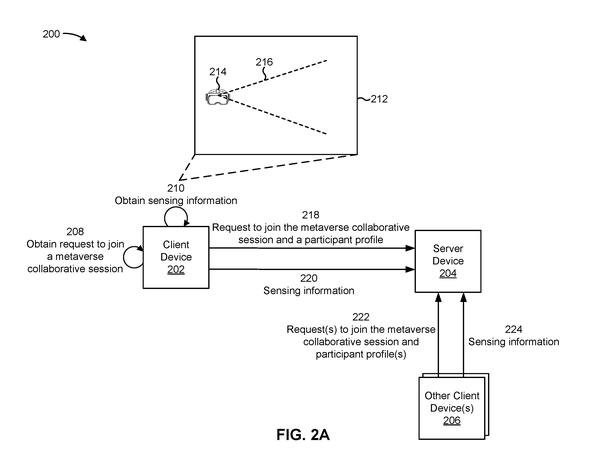
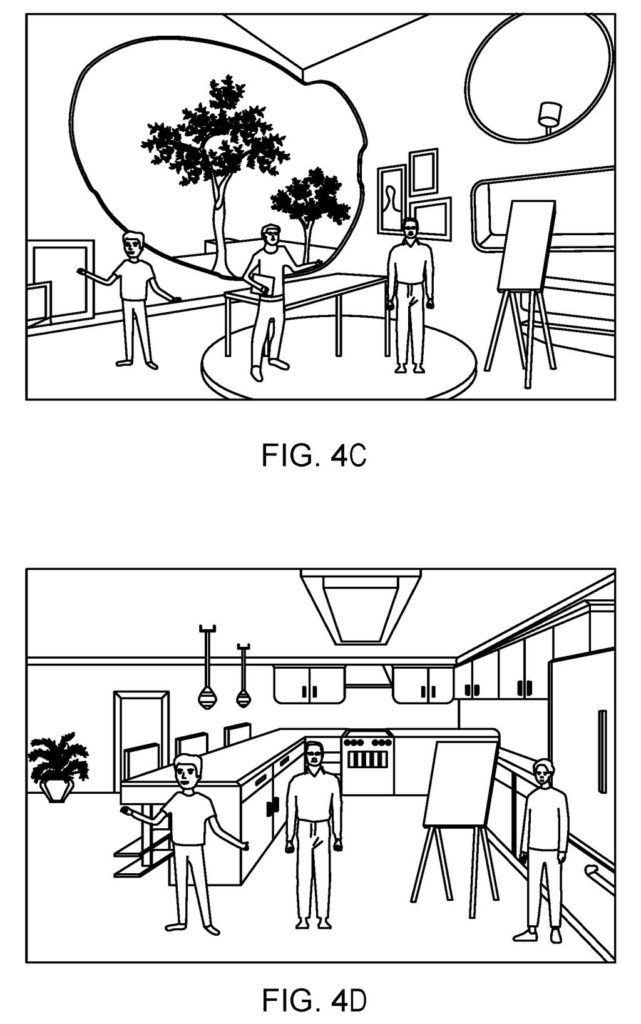
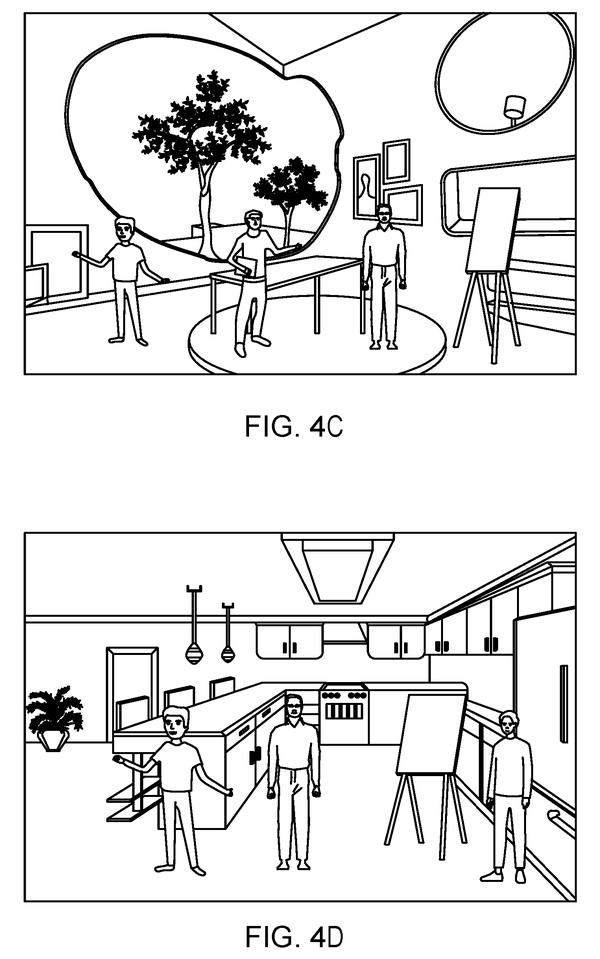
The idea: cameras and sensors in each person's real room watch for hazards, and software predicts where people and objects are heading. If your room looks calm, you get the fully virtual meeting. If something risky is coming, your headset blends in a live view of your real surroundings, with the meeting's avatars and presentation boards laid on top.
Everyone else can stay fully immersed. The system also combines each person's room layout to design a shared virtual space that avoids pushing anyone toward their own real-world danger zones. The filing also describes alerts and a quick-exit option for emergencies.
… determining a level of virtual immersion for each of the plurality of participants based on activities of each of the plurality participants in the metaverse environment, the received physical data and safety threshold data associated with the physical environment for each of the plurality of participants; …
Translation: The system figures out how deeply immersed you should be based on safety rules and what is happening around you.
How the system predicts trouble, then fades in your room
The claims cover a method, a computer system and a software product that all do the same job. The system collects physical data about each participant's room from cameras and IoT sensors (small connected sensors such as motion detectors, proximity sensors and thermometers). It then picks a level of virtual immersion for each person based on what they are doing in the meeting, what the sensors report, and safety threshold data (preset limits for what counts as risky, which the filing says can come from local safety standards or from AI analysis).
Next, it predicts how objects in each room, including the participant, will move. The filing describes a digital twin (a virtual copy of the real room) that runs simulations of movement to spot where an accident could happen. Live camera feeds keep those predictions current.
While the meeting runs, the filing describes the system doing the following:
- Giving each room a risk level from 0 to 4, with level 0 getting a fully virtual environment.
- At the highest risk level, showing nearly all live camera feed with just a few meeting objects overlaid.
- At lower risk levels, showing less live feed and more computer-generated objects.
Dependent claims add a shared-space step. The system maps the risky zones in every participant's room, combines them, and builds the meeting space so that no one is steered into a hazard.
… predicts movement of at least one object in the physical environment of one of the participants based the safety threshold data and based on mobility data associated with the object.
Translation: The software anticipates when a real world object is about to move close to you.
What this means for VR meetings at work and home
If you've ever bumped into a coffee table while wearing a headset, you know the problem. Work meetings in VR make it worse, since people join from kitchens, home offices and factory floors, where the real room can hold moving equipment or people. This filing describes a headset that responds to those risks on its own, so you keep your meeting but see enough of the real world to stay safe.
The examiner's first review rejected the claims as filed, which is routine at this stage and usually followed by amendments. Even so, the filing treats VR at work as a safety question for employers, and it names manufacturing plants as one example of where the stakes are highest.
IBM's eighth filing we've tracked in the AR glasses race since July builds on earlier applications like the social-history virtual world and the room-aware meetings patent.
Source: US 2026/0360088 A1 at the USPTO (PDF). Full patent text and figures are in the official publication.
Get our take in your Top Stories
Liked this breakdown? Add Patentlyze as a preferred source on Google, and our plain-English take shows up more often in your Top Stories the next time IBM patent news breaks.
Add Patentlyze on Google
One click.
There are more where this came from
We read every patent application Big Tech publishes and send you the ones worth knowing. Plain English, free, every week.
The drawings · 7 sheets
7 drawing sheets from US 2026/0360088 A1 · click any drawing to enlarge


More from IBM
All 470 IBM patents →
More in AR / VR
All 690 AR / VR patents →
Meta
Meta's New Patent Teaches Smart Glasses to Spot Danger Before You Do
Samsung
Samsung Files Patent for Faster Tracking of Real Objects in AR Apps
Samsung
Samsung Files Patent for a Headset That Fades Real Objects Into Your VR World
Samsung
No comments yet