
Qualcomm Patents an AI Training Trick That Hides Parts of Photos While Adding Static
Qualcomm wants its image AI to learn from pictures that are both fuzzy and full of holes, so that when you ask for an edit, it understands what surrounds the part you're changing.
What Qualcomm's blur-and-blank training does
Ask an AI image editor to change the color of a car, and today's models can struggle to leave everything else alone. Edits can look pasted on, or the model may change parts of the picture you never mentioned. Qualcomm's filing says part of the blame lies in how these models are trained.
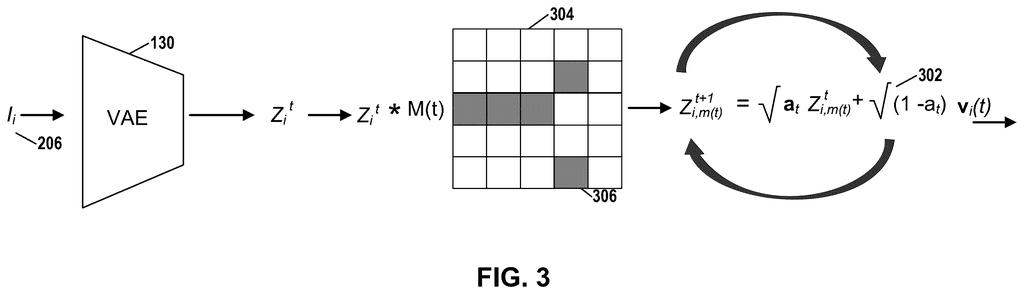
Here's the fix it describes. Training starts with a clean photo. The system adds static to it, like turning up the fuzz on an old TV, then blacks out random patches. It repeats both steps over many rounds until the picture is badly damaged, and the AI's job is to rebuild the original.
Doing both kinds of repair at once forces the model to learn how the parts of a scene fit together. If a patch is missing, it has to guess from what's around it, such as the shape of the car and its surroundings. That is the skill you'd want when you type "make the car red."
apply noise, in a first step, to a first state of an image to generate a second state of the image, wherein the first state of the image comprises a clean state and the second state comprises a noisy state …
Translation: The system starts by adding static to a clean picture.
How the model learns to rebuild a damaged photo
The claims describe a training recipe for an image-generating AI, not an editing app itself. Training starts with a clean image. In the first step, the system adds Gaussian noise (random static, like TV fuzz), and the amount of static grows over time as the process repeats.
In the second step, it makes a random jump to a masked state: chosen regions of the already fuzzy image are blanked out. Randomness decides where the blanks go and how big they are. One described version goes pixel by pixel, deciding whether to mask each one or keep its value. The two steps repeat at different points in time until the image reaches a final corrupted state.
Then the model is trained to turn that wrecked image back into the original. The claims name a denoising score matching objective (a training goal where the model learns which way to nudge each pixel to make the image less noisy) and an iterative process, meaning it cleans up in many small steps.
The filing also describes some extras:
- Shrinking the image first with a variational autoencoder (a tool that squeezes a picture into a compact code) to save computing.
- Applying the same training to video frames.
- A device that edits an image from a text prompt using the trained model.
Why this could matter for editing on your phone
If this works as described, the payoff lands in the edits you ask for. A command like "change the color of the car" needs a model that understands what is around the car, and the filing says today's models can make edits look unnatural or change more than you asked. Training on fuzzy and missing pieces together is Qualcomm's answer.
The description also leans on the idea of one general-purpose model instead of many specialized ones, which matters on phones and other devices short on storage and memory. It lists uses like extended reality, 3D editing, and making synthetic traffic scenes for driver assistance. The text reports no test results, so how much better the edits get is untested on the page.
Qualcomm's 17th filing we've tracked in our AI photo editing race since July builds on earlier applications like shrinking AI to run on-device and training AI to erase objects.
As ship paths go, this one is short on hardware and long on lab work. It is a change to how a model is trained, so no new chip, sensor, or camera is needed. A company with an image model and a big photo collection could swap in this recipe and retrain.
What has to exist first is the expensive part: the model, the data, and the computing time to train it. The filing includes no results, so nobody outside Qualcomm can say yet whether edits come out cleaner. The quickest route to a product is a research test against a standard training method, followed by a photo editing or image generation feature that runs on a phone or in a car.
It is a sensible, modest idea that amounts to about one research paper's worth of change. It could move fast if it tests well, and even then you would only notice it as edits that look less pasted on.
Get our take in your Top Stories
Liked this breakdown? Add Patentlyze as a preferred source on Google, and our plain-English take shows up more often in your Top Stories the next time Qualcomm patent news breaks.
There are more where this came from
We read every patent application Big Tech publishes and send you the ones worth knowing. Plain English, free, every week.
The drawings
4 drawing sheets from US 2026/0360127 A1 · click any drawing to enlarge


Want this weekly breakdown for a company we don't cover? Patentlyze Pro →
Be the first to weigh in