
Qualcomm Patents a Method to Speed Up Image Data Processing for AI Training
Every time an AI model trains on images, those images have to be packed and unpacked at enormous speed. Qualcomm's new patent describes a compression method designed to do that unpacking in parallel, keeping expensive processors fed instead of waiting.
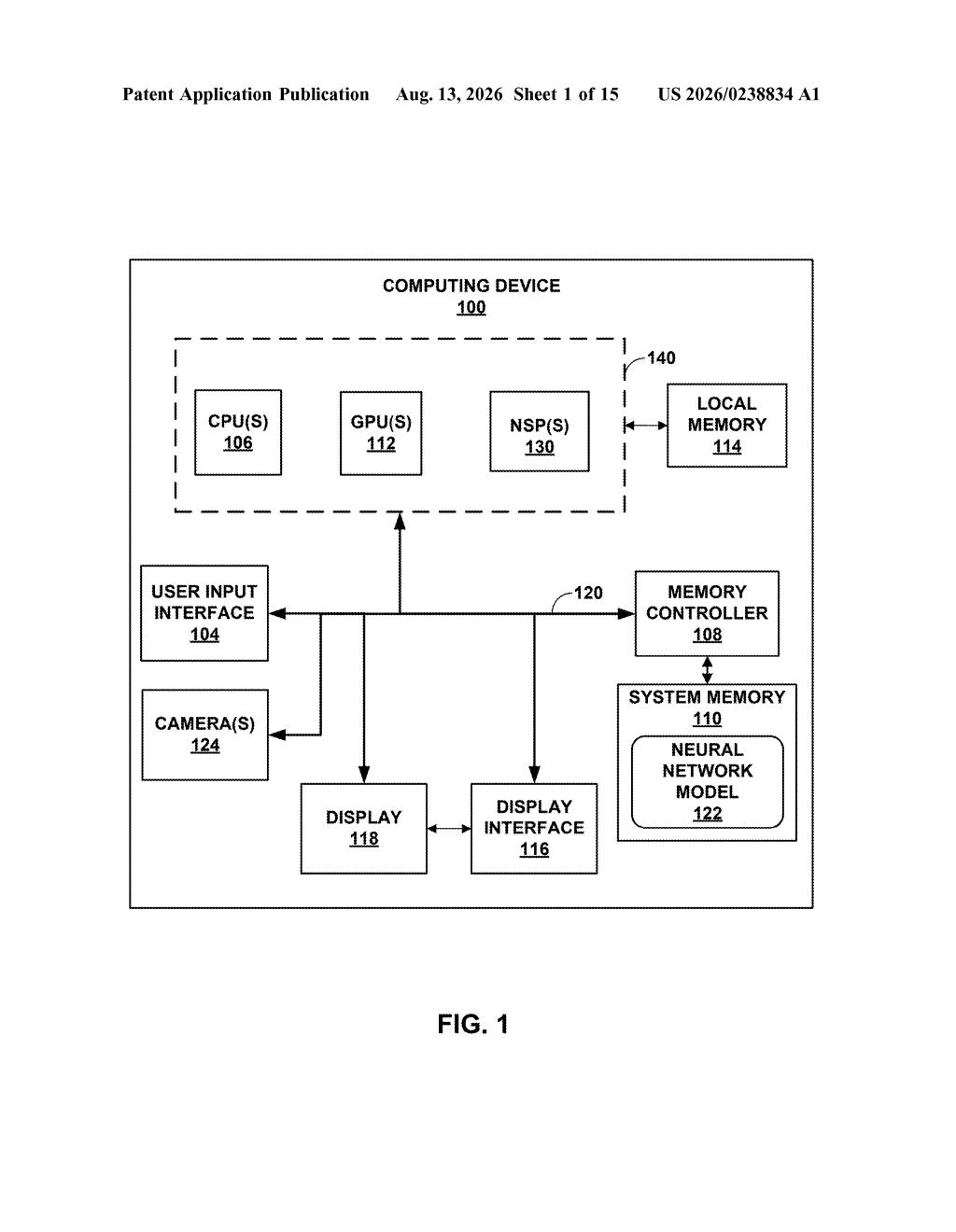
What Qualcomm's parallel image compression actually does
You're training an AI model on millions of images, and the bottleneck isn't the chips doing the math, it's the pipeline feeding them. Images have to be compressed so they don't eat all the memory, then decompressed just before the AI looks at them, and doing that one chunk at a time is slow.
Qualcomm's patent tackles this by processing many image chunks simultaneously instead of one after another. It uses a data structure called a range tree to decode compressed image data in large, parallel batches, which matches how modern chips (including Qualcomm's own) are designed to work.
The practical effect: AI training pipelines spend less time waiting on data delivery and more time actually learning. For companies running large training jobs, that kind of efficiency improvement adds up quickly across billions of image passes.
… entropy decode, using parallel vector operations, the encoded vectors using vector-range tree coding (V-RTC) to generate decoded data; and reconstruct the decoded data into image blocks.
Translation: It decodes compressed image data simultaneously using a special method to prepare it for use.
How vector-range tree coding handles image blocks in parallel
The patent describes a decompression system built around a technique called Vector Range-Tree Coding (V-RTC). A range tree is a data structure (think of it as a lookup table organized like a family tree) that lets a processor quickly figure out what symbol or value an encoded bit sequence represents. V-RTC applies that tree lookup to whole vectors of data at once rather than one value at a time.
The pipeline the patent describes works in three main steps:
- Retrieve: Pull multiple encoded image blocks from memory simultaneously.
- Entropy decode: Run parallel vector operations through the range-tree structure to turn compressed bit sequences back into usable numbers. Entropy coding is a standard compression technique that assigns shorter codes to more common values.
- Reconstruct: Reassemble the decoded numbers into full image blocks ready for the neural network.
One specific detail the patent highlights is converting signed integers (numbers that can be positive or negative) into unsigned integers (positive only) before decoding. This simplification lets the range-tree operations run more efficiently on parallel hardware, since unsigned arithmetic is cheaper for processors to handle in bulk.
The target application is high-throughput image processing, meaning scenarios where a system needs to decompress thousands or millions of images as fast as possible, which is exactly the pattern of large-scale neural network training.
… convert signed integers to unsigned integers, decodes the unsigned integers using a range-tree structure, and reconstructs image blocks.
Translation: It converts numbers to a format that can be processed quickly in order to rebuild the images.
What this means for AI chips and training speed
For anyone using a device powered by Qualcomm chips to run on-device AI, the quality of that AI depends partly on how efficiently it was trained. Faster, cheaper training means companies can run more experiments, refine models further, or train on larger datasets without proportionally larger compute bills. The bottleneck this patent targets is real: data-loading and decompression are well-documented chokepoints in GPU and NPU training pipelines.
Qualcomm's angle here is particularly interesting because the company wants its chips to handle AI workloads not just in data centers but in phones and edge devices. A compression method that works efficiently on parallel hardware fits that roadmap. This filing sits alongside other chip-level AI efficiency patents among the interesting tech patents that show how semiconductor companies are optimizing the layers beneath the model itself.
If you use any AI-powered feature on a Qualcomm-powered phone or laptop, you probably care about this patent without knowing it. The decompression step it addresses is one of the unsexy reasons why training an AI model takes as long as it does, and shaving time there means better models ship sooner. The technique is incremental rather than dramatic, but incremental wins at the data-pipeline level compound across millions of training iterations, so the practical payoff for end users is models that arrive faster and with more refinement baked in.
There are more where this came from
We read every patent application Big Tech publishes and send you the ones worth knowing. Plain English, free, every week.
The drawings
15 drawing sheets from US 2026/0238834 A1 · click any drawing to enlarge


Want this weekly breakdown for a company we don't cover? Patentlyze Pro →
Be the first to weigh in