
Salesforce Patents an Automated Pipeline for Tuning Large Language Models
Running a large language model in production is expensive — every millisecond of inference latency and every wasted GPU cycle adds up fast. Salesforce is patenting a system that automatically searches for the best combination of optimization tricks to make a pre-existing LLM leaner, without touching the training process.
What Salesforce's LLM auto-optimizer actually does
Imagine you have a powerful but sluggish AI model and you need it to respond faster and cost less to run — but retraining it from scratch is off the table. That's the problem Salesforce's patent is designed to solve.
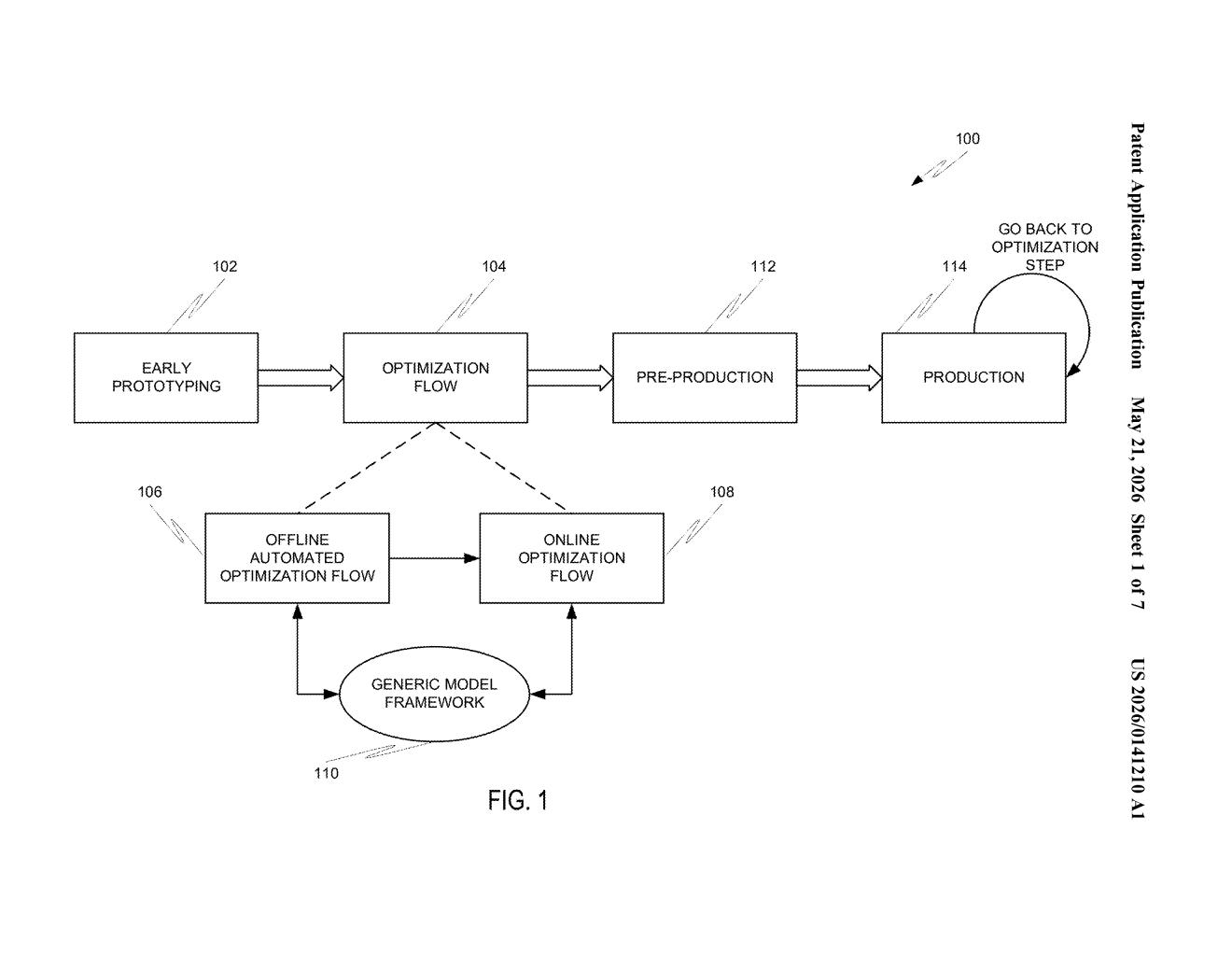
The system works in two phases. First, an offline program takes a library of optimization techniques — things like quantization, pruning, or batching strategies — and generates many different combinations of settings to try. Think of it like a recipe book of tuning options that gets handed off to the next stage.
Then a fully automated online program takes those candidate configurations and tests them against the actual model running in a real environment, ultimately picking the best setup and deploying it to production. The goal is to squeeze better performance out of models you already have, rather than building new ones.
How the offline-to-online optimization handoff works
The patent describes a two-stage optimization architecture for large language models (LLMs) — the big AI systems like those powering chatbots and code assistants — focused on inference optimization (making the model respond faster and cheaper at runtime, not during training).
The first stage is an offline optimization program built around a generic model framework — essentially a plug-in architecture that can accept different types of optimization techniques and combine them. By generating many combinations of LLM serving configurations (settings that control how the model is loaded, quantized, batched, and served), the offline stage builds a search space of candidate setups.
The second stage is a fully automated online optimization program that receives those candidate configurations and evaluates them against a live or near-live model environment. It selects the best-performing configuration and deploys the optimized model to a production environment.
Key characteristics of the claimed approach:
- Works on pre-existing LLMs — no retraining required
- Modular framework supports swapping in new optimization techniques
- End-to-end automation from configuration generation to deployment
- Separates offline search (exploratory) from online validation (confirmatory)
What this means for enterprise AI deployment costs
For any company running LLMs at scale — and Salesforce's Einstein AI platform qualifies — inference costs are a real operational burden. A system that automatically finds the optimal serving configuration for each model could meaningfully cut GPU time and latency without requiring ML engineers to manually tune every deployment. That's a labor and cost win that compounds across a large model portfolio.
The broader implication is about operationalizing AI: as enterprises deploy more models, the bottleneck shifts from training to serving. Salesforce filing in this space signals that it's building infrastructure to manage that shift at enterprise scale — and wants to own the tooling that sits between a trained model and a live customer-facing product.
This is solid infrastructure work, not a flashy AI capability patent. The two-stage offline/online optimization loop is a well-understood pattern in ML systems engineering, so the novelty here likely lives in the specific implementation details that didn't make it into the abstract. For Salesforce, this matters because it's the kind of boring-but-critical plumbing that determines whether Einstein AI can scale profitably — and that's worth paying attention to even if it won't make headlines.
Get our take in your Top Stories
Liked this breakdown? Add Patentlyze as a preferred source on Google, and our plain-English take shows up more often in your Top Stories the next time Salesforce patent news breaks.
There are more where this came from
We read every patent application Big Tech publishes and send you the ones worth knowing. Plain English, free, every week.
Want this weekly breakdown for a company we don't cover? Patentlyze Pro →