
Google Patents a Pre-Assembly Calibration System for Modular AR Displays
Building AR glasses is basically a precision nightmare — tiny misalignments between cameras, displays, and sensors ruin the illusion entirely. Google's new patent tries to solve that problem before the device is even assembled.
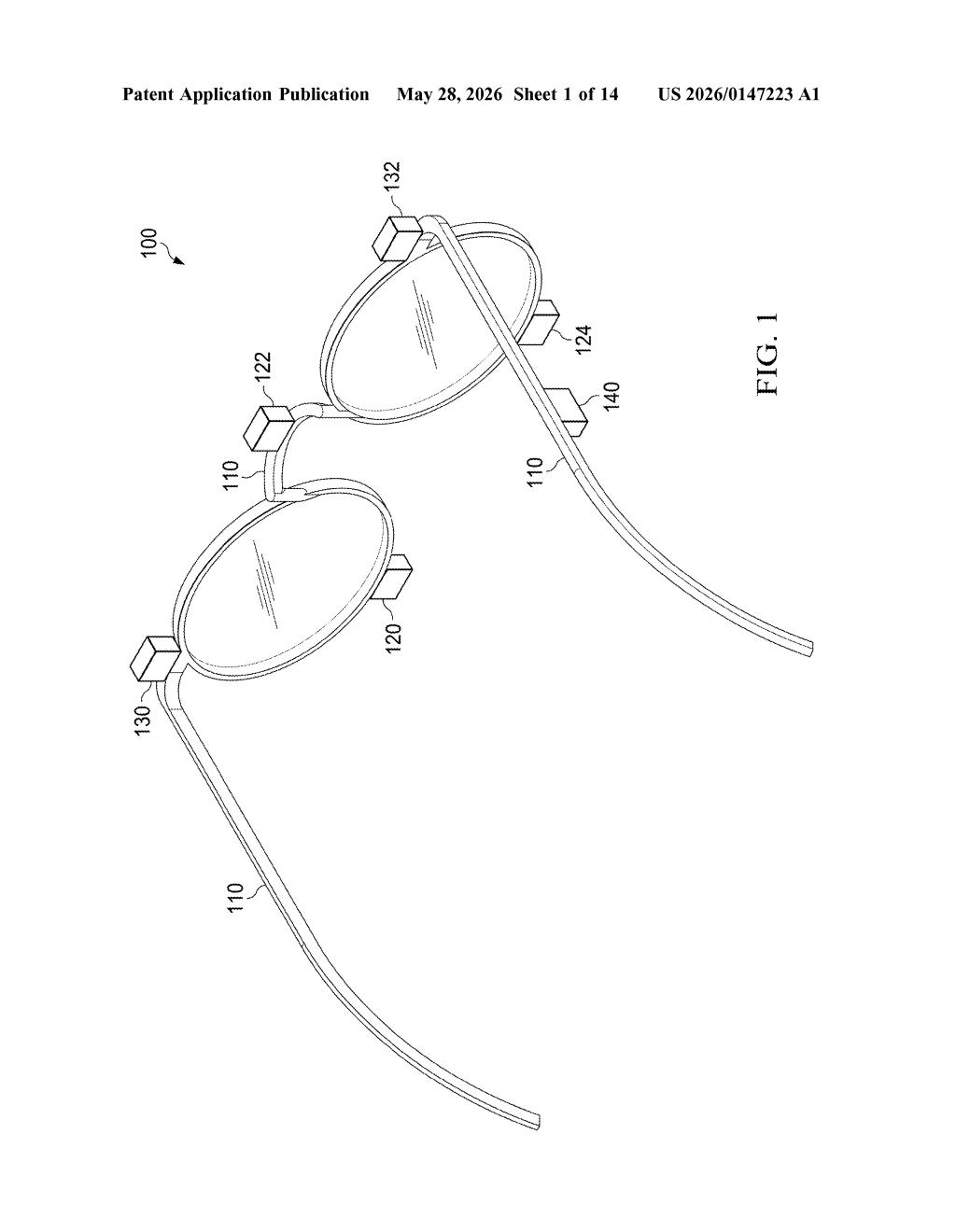
What Google's pre-assembly AR calibration actually does
Imagine trying to hang three picture frames on a wall so they line up perfectly — but you can only measure them after they're nailed in place, and the wall itself bends slightly depending on temperature and pressure. That's roughly the challenge of building AR glasses, where cameras, displays, and motion sensors all need to be in precise spatial agreement or the virtual overlay looks wrong.
Google's patent describes a smarter way to handle this: calibrate every component individually before assembly, and factor in how the physical frame holding them together is expected to bend or flex. The system collects sensor data from each part under controlled test conditions, runs it through deformation models to predict how the frame will behave, and outputs a set of calibration parameters that guide the final assembly.
The result is that each unit comes off the line already knowing how its parts relate to each other spatially — no post-assembly guesswork required. For a consumer AR device, that's the difference between an overlay that looks locked to the real world and one that drifts annoyingly off.
How deformation models align cameras, displays, and IMUs
The patent describes a manufacturing-time calibration pipeline for modular AR display systems — think AR glasses with separately manufactured cameras, displays, and inertial measurement units (IMUs) (the motion sensors that track head movement).
The process works in two layers. First, intrinsic parameters — the internal optical and alignment characteristics of each individual component, like lens distortion or sensor offset — are measured independently while the parts are still separate. Second, extrinsic parameters — the spatial relationships between components, like the exact angle and distance from the left camera to the right display — are calibrated using estimated deformation data.
The deformation step is the clever part. The patent uses preconfigured deformation models to predict how the physical support frame will warp or flex once components are mounted. Rather than assuming the frame is a rigid body (it isn't), the system accounts for real-world bending before it happens, adjusting the extrinsic calibration to match the expected final geometry.
All of this runs before assembly, and the calibrated parameters are handed off to the assembly process as output — essentially a personalized alignment recipe for each unit.
What this means for AR glasses manufacturing at scale
For AR to work convincingly, sub-millimeter alignment between optical, display, and sensing components is non-negotiable. Traditionally, calibration happens after assembly, which is slow, expensive, and hard to scale. By shifting that work upstream — and baking in predictions about how frames physically deform — Google is targeting a major bottleneck in making AR hardware manufacturable at consumer volumes.
If you've been watching the AR glasses space, this kind of manufacturing IP is often the unsexy work that actually determines whether a product ships on time and at price. Google's investment in this area suggests it's thinking seriously about production-scale AR hardware, not just prototype demos.
This is squarely a manufacturing and quality-control patent, not a flashy new feature — but it's the kind of foundational work that separates a product that ships from one that stays on a demo stage. The deformation-model angle is genuinely thoughtful: most calibration approaches treat frames as rigid, and they're not. Worth watching as a signal that Google is working through real production engineering problems for AR hardware.
There are more where this came from
We read every patent application Big Tech publishes and send you the ones worth knowing. Plain English, free, every week.
Want this weekly breakdown for a company we don't cover? Patentlyze Pro →