
Meta Patent Reveals AI Glasses and Smartwatch Working Together to Complete Tasks
Meta is patenting a system where your smart glasses watch what you're doing in the real world, and your watch tells you what to do next. It's a two-device AI assistant where neither device works alone.
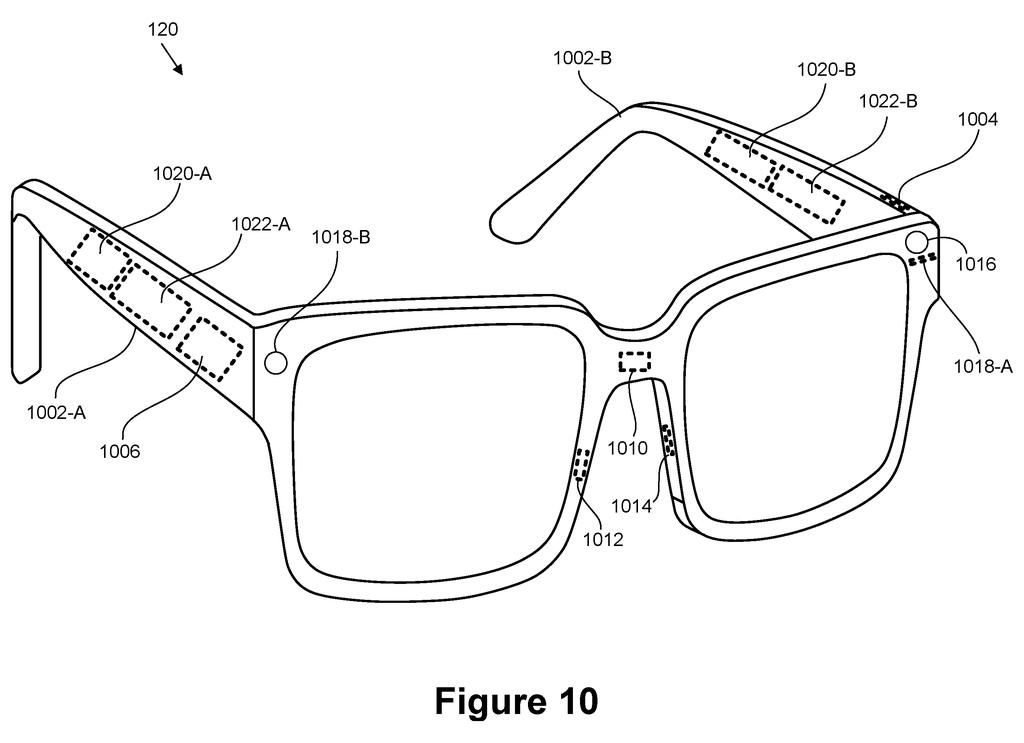
What Meta's glasses-and-watch AI duo actually does
Imagine you ask your glasses to help you cook a new recipe. The glasses have no screen of their own, so instead of projecting anything in front of your eyes, your watch lights up with a step-by-step checklist. As you work through each step, the glasses' camera watches what you're doing. When it figures out you've finished a step, the checklist on your wrist automatically ticks that item off and moves on.
That's the core idea in this Meta patent. Your glasses handle the seeing, and your watch handles the showing. You talk to the system, it picks a task, and then the two devices coordinate without you having to tap anything.
It's a practical workaround for a real constraint. Putting a good screen in a pair of glasses is hard and expensive. But almost everyone wearing smart glasses already has a smartwatch. This patent is Meta's attempt to use what's already on your wrist as the screen your glasses don't have.
How the camera tracks task progress and updates the watch
The patent describes a system built around two devices working in tandem: a display-less head-wearable device (think glasses or a headband with a camera but no screen) and a wrist-wearable device (a smartwatch) that does have a display.
When a user makes a request, the system figures out what task that implies and pushes a relevant interface to the watch screen. At the same time, it activates the glasses camera to observe the user's environment and actions.
- User makes a request (voice or gesture)
- System determines the associated task
- Watch displays a task-specific interface (checklist, guide, prompt, etc.)
- Glasses camera captures image data of what the user is doing
- System analyzes that image data to detect task completion
- Watch interface updates automatically to reflect progress
The key technical move here is using computer vision (the glasses camera analyzing images) as a feedback loop to drive UI updates on the watch. The watch doesn't require manual input from the user; the glasses do the observing and the watch reflects the result.
What this means for Meta's Ray-Ban glasses strategy
Meta sells the Ray-Ban Meta smart glasses, which have cameras and speakers but no display. This patent is a direct architectural response to that limitation: instead of adding a screen to the glasses (which would make them heavier, more expensive, and battery-hungry), Meta is betting that pairing them with a watch creates a usable, hands-free AI experience.
For you as a user, this would mean an AI assistant that genuinely watches what you're doing and keeps up with you, rather than one you have to update manually. The broader implication is that Meta may be designing its wearable AI around a two-device ecosystem, where your glasses and your watch are meant to be sold and used together, each covering for what the other can't do.
This is a genuinely interesting piece of product thinking from Meta. The display-less glasses problem is real, and using a watch screen as the output layer is a more practical solution than trying to cram a projector into a frame. Whether the camera-based task tracking works reliably in messy real-world environments is the hard question this patent doesn't answer.
There are more where this came from
We read every patent application Big Tech publishes and send you the ones worth knowing. Plain English, free, every week.
The drawings
25 drawing sheets from US 2026/0211539 A1 · click any drawing to enlarge


Want this weekly breakdown for a company we don't cover? Patentlyze Pro →
Be the first to weigh in