
Google Patents a Two-Step Head-Gesture Detection System for Wearables
Nod to accept, shake to decline — Google is patenting a reliable way to make that actually work. The trick is using two separate sensors in sequence, so your device doesn't mistake a bump in the road for a 'yes.'
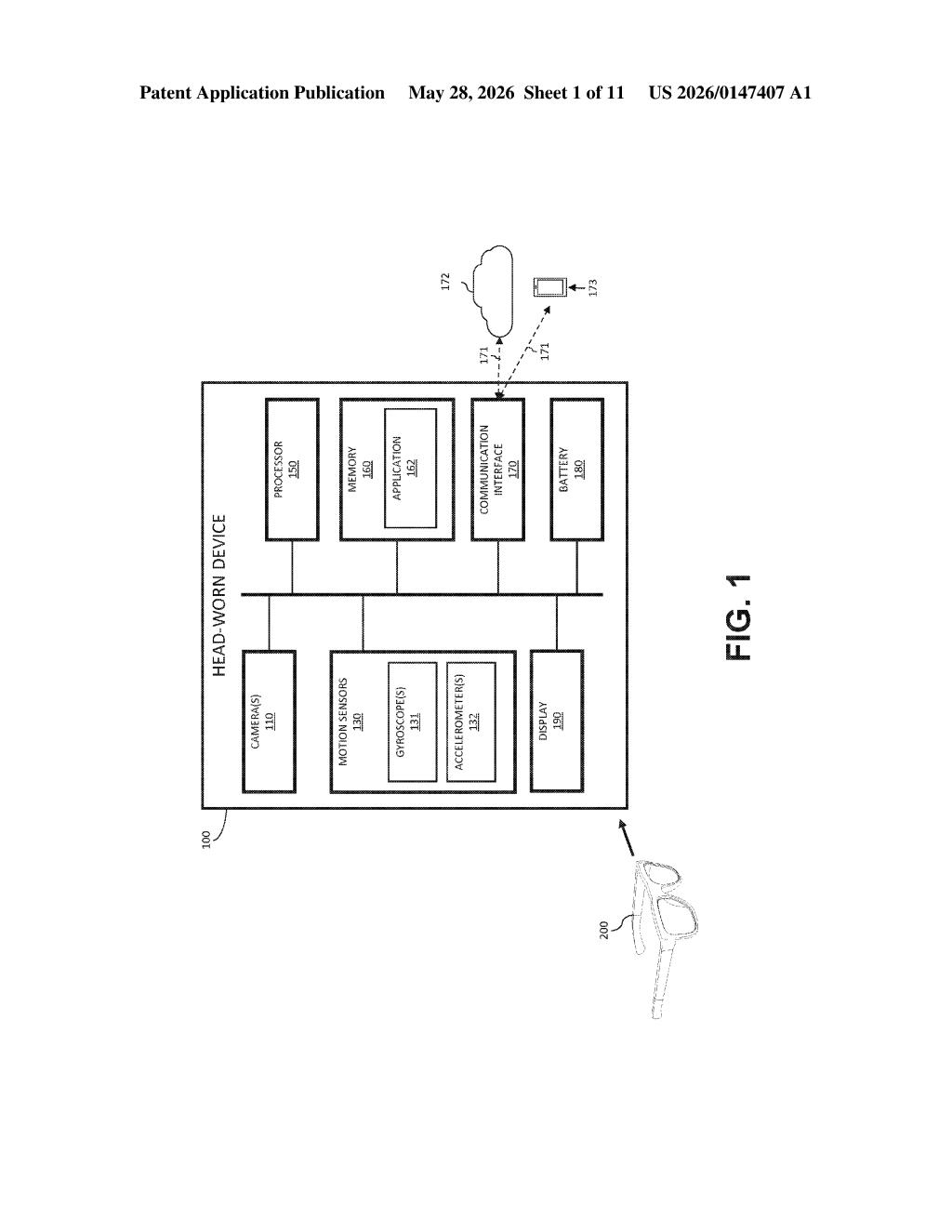
What Google's head-nod recognition system actually does
Imagine you're wearing a pair of smart glasses and want to dismiss a notification without touching anything — just a quick nod of your head. Sounds simple, but in practice it's surprisingly hard to get right. Every little stumble, head-turn, or jostle from a bumpy bus ride looks vaguely like a gesture to a sensor.
Google's patent describes a two-stage approach to fix this. First, the device's gyroscopes (sensors that track rotation) watch for a movement that looks like a deliberate gesture — say, a nod or a shake. Then, before acting on it, the system cross-checks that reading against the accelerometers (sensors that track linear movement) to decide how confident it is that the motion was intentional.
Only once both checks pass does the device respond to your head movement. Think of it like a spell-checker that catches the obvious error, then a second pass that confirms you actually meant to hit send. The result should be fewer false triggers and a more trustworthy hands-free experience.
How gyroscopes and accelerometers verify each head gesture
The patent describes a method triggered by an application-level request — meaning an app on the head-worn device explicitly asks the system to start listening for a head gesture. This on-demand activation window keeps the sensors from running full-time and burning battery.
Once activated, the system runs a two-layer detection pipeline:
- Layer 1 — Detection: Rotation data from a plurality of gyroscopes (multiple gyroscopes, likely oriented on different axes) is analyzed against a first set of criteria to identify whether a head gesture occurred. Gyroscopes measure angular velocity — how fast and in which direction your head is rotating — making them well-suited to spotting a nod or shake.
- Layer 2 — Verification: Acceleration data from a plurality of accelerometers is then analyzed against a second set of criteria to assign a confidence score to the detected gesture. Accelerometers catch linear motion (like the jolt from walking), helping the system rule out incidental movement.
The device then sends a response-reply signal back to the requesting application that bundles both the gesture type and the confidence level, letting the app decide how to act — or whether to act at all. Using multiple sensors on each axis also suggests the system can cross-validate readings from redundant units, improving robustness on a device that moves around constantly with your head.
What this means for Google's glasses and AR wearables
Hands-free input is the core value proposition of any head-worn device, from smart glasses to AR headsets. If gesture detection is flaky — triggering randomly or missing intentional nods — users give up on it fast. A confidence-weighted, two-sensor verification loop directly addresses the reliability problem that has made head-gesture UX feel gimmicky on earlier devices.
For Google, this fits squarely into the roadmap for products like Google Glass successors or any future AR glasses collaboration (the company has been publicly working on Android XR hardware with Samsung). A robust, low-power gesture system that apps can invoke on demand is exactly the kind of foundational input primitive you'd need before building a useful heads-up interface on top of it.
This is unglamorous but genuinely necessary plumbing work. The two-stage detect-then-verify architecture — gyroscopes first, accelerometers for confidence — is a sensible engineering answer to a real usability problem that has tripped up every head-worn device that tried gesture input. It's not flashy, but if Google's glasses ever ship at scale, this kind of patent is the quiet reason they don't embarrass you in public.
There are more where this came from
We read every patent application Big Tech publishes and send you the ones worth knowing. Plain English, free, every week.
Want this weekly breakdown for a company we don't cover? Patentlyze Pro →