
Samsung Patents an Error-Detecting Charging System for Cordless Vacuums
Samsung is patenting a vacuum cleaner that watches its own charging process in real time — comparing voltages at both ends of the charging connection to catch faults before they damage the battery.
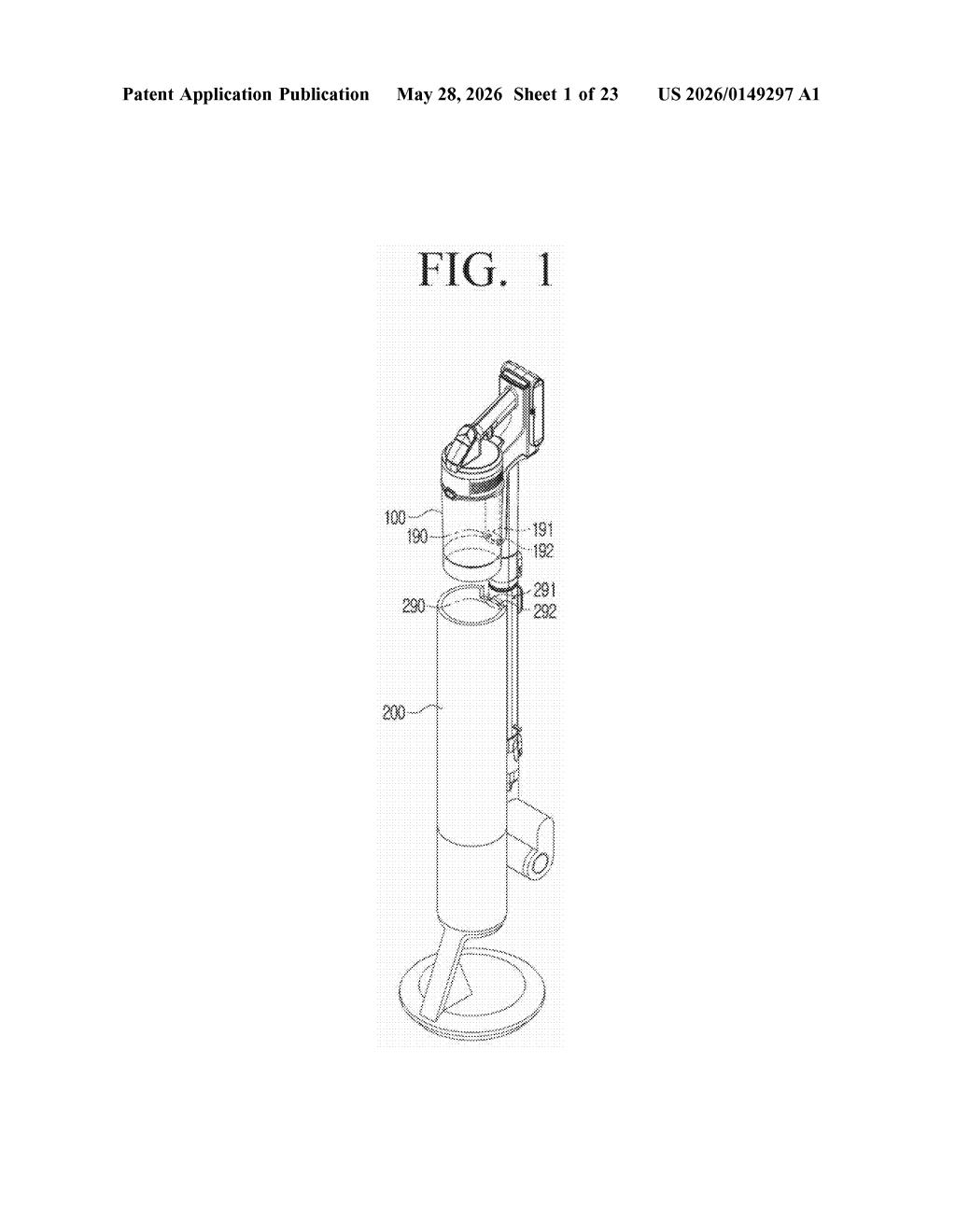
What Samsung's two-mode vacuum charging actually does
Imagine you plug your cordless vacuum into its charging dock, walk away, and come back an hour later to find it still not charged — or worse, the battery is swollen from overcharging. That's the kind of problem Samsung is trying to prevent with this patent.
The idea is that your vacuum actively monitors the voltage at its own charging terminal and at the dock's terminal while charging. If those two numbers don't line up the way they should, the vacuum flags a charging error rather than blindly continuing. No more "why is this thing still dead?"
If everything looks healthy, the vacuum moves through two distinct charging stages: a steady current phase to fill the battery quickly, then a gentler "maintenance" phase once the battery hits a target level. It's similar to how modern phone chargers trickle down their power as you approach 100% — except here, the vacuum is making that call itself based on live voltage readings.
How the vacuum compares terminal voltages to catch faults
The patent describes a two-mode charging control system built into the vacuum's onboard processor. Here's the sequence:
- First mode (constant-current charging): The vacuum supplies a fixed threshold current to its rechargeable battery — essentially a standard bulk-charge phase to fill capacity quickly.
- Voltage cross-check: While in that first mode, the processor reads two voltages: one at the vacuum's own charging terminal and one at the external charging device's terminal. If the gap between those readings is unexpected, the system identifies a charging error (think: poor dock contact, a wiring fault, or a failing charger).
- Error-free path: If no error is detected, the processor then reads the battery's actual voltage. Once that voltage hits or exceeds a preset threshold — think of it as "nearly full" — the system switches to the second mode.
- Second mode (voltage maintenance): In this phase, the vacuum stops pushing current at full strength and instead holds the battery voltage within a tight target range, preventing overcharge stress.
The dual-terminal voltage comparison is the distinguishing piece here. Most consumer battery chargers only monitor the battery side; checking both ends of the charging interface lets the system catch connection-level problems that a battery-only sensor would miss.
What this means for cordless vacuum battery longevity
Cordless vacuum batteries are a well-known pain point — they degrade faster than phone batteries because they're routinely stored on a dock at high charge levels and subjected to heat from the motor. A charging system that actively detects faults and switches to a gentler maintenance mode could meaningfully extend the pack's useful life, which matters a lot when a replacement battery for a premium cordless vacuum often costs $50–$100.
For Samsung's robot and stick vacuum lineup, better battery management is also a reliability story. Fewer "why won't it charge" support calls and longer battery lifespans reduce both warranty costs and customer frustration. This is incremental engineering work, not a fundamental reinvention — but it's the kind of unglamorous firmware detail that separates a durable appliance from a disposable one.
This is solidly useful but unglamorous battery-management work. The dual-terminal voltage check is a genuinely practical idea for catching dock-connection faults that purely battery-side monitoring misses. It's unlikely to be a headline feature on any product page, but it's exactly the kind of detail that shows up in reliability improvements over time.
There are more where this came from
We read every patent application Big Tech publishes and send you the ones worth knowing. Plain English, free, every week.
Want this weekly breakdown for a company we don't cover? Patentlyze Pro →