
Qualcomm Patents a Neural Network That Fuses GPS with Road Maps
GPS is notoriously unreliable in dense urban canyons — satellite signals bounce off buildings, and your phone thinks you're floating in the middle of a block. Qualcomm's new patent tries to fix that by feeding both raw satellite measurements and road map data into a neural network to figure out where you actually are.
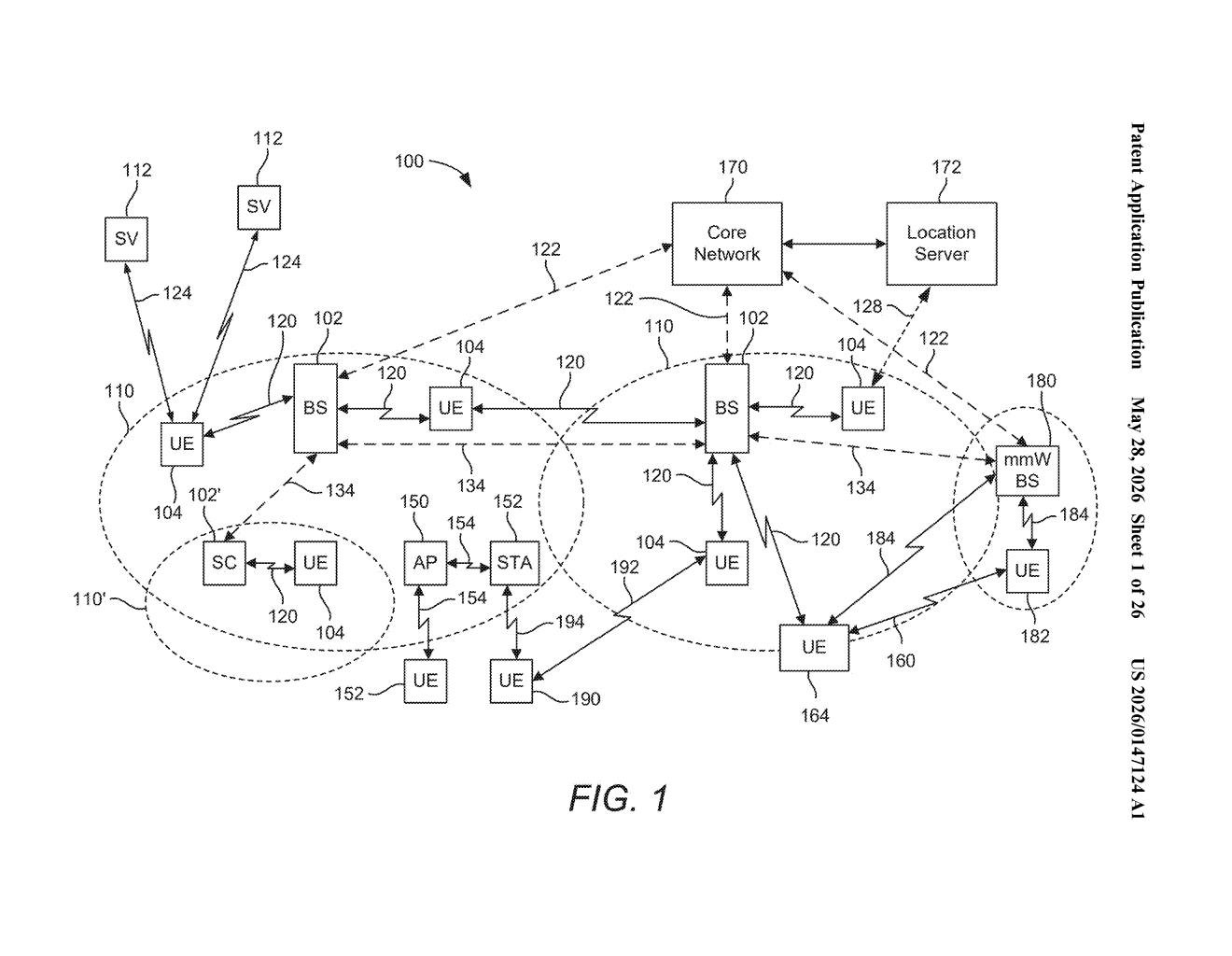
What Qualcomm's map-assisted GPS positioning actually does
Imagine you're driving through a city and your navigation app keeps placing you on the wrong street, or jumping between parallel roads because GPS signals are bouncing off skyscrapers. That's a real and frustrating problem, and it gets worse in tunnels, underpasses, and dense downtown grids.
Qualcomm's patent describes a system where your device doesn't just rely on raw satellite signals — it also pulls in road map data and runs both through neural network models to figure out the most likely place you actually are. Think of it as the phone asking: "Given these fuzzy satellite readings and the fact that there's a road right here, which position makes the most sense?"
The logic runs directly on the user equipment — meaning your phone or a connected car module — rather than in the cloud. The result is a position estimate that's grounded in the real-world geometry of streets, not just noisy radio signals from orbit.
How the neural network blends GNSS signals with map data
The patent describes a user equipment (UE) — a phone, modem chipset, or connected-vehicle module — that combines two independent data streams to compute a location fix.
- GNSS measurements: Raw signals from GPS, Galileo, GLONASS, or BeiDou satellites. These can include pseudoranges (estimated distances to each satellite), Doppler shifts, and carrier-phase data — all of which carry noise, especially in urban environments where signals reflect off buildings (a phenomenon called multipath).
- Map data: Structured road network information — essentially a digital representation of where roads, intersections, and pathways exist in the physical world.
- Neural network models + prediction algorithms: The patent applies one or more NN models to the combined input to produce a "most likely position." The network effectively learns which satellite-reading patterns correspond to which road-level locations, so it can snap a noisy fix to a plausible point on the map.
The key architectural insight is that the map acts as a constraint. Rather than treating positioning as a pure signal-processing problem, the model incorporates geographic priors — the fact that you're almost certainly on a road, not in a building or a river — to disambiguate between candidate positions that raw GNSS alone can't distinguish.
What this means for GPS accuracy in cities and tunnels
Urban GPS drift is one of those problems that's been mostly tolerated rather than solved. Existing map-matching algorithms do something similar, but they rely on hand-crafted heuristics. Replacing those with a learned model means the system can generalize to more edge cases — unusual intersection geometries, construction zones, elevated highways — without engineers manually coding rules for each scenario.
For Qualcomm, this fits squarely into its Snapdragon positioning business, which powers location in a huge share of Android devices and automotive platforms. If this technique ships in a future Snapdragon X or automotive SoC, it could meaningfully improve turn-by-turn navigation and location-based services for hundreds of millions of users without requiring any infrastructure changes.
This is a solid, focused patent that addresses a real pain point — urban GPS accuracy — with a credible technical approach. Fusing map priors with learned signal processing is the kind of incremental-but-meaningful improvement that actually shows up in shipping products. It's not a moonshot, but it's the kind of work that makes navigation apps noticeably less frustrating.
There are more where this came from
We read every patent application Big Tech publishes and send you the ones worth knowing. Plain English, free, every week.
Want this weekly breakdown for a company we don't cover? Patentlyze Pro →