
Samsung Patents a Camera System That Flattens Curved-Object Scans Automatically
Ever tried to scan a business card lying at an angle and got a warped, unreadable mess back? Samsung is filing a patent for a system that figures out the 3D shape of whatever you're pointing your camera at and mathematically straightens it out — all on the fly.
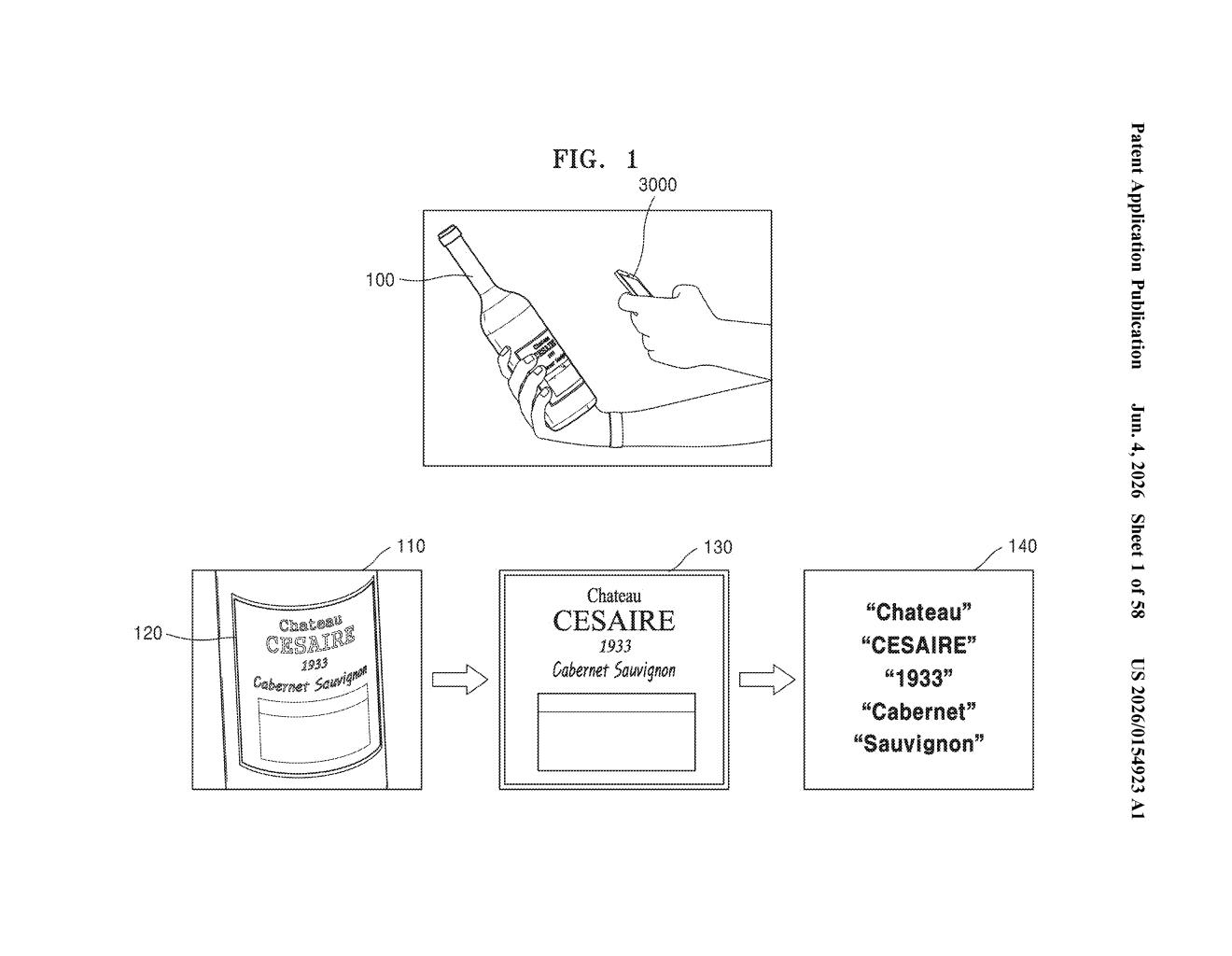
What Samsung's automatic perspective fix actually does
Imagine you point your phone's camera at a loyalty card sitting at an angle on a table. Because the card is tilted away from you, the text looks squished and the corners don't line up properly — making it almost impossible for an app to read the numbers on it.
Samsung's patented approach has the phone figure out the 3D shape of the object first. It detects the outline of the card, estimates how it's positioned in three-dimensional space, and then mathematically "flattens" the image — as if you were looking straight down at the card on a perfectly level surface.
The result is a distortion-removed image that an app can then scan cleanly, whether it's reading a QR code, a loyalty card number, or text on a curved surface like a bottle. You don't have to fuss with angles or re-take the photo — the phone corrects the geometry for you.
How the 3D key-point pipeline undoes the distortion
The system works in a pipeline of four distinct steps triggered when you aim your camera at an object:
- Region of Interest (ROI) detection: The device identifies the specific area on the object's surface that contains the information you want — say, the number strip on a credit card.
- Key-point detection: It then finds a set of object key points — landmark coordinates that trace the outline or corners of the object — to understand its overall shape and orientation.
- 3D parameter estimation: Using those key points, the system estimates 3D geometric parameters (think: how far each corner is from the camera, the tilt angle, the curvature) that describe the object's full shape in space.
- Perspective transform: Armed with those parameters, the device applies a perspective transform — a mathematical remapping that projects the ROI onto a flat 2D plane, effectively removing any tilt or curvature distortion.
The claim is specifically notable because it handles curved surfaces, not just flat ones tilted at an angle. A standard document scanner can do flat-plane correction, but estimating 3D geometric features means the system could, in theory, also flatten text on a cylindrical bottle or a rounded package.
What this means for document and card scanning on Galaxy phones
For everyday users, this is the difference between a scan that works on the first try and one that requires you to hover directly over a card or document at an awkward angle. Features like Samsung's Bixby Vision or the built-in document scanner in the Galaxy camera app already do some perspective correction — but this patent describes a more generalized approach that works on non-flat objects, which is a meaningful extension.
The broader implication is for use cases like reading product labels, scanning loyalty cards in a wallet, or pulling data from packaging — all scenarios where the target surface is rarely lying flat. If this ends up in a production Galaxy feature, it could make the phone's camera a more reliable everyday scanner without requiring any extra effort from you.
This is a solid, practical patent — not flashy, but aimed squarely at a real friction point people hit every day when trying to scan things with their phone. The extension to curved surfaces is the genuinely interesting part; flat-document correction has been done to death, but handling 3D geometry on arbitrary objects is a harder problem worth watching.
There are more where this came from
We read every patent application Big Tech publishes and send you the ones worth knowing. Plain English, free, every week.
Want this weekly breakdown for a company we don't cover? Patentlyze Pro →