
IBM Patents a System for Auditing How Well Pre-Trained AI Models Adapt to New Tasks
Pre-trained AI models are everywhere, but knowing whether one has actually learned the right things for your specific task is surprisingly hard. IBM's new patent describes a way to measure that — by scanning the model's internal representations for meaningful structure.
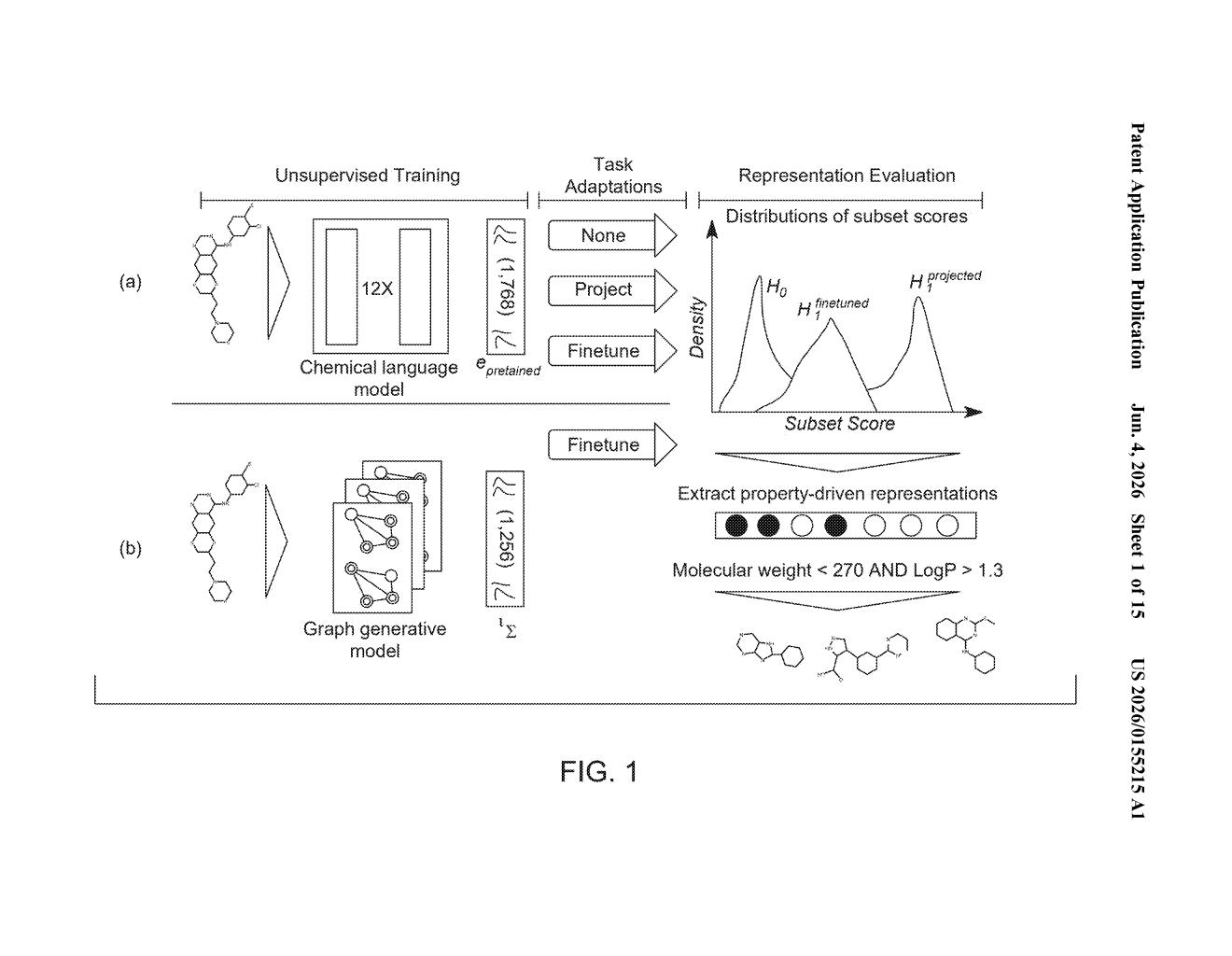
What IBM's AI model auditing system actually does
Imagine you hire someone who trained as a general engineer and you want to know if their skills will transfer well to, say, designing bridges specifically. You'd want a test that reveals whether their mental models of the problem are actually useful — not just whether they sound confident.
That's roughly what IBM's patent addresses for AI. When you take a large pre-trained AI model and fine-tune it for a specific job (say, predicting how a molecule behaves in the body), it's not always clear whether the model has genuinely learned the right internal concepts or just memorized surface patterns. IBM's approach trains a secondary, unsupervised model — one that doesn't rely on labeled examples — to scan the first model's internal "embeddings" (its numeric representations of data) for statistically meaningful clusters and anomalies.
The result is a metric you can use to compare different ways of adapting a pre-trained model, helping researchers pick the approach that actually works best for their domain.
How subset scanning scores an AI's internal embeddings
The patent centers on a technique called non-parametric property-driven subset scanning — a statistical method (originally developed for detecting anomalous clusters in data) that here gets repurposed to characterize the structure of a neural network's embeddings. Embeddings are the high-dimensional numeric vectors a deep learning model uses to represent inputs internally; they're essentially the model's learned "vocabulary" about the world.
The process works in two steps:
- Characterization: An unsupervised secondary model (one that needs no labeled training data) uses subset scanning to identify which subsets of the embedding space have statistically unusual properties — essentially finding where the model has formed meaningful internal structure versus where it's noisy or uninformative.
- Evaluation: Those characterizations are turned into a quantitative metric that lets you compare multiple domain adaptation methods (techniques for fine-tuning a general model to a specific task) head-to-head.
The claim specifically mentions improving interpretability of deep molecular representations — embeddings learned from molecular data, which suggests the primary application IBM has in mind is computational chemistry or drug discovery, where understanding why a model makes a prediction is as important as the prediction itself.
Why this could matter for AI models used in drug discovery
For anyone working in AI-assisted drug discovery or materials science, choosing the right fine-tuning strategy for a large pre-trained model is a major practical bottleneck — and today there's no widely accepted, principled way to compare options. IBM's metric-driven approach could give research teams a more objective benchmark instead of relying on downstream task performance alone, which can be noisy and expensive to measure.
More broadly, the ability to audit what a model has actually learned — rather than just what it outputs — is a growing concern in enterprise AI deployments. If this approach generalizes beyond molecular data, it could become a useful tool in IBM's broader AI governance and explainability portfolio.
This is a niche but genuinely useful idea aimed squarely at researchers who fine-tune large pre-trained models for scientific applications. It's not a consumer-facing invention, and it won't ship as a product you'll ever directly interact with — but IBM's Watson and watsonx platforms are exactly the kind of place where an embedding-auditing tool like this would quietly add real value for enterprise AI teams.
There are more where this came from
We read every patent application Big Tech publishes and send you the ones worth knowing. Plain English, free, every week.
Want this weekly breakdown for a company we don't cover? Patentlyze Pro →