
IBM Patents an Automated System for Moving Containers Between Servers Quickly
Moving a containerized app between servers is one of those tasks that sounds simple but quietly involves a dozen manual steps that can go wrong. IBM's new patent tries to automate the whole handoff — from reading the old container's metadata to verifying it boots cleanly on the new host.
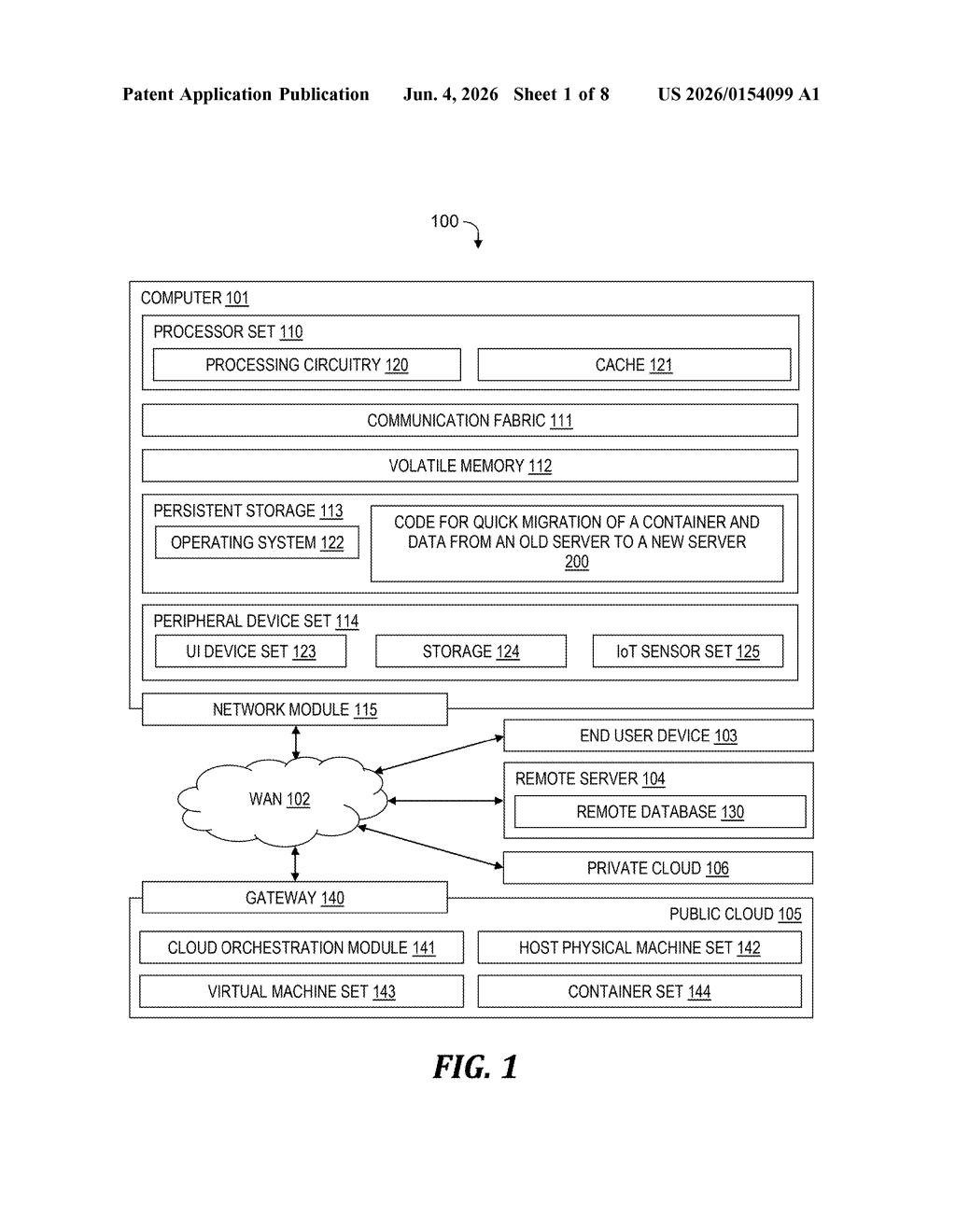
What IBM's container migration system actually does
Imagine your company runs a web app inside a container — think of it like a self-contained lunchbox of software — and you need to move it to a different server, maybe because the old one is failing or being decommissioned. Today, that move usually means someone manually reconstructing configuration files, reassigning network ports, and copying disk data, hoping nothing gets lost in translation.
IBM's patent describes a system that handles this migration automatically. It reads the existing container's metadata (the instructions that tell the server how to run the app), figures out what needs to change for the new environment, builds a fresh startup command, and uploads all the necessary files — then confirms the container actually started correctly on the other end.
The goal is to reduce the manual, error-prone steps that slow down cloud teams when they're trying to move workloads fast. Instead of a human piecing together a new config from scratch, the system does it in one coordinated pass.
How IBM rebuilds the container config on the new server
The patent describes a pipeline with several discrete steps that together automate a container move end-to-end.
- Metadata extraction: The system pulls image metadata from the source container — this is the structured data (like a recipe card) that describes how the container was built and what it needs to run.
- Manifest creation: It generates a new manifest (a configuration document that tells the container runtime how to deploy the image) tailored for the destination server, incorporating migration-specific adjustments.
- Startup command synthesis: Rather than reusing the old startup command verbatim, it combines the original container metadata with updated service port assignments and disk usage information to produce a new launch instruction that's valid on the new host.
- Media upload and verification: Disk images and related files are uploaded to the correct directory on the new server, the service is started using the synthesized command, and the system verifies the container actually came up successfully.
The verification step is notable — it closes the loop rather than just assuming the migration worked. This is the kind of automated health-check that prevents silent failures where a container appears migrated but never actually starts.
What this means for cloud ops and workload portability
For cloud infrastructure teams, container migrations are a routine but tedious source of operational risk. Any time a human has to manually reconstruct port mappings and disk configs, there's a chance of misconfiguration that only surfaces at 2am. A system that handles this automatically — and then confirms the result — could meaningfully reduce that class of incident.
For IBM specifically, this fits squarely into their hybrid cloud and Red Hat OpenShift positioning. Enterprises running workloads across on-premise and cloud environments move containers constantly, and tooling that makes that faster and safer is directly in IBM's commercial interest to own.
This is infrastructure plumbing, not a flashy AI story — but it's the kind of patent that signals IBM is still investing seriously in the operational layer of enterprise Kubernetes environments. The verification step is the most interesting detail; most migration tools trust the process rather than checking the outcome. Whether this ever becomes a shipping feature in OpenShift or IBM Cloud is the real question.
There are more where this came from
We read every patent application Big Tech publishes and send you the ones worth knowing. Plain English, free, every week.
Want this weekly breakdown for a company we don't cover? Patentlyze Pro →