
Qualcomm Patents a Self-Tuning Filter for GPS Signal Errors Caused by the Atmosphere
Every GPS fix you get has been quietly distorted by the ionosphere — the charged layer of atmosphere that bends and delays radio signals. Qualcomm is patenting a way to automatically figure out when the correction data meant to fix that problem is itself too unreliable to trust.
What Qualcomm's ionospheric GPS filter actually does
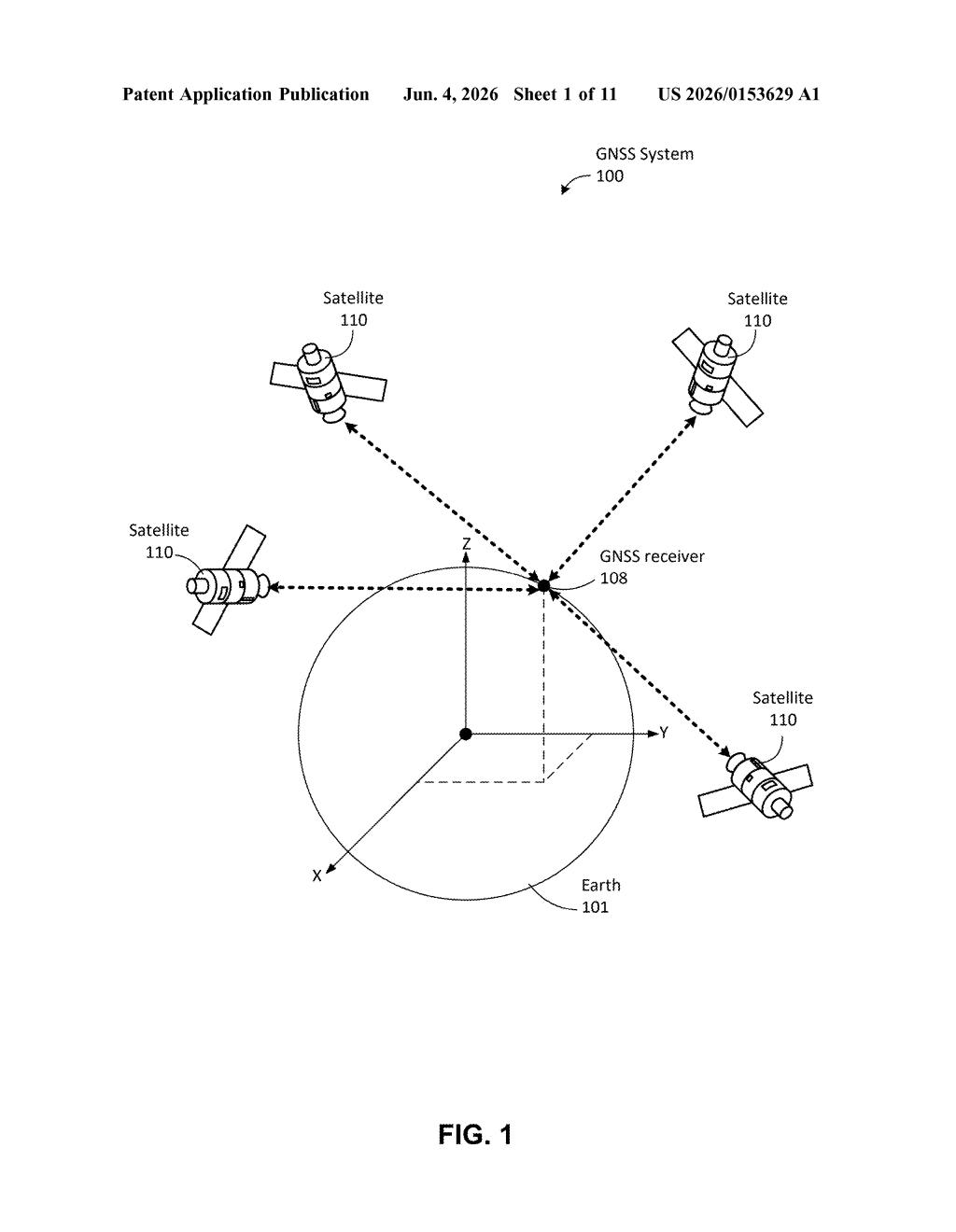
Imagine your GPS app is trying to pinpoint your location. Satellites send signals, but those signals pass through the ionosphere — a layer of charged particles high above Earth — and that slows them down in unpredictable ways. To fix this, positioning systems receive correction data that says, in effect, "add this much to compensate for the atmospheric delay." The problem is that correction data isn't always trustworthy.
Qualcomm's patent describes a system that evaluates how uncertain each piece of correction data is before deciding whether to use it. Every correction comes packaged with a "variance" figure — essentially, a confidence rating. The patent's trick is to compute a smart threshold, or "mask," that separates correction data worth using from data that's too noisy to help.
That threshold isn't hardcoded. It can be tuned using crowdsourced data from many GPS receivers at once, or calculated on-device using the receiver's own measurements. When correction data doesn't pass the filter, the device falls back to a different correction method rather than making things worse.
How the variance threshold gets calculated and applied
At the core of the patent is a process for determining an ionospheric correction variance threshold — think of it as a quality gate for atmospheric correction data used in GNSS (GPS, Galileo, GLONASS, etc.) positioning.
Here's how the pipeline works:
- Obtain GNSS measurements from visible satellites — the raw signal observations your receiver captures.
- Obtain ionospheric correction data, which includes both the correction value itself and a variance figure representing how uncertain that correction is.
- Compute a threshold by doing statistical analysis across those variance values and comparing them against residual positioning errors — the gap between where you said you were and where the signals say you are.
- Apply the threshold as a mask: corrections with variance above the threshold get filtered out.
The threshold can be derived in two ways. A server-side approach aggregates data crowdsourced from many GNSS receivers across a region — useful for detecting broad atmospheric events like geomagnetic storms. An on-device approach lets a single GNSS receiver compute its own threshold from local measurements, making the system work even without network connectivity.
When a correction is filtered out, the device doesn't just skip correction entirely — it falls back to alternative ionospheric correction techniques, preserving accuracy as much as possible.
What this means for high-precision GNSS on mobile devices
Ionospheric distortion is one of the biggest sources of GPS error for consumer devices, especially during periods of high solar activity or in equatorial regions where the ionosphere is most chaotic. Correction services like SBAS or PPP broadcast correction data continuously, but that data degrades in quality without always flagging itself as degraded. A receiver that blindly trusts bad correction data can actually end up less accurate than one that ignores it entirely — which is a real, known problem in high-precision positioning.
For Qualcomm, which supplies GNSS chips to a huge share of Android smartphones and automotive platforms, shoring up this layer means more reliable location results in the field — whether that's turn-by-turn navigation, precision agriculture, or emergency services dispatch. The crowdsourcing component also hints at a potential network-layer service Qualcomm could offer on top of its chipsets.
This is unglamorous but genuinely useful signal-processing work. The insight — that you should evaluate the confidence of correction data before applying it, not just apply it blindly — is the kind of practical engineering that separates mediocre GPS from the kind that actually holds up in bad conditions. It's not headline-grabbing, but Qualcomm's chipsets are in enough devices that even a modest accuracy improvement at scale matters a lot.
There are more where this came from
We read every patent application Big Tech publishes and send you the ones worth knowing. Plain English, free, every week.
Want this weekly breakdown for a company we don't cover? Patentlyze Pro →