
Qualcomm Patents a Wireless System That Knows When Shelf Items Go Missing
Qualcomm is patenting a way for store shelves to automatically notice when a tagged item has been picked up or removed — without cameras or manual scanning.
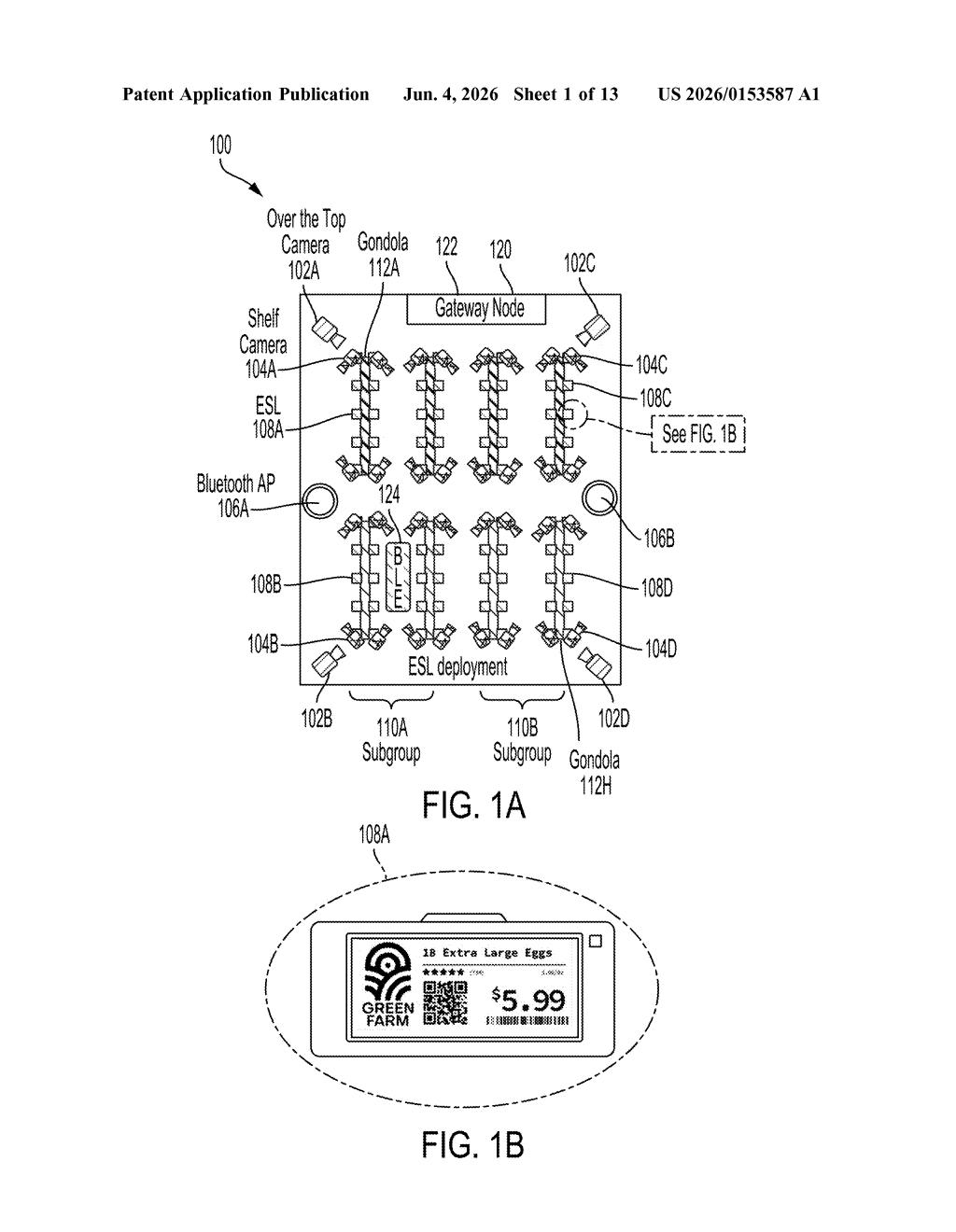
What Qualcomm's shelf-tag tracking actually does
Imagine a grocery store where every item on the shelf has a tiny wireless tag attached. Right now, if someone grabs a product and never buys it — or worse, walks out without paying — no one finds out until a staff member physically counts inventory. Qualcomm's patent is designed to change that.
The idea is that a device in the stocking area (think: a shelf unit or a nearby reader) listens for wireless signals broadcast by those small electronic tags. If a tag's signal disappears or changes in a way that suggests it left the shelf, that information gets sent to a central server. The server can then flag the event for store staff.
It's essentially a real-time inventory awareness system built on top of the same electronic shelf label hardware that stores already use to update prices remotely. You get loss detection and stock-level tracking without adding entirely new infrastructure.
How the eTag beacon system detects item removal
The patent describes a system built around electronic tags (eTags) — small wireless devices attached to retail items — and a stocking device that acts as a local radio listener on the shelf or nearby fixture.
Here's the core loop:
- Each eTag periodically broadcasts a beacon — a short wireless ping that identifies the tag.
- The stocking device's radios receive those beacons and generate eTag measurement information: essentially a record of which tags are present, their signal characteristics, and any changes over time.
- That measurement data is forwarded to an ESL server (Electronic Shelf Label server — the backend that already manages price display updates in modern retail).
- The server uses the data to determine whether a particular eTag has been removed from the stocking device — meaning the item it's attached to is gone.
The patent doesn't specify exactly how removal is inferred, but likely candidates include signal dropout, RSSI change (RSSI = received signal strength indicator, a measure of how strong a wireless signal is), or the tag ceasing to appear in beacon scans. The system is framed as a coexistence improvement, meaning it's designed to work alongside existing ESL notification traffic without creating interference.
What this means for retail inventory and loss prevention
Retailers spend billions annually on inventory shrinkage — products that go missing before they're sold, whether from shoplifting, misplacement, or administrative error. Most current systems catch the problem after the fact, at the register or during a manual stock count. A real-time beacon-based alert moves that detection window dramatically earlier.
For Qualcomm, this fits neatly into its broader push to put its wireless silicon into retail infrastructure. ESL systems are already proliferating in large grocery chains and electronics stores as a way to update prices digitally. If Qualcomm can extend those same networks to do asset tracking, it makes the hardware investment easier to justify — and potentially gives Qualcomm a stronger foothold in a market segment it doesn't currently dominate.
This is a sensible, incremental extension of existing ESL infrastructure — not a flashy invention, but a real problem worth solving. The genuinely interesting angle is Qualcomm positioning itself to own more of the retail wireless stack, not just the chip inside your phone. Whether this specific patent has enough differentiation to survive prior-art scrutiny in a crowded RFID/asset-tracking space is a real question.
There are more where this came from
We read every patent application Big Tech publishes and send you the ones worth knowing. Plain English, free, every week.
Want this weekly breakdown for a company we don't cover? Patentlyze Pro →