
Google Patents an AI That Decides What to Ask You Before Making a Recommendation
Most recommendation systems wait for you to figure out what information to give them. Google's new patent describes an AI that figures out what it needs from you — and then picks the right way to collect it.
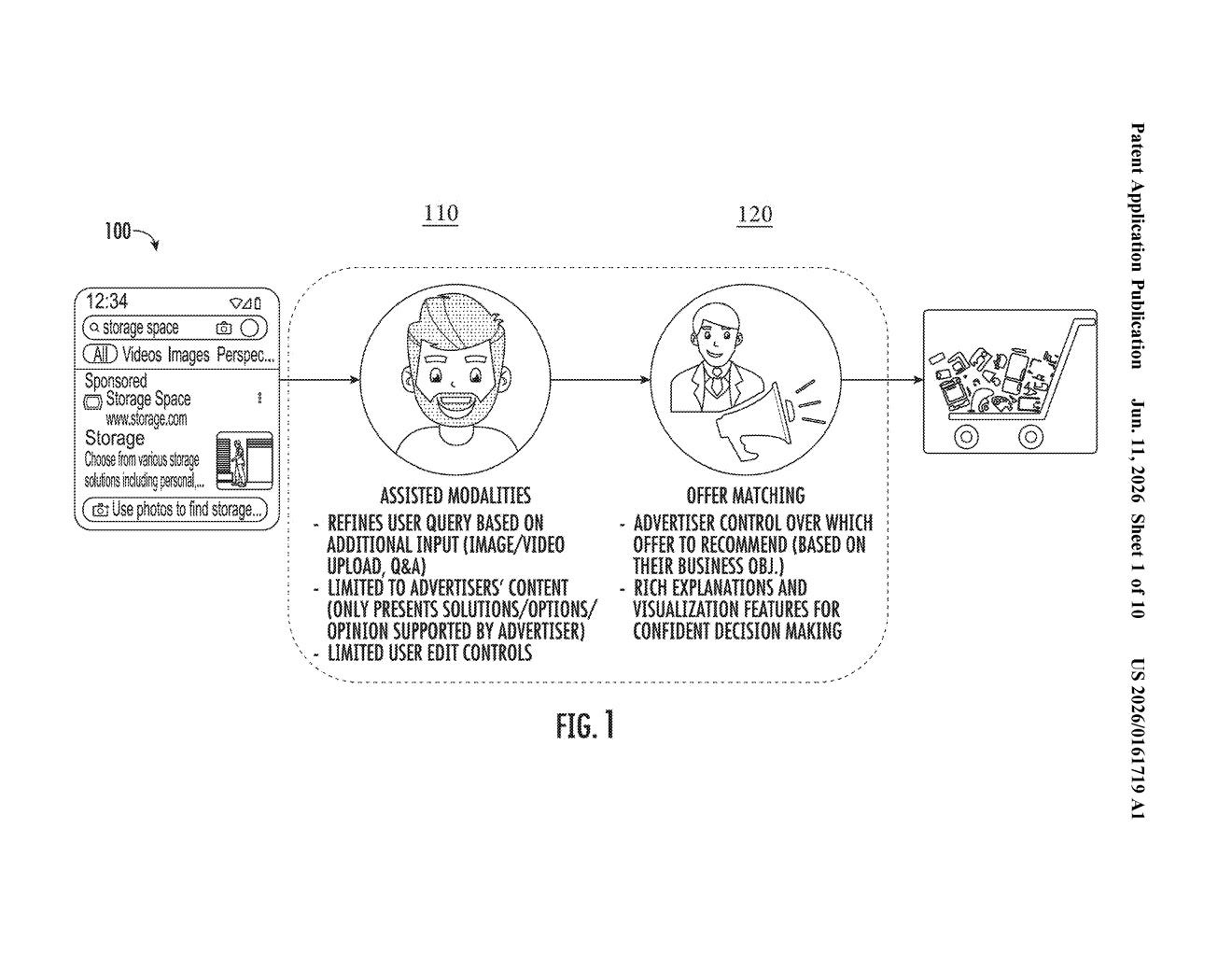
What Google's AI recommendation loop actually does
Imagine you ask a shopping assistant, "Help me find a couch that fits my living room." Instead of guessing, a smart system would say, "Can you upload a photo of the space?" or "Enter the room dimensions here." That's the core idea in this Google patent.
The system uses an AI model to read your initial question and decide what kind of extra information it needs — and more importantly, which input method (a photo uploader, a text form, a measurement tool, etc.) is the right one to collect that information. Once you provide it, the AI combines your original question with the new details to surface a specific piece of content from a content provider.
In short, it's an AI that doesn't just wait for you to explain yourself perfectly — it asks the right follow-up question in the right format, then delivers a tailored result.
How the model picks an input tool and selects content
The patent describes a multi-step pipeline centered on a machine-learned model (an AI trained on data, as opposed to hand-coded rules).
- Step 1 — Query intake: A user submits an initial query from their device. This could be typed text, a spoken request, or something similar.
- Step 2 — Input tool selection: The AI analyzes the query and chooses an appropriate input tool from a set of options — think image uploader, measurement entry field, dropdown selector, or similar. The tool is chosen based on what kind of supplemental data would best resolve the query.
- Step 3 — Additional information collection: The user provides more information through that chosen tool. Because the tool was selected specifically for this query type, the extra data is structured and relevant.
- Step 4 — Content selection and presentation: The model processes the original query plus the new input together, then selects a content item linked to a content provider (a product listing, an article, an ad, a result) and displays it on screen.
The claim is intentionally broad — "content provider" and "content item" could cover ads, retail listings, or organic search results. The key novelty is the dynamic selection of the input tool rather than presenting a static form.
What this means for Google's search and shopping products
For everyday users, this could make AI-powered search feel less frustrating. Right now, getting a good recommendation often requires you to know exactly how to phrase your query and what supporting details to volunteer. A system that proactively selects the right follow-up mechanism takes that cognitive load off your shoulders.
For Google, the commercial angle is clear: richer, more structured user input leads to more precise content matching — which, in an ad-supported business, means better-targeted results. Whether this surfaces in Google Search, Google Shopping, or a future AI assistant product is not spelled out in the patent, but the infrastructure described fits naturally into any of those surfaces.
This is a plausible near-term feature for Google's AI-driven search products, and the underlying logic is sound — dynamic input collection is genuinely useful. But the patent claim is written so broadly that it could describe almost any AI assistant with a follow-up-question feature. Don't expect this filing alone to represent a major technical moat.
There are more where this came from
We read every patent application Big Tech publishes and send you the ones worth knowing. Plain English, free, every week.
Want this weekly breakdown for a company we don't cover? Patentlyze Pro →