
Google Patents a Way to Edit Real Photos by Rewriting Their Text Descriptions
What if you could edit a photo just by changing a sentence? Google has filed a patent for exactly that: a system that takes a real photograph, builds an internal 'recipe' for it, and then regenerates the image with changes you describe in plain English.
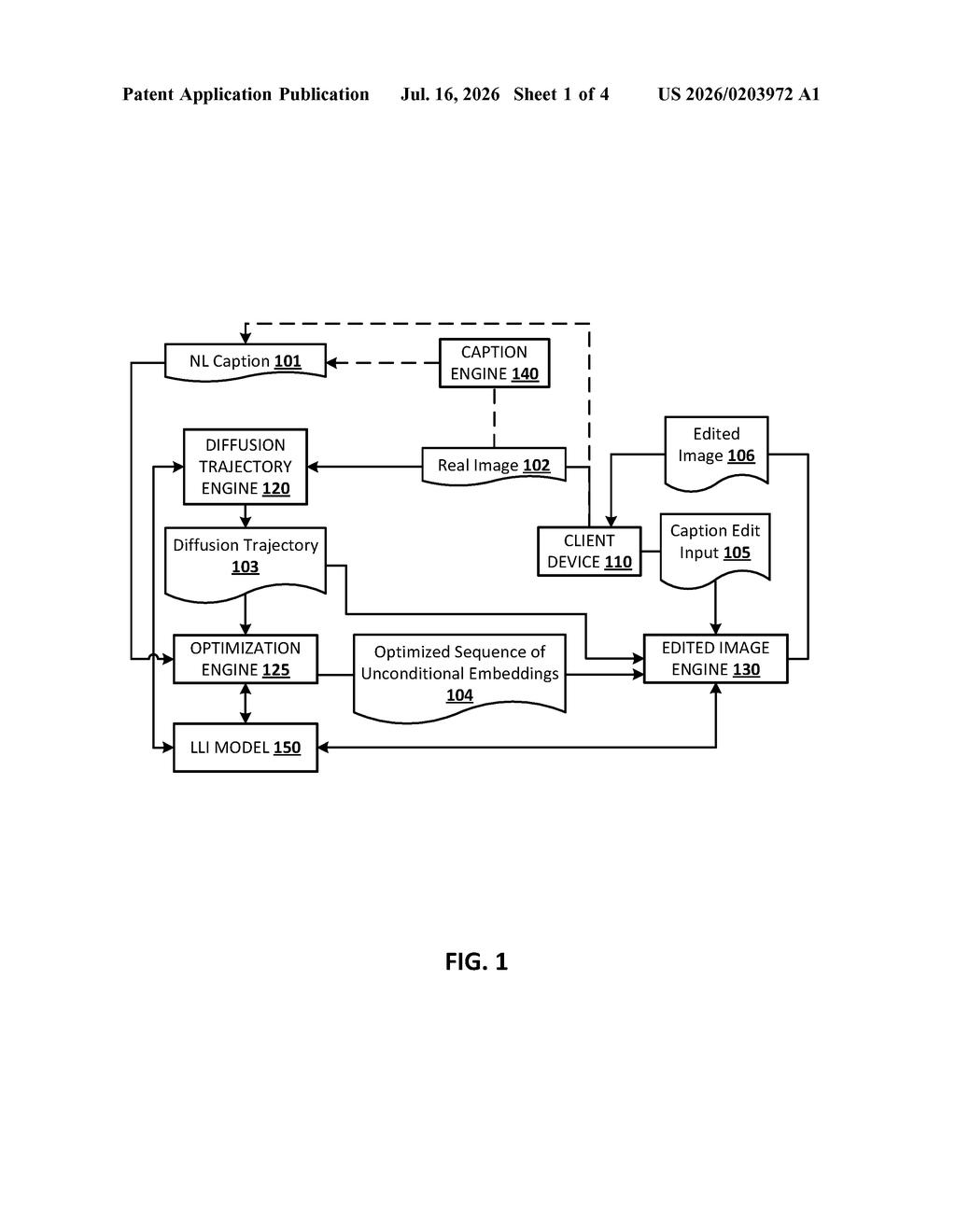
How Google's text-caption photo editing actually works
Imagine you have a photo of your friend standing in front of a red car. You'd like the car to be blue, but you don't want to open a complex editing program and paint over it pixel by pixel. Google's patented approach lets you just change the description: swap 'red car' for 'blue car,' and the system figures out how to rebuild the photo with that change while keeping everything else, your friend's face, the background, the lighting, as close to the original as possible.
The tricky part has always been that AI image generators are trained to create new images from scratch, not to faithfully copy an existing one. Google's method solves this by first studying the real photo carefully and creating a set of hidden reference points that anchor the AI to the original scene before any editing begins.
The result is an edited image that looks like it could have been taken by the same camera on the same day, just with that one detail changed. That's a genuinely hard problem, and this patent describes a specific technical approach to getting it right.
How null-text inversion locks a photo into a diffusion model
The system works in two main stages.
Stage one: inversion. The patent describes a process called 'inversion,' where the system runs a real photograph backward through a diffusion model (the type of AI that generates images from noise) to figure out the exact sequence of computational steps that would have produced that photo. Think of it like reverse-engineering a recipe from a finished dish. This produces what the patent calls a diffusion trajectory: a precise record of the noise patterns the model would need to work through to arrive at this specific image.
Stage two: null-text optimization. Here's where the name 'null-text inversion' comes in. Standard text-guided diffusion models balance two signals: a text prompt and an unconditional (no-text) baseline. The unconditional baseline normally pulls the output toward a generic average image, which distorts reconstruction of a specific real photo. Google's method fixes this by optimizing a custom set of unconditional embeddings (tuned placeholder values, one per processing step) so that running the model forward again produces the original photo almost exactly, without the text description dragging it off course.
Once those tuned embeddings are locked in, you can swap in an edited text caption (changing 'red car' to 'blue car,' for example), and the model regenerates the image using the same trajectory but with the new instruction. The edits apply; the rest stays faithful to the original.
What this means for AI photo editing tools
For anyone who edits photos, this kind of tool would make targeted, realistic changes far more accessible than current approaches. Today's AI photo editors often struggle to make a small change to a real photograph without distorting unrelated parts of the image. Google's approach is specifically designed to keep the unedited areas faithful to the source.
On a broader level, this sits inside a fast-moving competitive space where Google, Adobe, and others are all racing to make AI image editing feel natural and trustworthy. A robust inversion method like this could power future versions of Google Photos editing tools or Workspace products, and it would also raise real questions about how easy it becomes to alter photographic evidence in believable ways.
This is genuinely interesting work on a problem that has frustrated AI image researchers for years: how do you get a generative model to faithfully reconstruct a specific real photo, not just something vaguely similar? The null-text trick is clever and the patent is specific enough to be meaningful. That said, the technology race here is fierce, and Google will need to show this performs better in practice than competing approaches from Adobe and others already shipping in real products.
Which company should we read for you?
We track 17 companies here. Pro is the same weekly breakdown for any company you choose, delivered privately. Type a name and we'll scope it and send you a quote.
Get one Big Tech patent every Sunday
Plain English, intelligent commentary, no hype. Free.
Editorial commentary on a publicly published patent application. Not legal advice.