Latest semiconductor & chip patents, Page 5
From processors and AI accelerators to the packaging and cooling that hold them together, this is where the silicon race lives. Every chip filing, decoded without the jargon.
- in the Nov 19 release
- 4
- in November so far
- 25
- filings tracked
- 651
- last 90 days
- 205
Recent filings
Newest first · 651 total-
Samsung · Published Oct 8
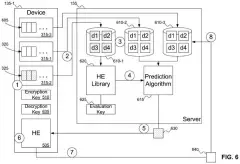
Samsung Files Patent for Memory That Lets Servers Predict Failures Without Seeing Its Secrets
Samsung's patent application describes a way for a server to predict which parts of a memory chip are about to fail, even though the chip never hands over the readable data behind the prediction.
-
IBM · Published Oct 8
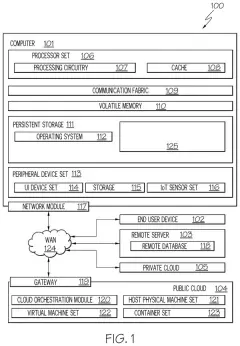
A New IBM Patent Lets Chip Software and Hardware Teams Hunt Bugs Together
Chip makers can lose weeks waiting on simulations because the startup-software team and the circuitry team debug in separate worlds. IBM's filing describes a shared save file that lets them hand a chip's state back and forth.
-
AMD · Published Oct 8
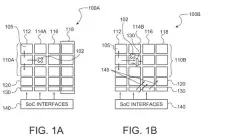
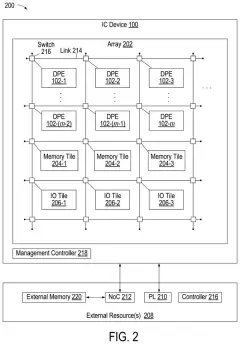
AMD Files Patent for AI Chips With a Built-In Spare for Manufacturing Flaws
Today, one microscopic flaw can send an entire AI chip to the scrap bin. A patent application from AMD's Xilinx unit gives the chip a spare column of processing blocks, so a single defect doesn't doom it.
-
Google · Published Oct 8
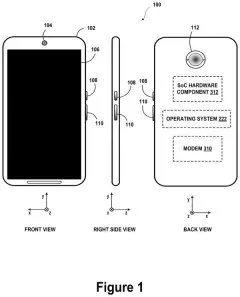
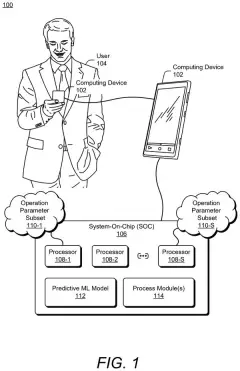
A New Google Patent Trims Phone Battery Drain by Matching Cellular Power to Each App
Your phone's cellular chip may be running at full tilt while you stream a podcast. Google's patent application has the operating system ask each app what it needs and set the chip's power to match.
-
AMD · Published Oct 8
AMD Files Patent for AI Chip Parts That Share Memory and Run Side by Side
AI chips can lose time doing two jobs one after the other. This filing, from AMD's Xilinx unit, lets the chip's processing cores work on both jobs at once while sharing a single block of memory.
-
Google · Published Oct 8
Google Files Patent for a Phone Chip That Sees Overheating Coming
Your phone usually slows itself down only after it gets hot. Google's patent has the chip guess the heat before it arrives and shuffle the work around in time.
-
IBM · Published Oct 8
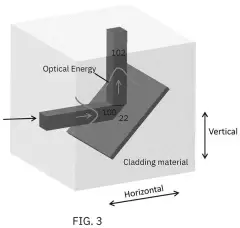
IBM Patents a Chip Mirror That Catches Stray Light as Signals Turn Corners
Light carrying data on a chip doesn't all travel down the middle of its channel, and IBM's mirror is built to catch the part riding along the edges as well. The extra catch is meant to cut the signal lost at every turn.
-
IBM · Published Oct 8
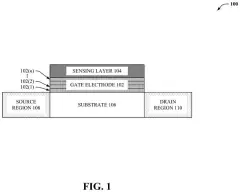
IBM Patents a Two-Layer Chip Surface to Keep Medical Sensors Reading Accurately
Medical sensor chips tend to lose their grip: the molecules that catch the target can peel off in liquid and skew the reading. IBM's patent application adds stacked layers underneath to hold them on.
-
Apple · Published Oct 8
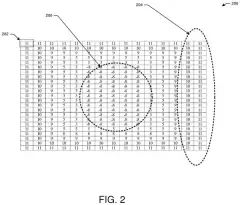
Apple Files Patent for Covering Up Dropped Video Pieces Before You Notice
Apple has filed a patent for hiding video glitches by reusing the last good picture data. It also adds a status board that tells the sending chip exactly which piece went missing.
-
Intel · Published Oct 8
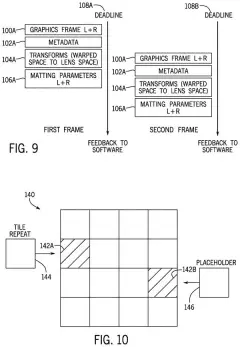
Intel Patents a Chip Shortcut That Spends Video Quality Where Viewers Look
Intel's patent teaches a video chip to spend more detail on faces and less on empty walls, without asking software to redo the math for every tiny square of every frame.
-
Samsung · Published Oct 8
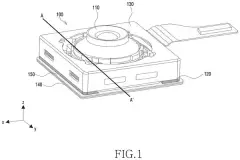
Samsung Files Patent for a Slimmer Phone Camera With Focus Parts Tucked Into Its Base
Samsung found a place to hide part of a phone camera's focusing machinery: down in the space beside the circuit board. The patent application says that could make the whole camera shorter.
-
AMD · Published Oct 8
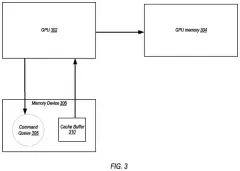
AMD Files Patent to Let Graphics Chips Pull Game Visuals Straight From Storage
Every time a game shows you a new brick wall or a patch of grass, your graphics card has to get that image from somewhere. AMD's patent application describes a way for the graphics chip to fetch it on its own, without checking in with the main processor first.