Latest display patents, Page 55
Screens are one of tech's fiercest battlegrounds: folding panels, pixel circuits, brightness tricks, and the seams where two displays meet. We read every display filing and translate it into plain English.
- in the Nov 19 release
- 10
- in November so far
- 44
- filings tracked
- 746
- last 90 days
- 228
Recent filings
Newest first · 746 total-
Samsung · Published May 28
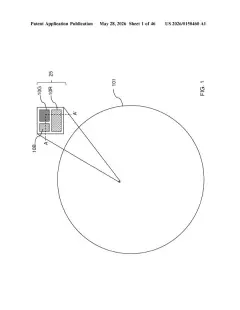
Samsung Patents a Single-Substrate Growth Method for Full-Color Micro LED Displays
One of the biggest manufacturing headaches in micro LED display tech is growing red, green, and blue pixels separately and then assembling them. Samsung's new patent describes a way to grow all three colors on the same substrate — which could be a meaningful step toward making micro LED displays practical at scale.
-
Samsung · Published May 28
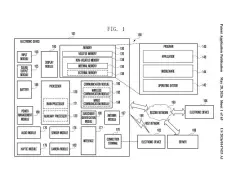
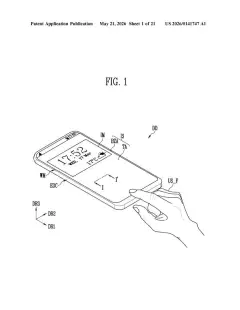
Samsung Patents a Pocket-Detection System for Foldable Phones
Samsung is filing patents to solve one of the most mundane-but-maddening problems with foldable phones: the screen you can still see on the outside keeps registering phantom taps when the phone is buried in your pocket.
-
Qualcomm · Published May 28
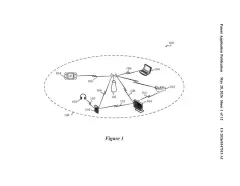
Qualcomm Patents a Context-Aware Screen Time Monitor That Weighs Your Environment
Your phone already tracks how long you stare at a screen — but Qualcomm is filing patents for a system that also tracks *how bad* that staring actually was, based on your lighting, posture, and physical state at the time.
-
Qualcomm · Published May 28
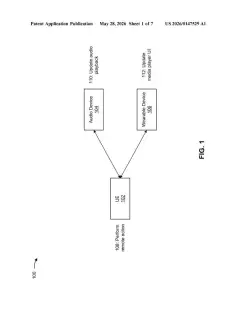
Qualcomm Patents a System That Stops Updating Your Watch When Its Screen Goes Dark
When you're listening to music through earbuds and your smartwatch screen is off, why should your phone keep sending playback updates to that watch? Qualcomm has filed a patent for a system that asks exactly that question — and stops the waste.
-
Sony · Published May 28
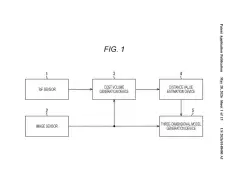
Sony Patents a Cost-Volume System for High-Accuracy ToF Depth Estimation
Time-of-Flight sensors are fast but fuzzy — they trade spatial resolution for speed. Sony's new patent describes a way to squeeze much more depth accuracy out of that sparse data by treating each pixel's distance as a probability problem, not a single hard number.
-
Sony · Published May 28
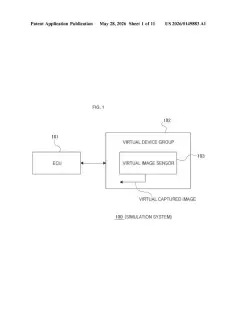
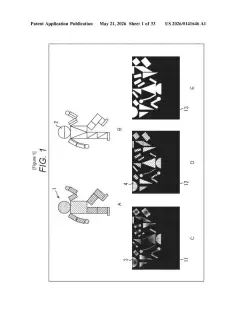
Sony Patents a System for Adding Realistic Rolling Shutter Distortion to CG Images
When a camera sensor reads out pixels line by line instead of all at once, fast-moving objects appear skewed or wobbly — a well-known artifact called rolling shutter distortion. Sony's new patent describes a way to add that distortion to individual computer-generated objects before blending them into a final frame, making synthetic images look more like what a real camera would capture.
-
Samsung · Published May 21
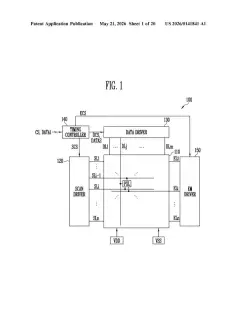
Samsung Patents a Dual-Gate Transistor Design for More Precise OLED Pixel Control
Samsung Display is rethinking how individual OLED pixels get told how bright to be — and their answer is to give the driving transistor two control gates instead of one, each fed a carefully coordinated voltage.
-
Samsung · Published May 21
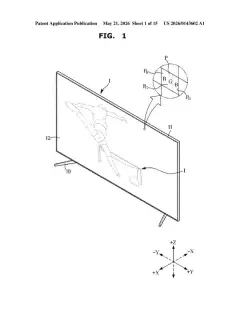
Samsung Files Patent for a Display That Senses Light Without Extra Sensors
Samsung Display is patenting a screen that doubles as a light sensor — embedding light-receiving elements directly into the panel and using a clever spatial trick to get clean readings without cross-talk from neighboring pixel groups.
-
Samsung · Published May 21
Samsung Patents a Per-Zone Refresh Rate Clock System for OLED Displays
Most variable refresh rate systems treat the whole screen the same — Samsung's new patent lets different parts of your display refresh at completely different speeds, simultaneously, by selectively hiding clock pulses from the panel driver.
-
Samsung · Published May 21
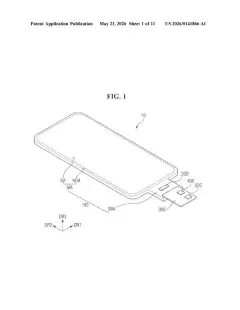
Samsung Patents a Self-Grounding PCB Mount for Display Devices
Samsung has filed a patent for a display device where the circuit board grounds itself to the chassis the moment it's physically mounted — no separate grounding step, no extra hardware.
-
Sony · Published May 21
Sony Patents a Vertex-Pairing System to Fix 3D Mesh Encoding Seams
When you compress a 3D model by slicing it into patches, the edges where those patches meet can fall apart at decode time — creating visible seams or geometry errors. Sony's new patent attacks that problem directly by tracking which vertices on different patches were originally the same point in 3D space.
-
Sony · Published May 21
Sony Patents a Tile-Based Hierarchical Map System for Real-Time 3D Streaming
Sony is patenting a system that breaks 3D scene data into tiles and resolution layers, streaming only the pieces your current viewpoint actually needs — and updating only the chunks that actually changed.