Latest display patents, Page 53
Screens are one of tech's fiercest battlegrounds: folding panels, pixel circuits, brightness tricks, and the seams where two displays meet. We read every display filing and translate it into plain English.
- in the Nov 19 release
- 10
- in November so far
- 44
- filings tracked
- 746
- last 90 days
- 228
Recent filings
Newest first · 746 total-
Sony · Published Jun 4
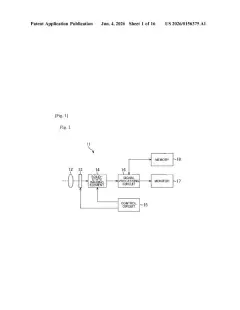
Sony Patents a Dual-Pixel Sensor Design That Splits Brightness and Color Capture for Car Cameras
Most camera sensors make every pixel do double duty — capture both brightness and color at the same time. Sony's new patent proposes splitting that job across two different kinds of pixels, optimizing each for what it does best.
-
Sony · Published Jun 4
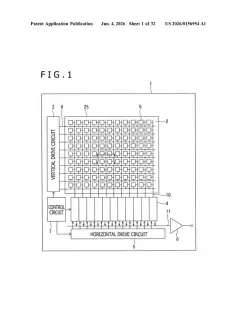
Sony Patents a Wrap-Around Gate Design to Shrink Image Sensor Pixels Further
As image sensors get packed with more and more pixels, there's simply less room to fit the circuitry that actually reads them. Sony's latest patent tackles that geometric puzzle by bending the transfer gate around the walls of the pixel itself.
-
Sony · Published Jun 4
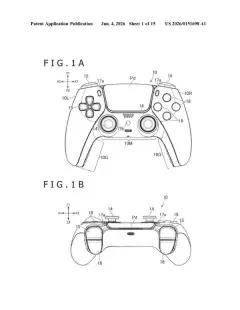
Sony Patents a Two-Color Molded Light Guide for Cleaner LED Indicators
Sony's PlayStation hardware team has patented a clever single-piece component that both channels light from an LED and blocks it from leaking where it shouldn't — all molded in one manufacturing step.
-
Sony · Published Jun 4
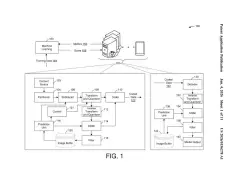
Sony Patents a Video Encoding Trick That Skips Redundant Color Transform Data
Sony is patenting a subtle but meaningful tweak to video encoding: skip writing transform type metadata entirely when any color channel is already bypassing the transform step — saving bits without losing quality.
-
Intel · Published Jun 4
Intel Patents a Real-Time System for Scoring How Good Encoded Video Actually Looks
Encoding video fast is one thing — knowing whether the result actually looks good to a human eye, in real time, is another problem entirely. Intel's latest patent takes a swing at solving the second one.
-
Disney · Published Jun 4
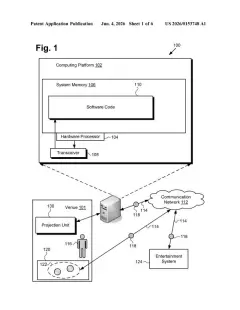
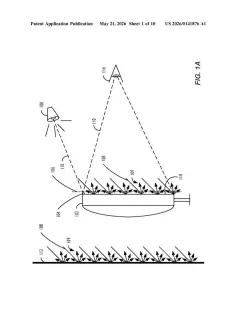
Disney Patents a Motorized 3D Projection Surface That Pops Out on Cue
Disney is patenting a projection surface that physically unfurls on command — and then displays 3D visuals synced to a show, or that react to where you're standing.
-
Apple · Published May 28
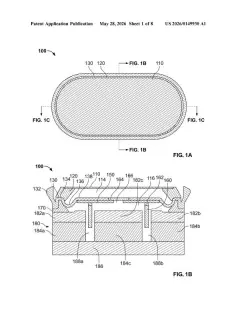
Apple Patents a Four-Edge Curved Display With Per-Pixel Side Mirrors
Apple is patenting a display that curves on all four sides — not just the left and right — and solves a tricky physics problem with tiny mirrors built into each bent pixel.
-
Apple · Published May 28
Apple Patents an Optical Touch Sensor That Ignores Water Droplets
Water on a touchscreen has always been the enemy — it fools capacitive sensors into thinking ghost fingers are tapping everywhere. Apple's latest patent describes an optical approach that can tell the difference between your actual fingertip and a rogue water droplet.
-
Apple · Published May 21
Apple Patents a Dynamic Color System That Adapts What You See to Where You Are
Apple is patenting a display pipeline that doesn't just show you what a video looks like — it tries to show you what that video was *meant* to look like, even when you're watching in conditions the creator never intended.
-
Google · Published May 28
Google Patents a Speaker Surround That Catches Itself Under High Excursion
Push a speaker too hard and its flexible surround can tear, fold, or fail — often permanently. Google's new patent describes a speaker design where the surround physically catches itself before that can happen.
-
Nvidia · Published May 28
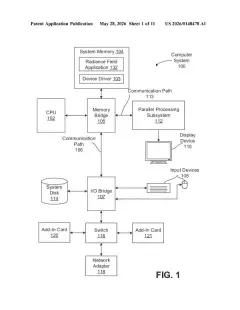
Nvidia Patents a Morton-Code Voxel Sorting Method for Real-Time Radiance Field Rendering
Nvidia is patenting a technique that uses a clever spatial sorting trick — Morton codes — to bring radiance field rendering closer to real-time speeds. It's a data-structure play hiding inside a graphics pipeline.
-
Samsung · Published May 28
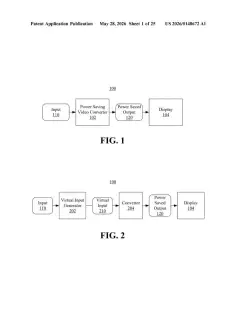
Samsung Patents a Display Trick That Fakes Brightness to Save Battery
Samsung's latest patent describes a way to make a display appear brighter to your eyes without actually cranking up the backlight — by exploiting the way human vision works. The result is a screen that looks vivid while drawing less power.