
Samsung Patents an AI System That Catches GPU Rendering Errors Before They Reach Your Screen
What if your GPU could catch its own mistakes before you ever see a corrupted frame? Samsung is patenting a pipeline that uses a machine-learning model as a built-in fact-checker for rendered graphics.
What Samsung's AI frame-error detector actually does
Imagine your phone's graphics chip draws a frame — a game scene, a camera preview, whatever — and something goes wrong partway through. A pixel block glitches, the colors shift, or the image gets corrupted. Normally, you'd just see the bad output and have no idea where things broke down.
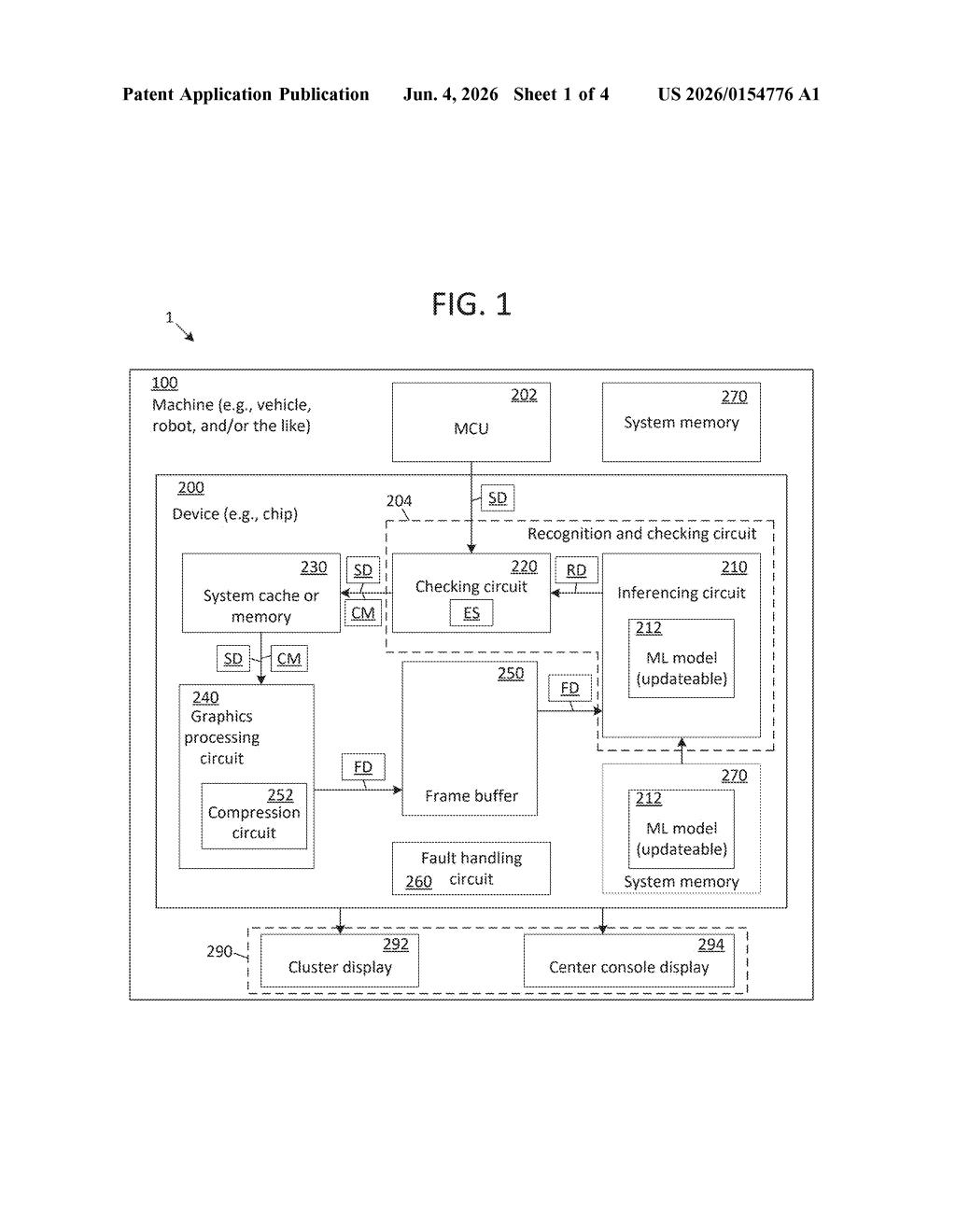
Samsung's patent describes a system where a machine-learning model watches the rendered frame and tries to recognize what's in it. That recognition is then compared back against the original sensor data that kicked off the whole process. If the two don't match, a 'checking circuit' fires off an error signal — essentially an alarm that says something went wrong between input and output.
Think of it like a spell-checker for your GPU: the AI reads what the graphics pipeline produced and flags it when it doesn't match what the pipeline was supposed to draw. The goal is catching rendering faults automatically, without waiting for a human to notice something looks off.
How the checking circuit compares sensor data to ML output
The patent describes a three-stage pipeline sitting inside a graphics processing system:
- Graphics processing circuit: Takes raw sensor data (think camera feeds, depth sensors, or display input signals) and renders it into a first frame — basically a standard GPU pipeline output.
- Inferencing circuit with ML model: Receives a second frame derived from that first frame and runs it through a machine-learning model to produce recognition data — a structured description of what the model identifies in the frame (objects, patterns, scene content).
- Checking circuit: Compares the original sensor data directly against the ML model's recognition data. A meaningful difference between the two triggers an error signal.
The core idea is using the ML model as a semantic verifier (a layer that understands meaning, not just pixels). Instead of doing a raw pixel-diff between two frames — which would miss subtle content errors — the system asks: does what the model sees in the output match what the sensor data originally described?
This makes it sensitive to rendering errors that look visually plausible but are semantically wrong — for example, a depth sensor showing an object at close range while the rendered frame shows empty space.
What this means for display reliability in Samsung devices
For consumer devices, this kind of self-checking pipeline could matter most in safety-sensitive or high-reliability contexts — AR/VR headsets, automotive displays, or camera viewfinders where a corrupted frame isn't just ugly but potentially dangerous. An error signal generated in real time gives the system a chance to re-render, discard, or flag the bad output before it reaches the user.
For Samsung specifically, this fits into the company's broader push to integrate ML inference engines directly into its Exynos SoC family. Building error detection into the graphics hardware layer — rather than relying on software-level sanity checks — is the kind of low-latency reliability feature that matters in always-on display and XR pipeline work.
This is a solid, focused engineering patent rather than a flashy AI claim — it's about reliability infrastructure, not a new AI capability. The interesting part is using ML recognition as a semantic ground-truth check rather than a pixel-level comparator. That's a genuinely useful design choice for catching the class of errors that brute-force frame comparison would miss. Worth watching if Samsung is pushing Exynos further into automotive or XR contexts where frame integrity is non-negotiable.
There are more where this came from
We read every patent application Big Tech publishes and send you the ones worth knowing. Plain English, free, every week.
Want this weekly breakdown for a company we don't cover? Patentlyze Pro →