
Samsung Patents AI That Removes Blurring Doubles When Enlarging Low-Resolution Photos
When your phone blends a sharp image with a blurry one to make a high-resolution photo, you sometimes get a ghost — a faint double of a moving object. Samsung's new patent targets exactly that problem.
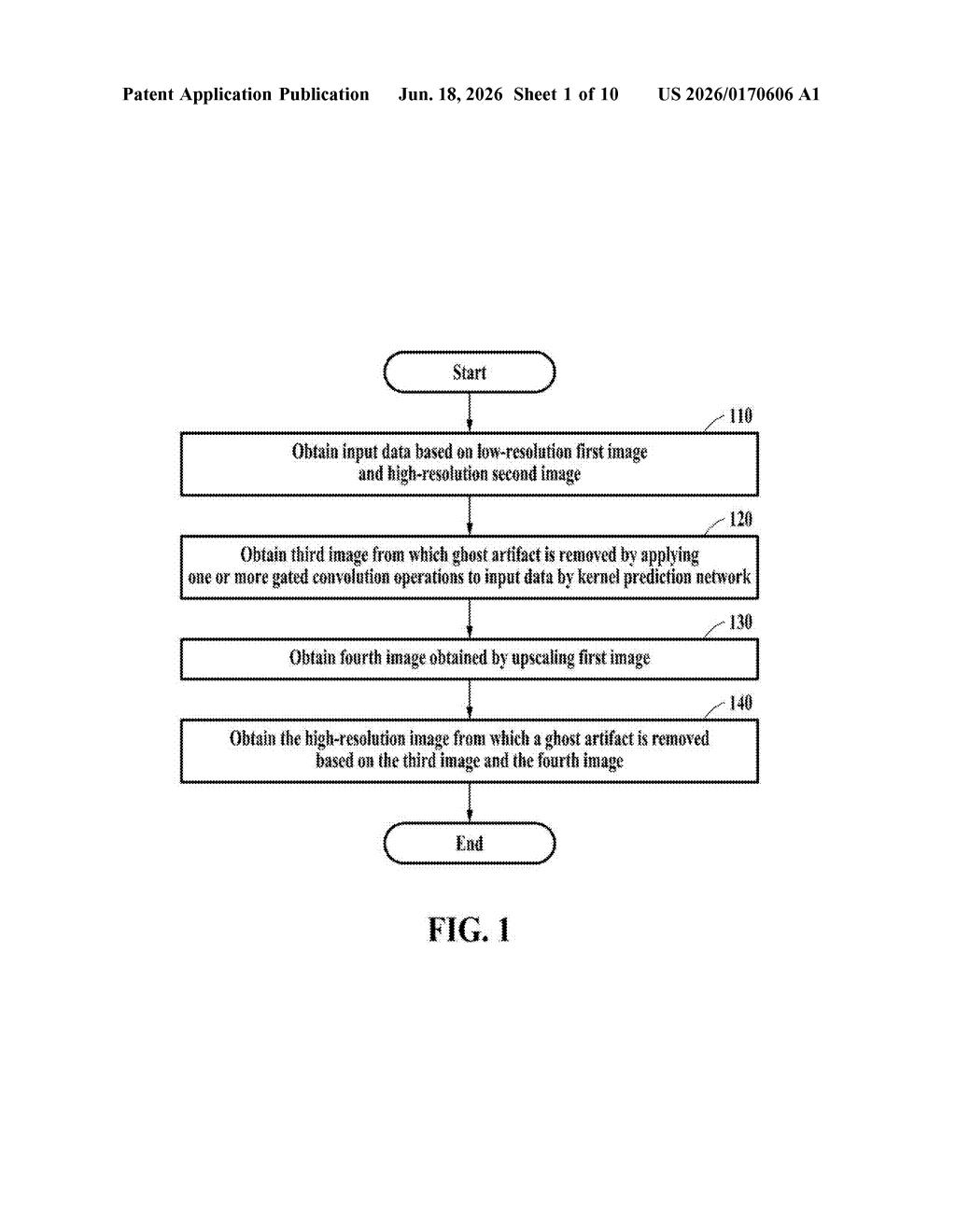
What Samsung's ghost-removal upscaling actually does
Imagine taking a photo with your phone and watching a person walk through the frame mid-shot. Your camera often takes multiple exposures at different quality levels, then stitches them together to build a sharper final image. The catch: if anything moved between shots, you can end up with a faint, translucent double of that object — a classic "ghost artifact."
Samsung's patent describes an AI system that takes both a lower-quality image and a sharper image as inputs, figures out where those mismatched ghosting errors are happening, and filters them out before the final photo is assembled. A specialized network predicts exactly which parts of each image to trust, then those clean results get combined with an upscaled version of the original to produce a final image that's both sharp and ghost-free.
The goal is a final photo that has the full detail of the higher-resolution shot without the smearing or doubling that comes from any movement between exposures — all handled automatically inside the camera pipeline.
How the kernel prediction network filters ghosted pixels
The patent describes a four-step image generation pipeline:
- Input assembly: The system takes a low-resolution image (say, a standard shot) and a higher-resolution image (perhaps from a telephoto or a separate sensor pass) and combines them into a single input data package.
- Ghost removal via gated convolution: A kernel prediction network — a type of AI model that generates custom per-pixel filters on the fly, rather than using fixed rules — applies gated convolution operations to that input. "Gated" means the network selectively decides how much information from each image to let through at each pixel location, effectively masking out regions where movement caused misalignment.
- Upscaling the base image: Separately, the low-resolution image is upscaled using a conventional method, providing a clean spatial scaffold.
- Final merge: The ghost-free result from step two is combined with the upscaled base image to produce a final output that exceeds the original resolution and contains no doubling artifacts.
The key innovation is using learned, adaptive filters (the kernel prediction network) rather than fixed blending rules. Because the filters are predicted fresh for each image, the system can handle a wide range of motion types and misalignment patterns that a static algorithm would miss.
What this means for Samsung camera processing
Ghost artifacts are a real and persistent annoyance in computational photography — you've almost certainly seen them in night shots or action photos where your phone tried to merge multiple frames. Any camera that blends exposures, relies on multi-frame processing, or uses a multi-sensor setup is vulnerable. Samsung's Galaxy phones already do heavy multi-frame processing, so a patented fix for this specific failure mode fits squarely into their camera software roadmap.
For users, this would mean cleaner action shots and low-light photos without having to choose between sharpness and ghosting. For Samsung, it's a concrete engineering claim in a fiercely competitive camera-quality race where Google, Apple, and Huawei are all playing the same multi-frame game.
This is a practical, focused patent — not a flashy AI concept, but the kind of quiet image-processing fix that directly improves photos you take every day. Ghost artifacts in multi-frame photography are genuinely annoying, and a learned approach that adapts per image is more defensible than a rule-based one. Worth watching to see if this surfaces in a Galaxy camera update.
There are more where this came from
We read every patent application Big Tech publishes and send you the ones worth knowing. Plain English, free, every week.
Want this weekly breakdown for a company we don't cover? Patentlyze Pro →