
Patent: Sony's Filing Picks the Most Reliable AI by Nudging Its Test Data
When an AI model encounters data it was never trained on, how do you know which of your available models to trust? Sony has filed a patent for a system that answers that question without needing a human to label a single example.
How Sony's system picks an AI model without labeled data
Imagine you're running a camera system in a new city it has never visited. You have several AI models trained for different conditions, but you don't know which one fits this new environment best. Normally, a team of engineers would have to label real examples and test each model manually. That's slow and expensive.
Sony's system does something clever instead: it takes that unlabeled, real-world data, nudges it slightly in small random ways (like subtly adjusting brightness or adding a tiny amount of noise), and then runs those nudged copies through each AI model. A model that really understands what it's looking at will give consistent answers across all those slightly different versions. A model that's confused or poorly matched will give scattered, unreliable answers.
The system measures that consistency automatically and uses it to rank or select the best-fit model, no human labels required. It's a bit like testing which flashlight is brightest by switching it on and off rapidly and watching which one flickers least.
How the deviation score ranks competing AI models
The patent describes a three-part pipeline for model selection in what Sony calls an unknown environment (real-world conditions the models weren't explicitly trained on and where no annotated ground truth exists).
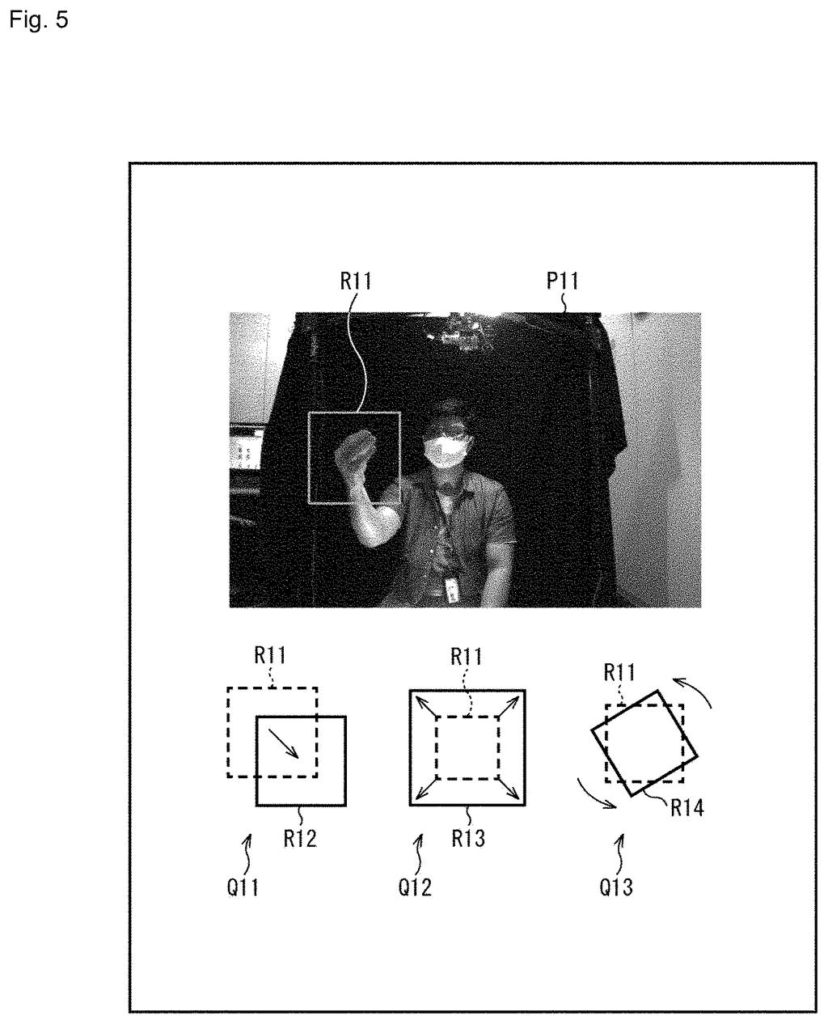
- Perturbation step: The system takes raw, unlabeled input data (called first data) and generates multiple slightly modified copies (called second data) by applying weak perturbations. These are small, controlled distortions, think minor noise, tiny geometric shifts, or slight brightness changes, that don't meaningfully change what the data represents but do probe how sensitive a model's output is.
- Inference step: Each candidate model processes all of those perturbed copies and produces a set of predictions (inferences).
- Deviation scoring: A deviation calculation unit measures how spread out or inconsistent those predictions are across the perturbed versions. Low deviation means the model is confident and stable; high deviation means it's uncertain or mismatched to this environment.
- Model selection: A model selection unit compares deviation scores across all candidate models and picks the one or more models best suited to the current environment.
The key insight is that prediction consistency under small input changes acts as a proxy for model reliability, sidestepping the usual requirement for human-labeled validation data.
What this means for AI deployed in the real world
Deploying AI in the real world is messy because real-world data constantly shifts. A model that performs well in a controlled test environment may fall apart in a new city, weather condition, or sensor configuration. Traditionally, catching that failure requires expensive human annotation and evaluation cycles. Sony's approach inserts an automatic quality check that can run on-device or in the field, in real time, without any labels.
This kind of technique is particularly relevant for robotics, autonomous vehicles, and surveillance or sensing systems where the operating environment changes and you can't pause to retrain. If Sony applies this to its camera, sensor, or robotics product lines, it could mean systems that self-audit which AI brain to use depending on where they find themselves deployed.
This is a genuinely practical idea for a real and persistent problem in applied AI. The core trick, using prediction consistency under perturbation as a free signal for model quality, is well-grounded in the research literature on uncertainty estimation. Sony filing this suggests they're thinking seriously about deploying AI models in conditions where the training-to-deployment gap can't be closed in the lab. Worth watching if you follow Sony's sensor or robotics ambitions.
There are more where this came from
We read every patent application Big Tech publishes and send you the ones worth knowing. Plain English, free, every week.
The drawings
18 drawing sheets from US 2026/0220536 A1 · click any drawing to enlarge


Want this weekly breakdown for a company we don't cover? Patentlyze Pro →
Be the first to weigh in