
Amazon Patents an AI Inspection Station That Checks Warehouse Robots for Damage
Amazon wants to automate one of the more tedious jobs in a warehouse: checking whether the mobile shelving units that ferry your packages around are damaged or defective. Instead of a human eyeballing each unit, a ring of cameras and an AI do the job in seconds.
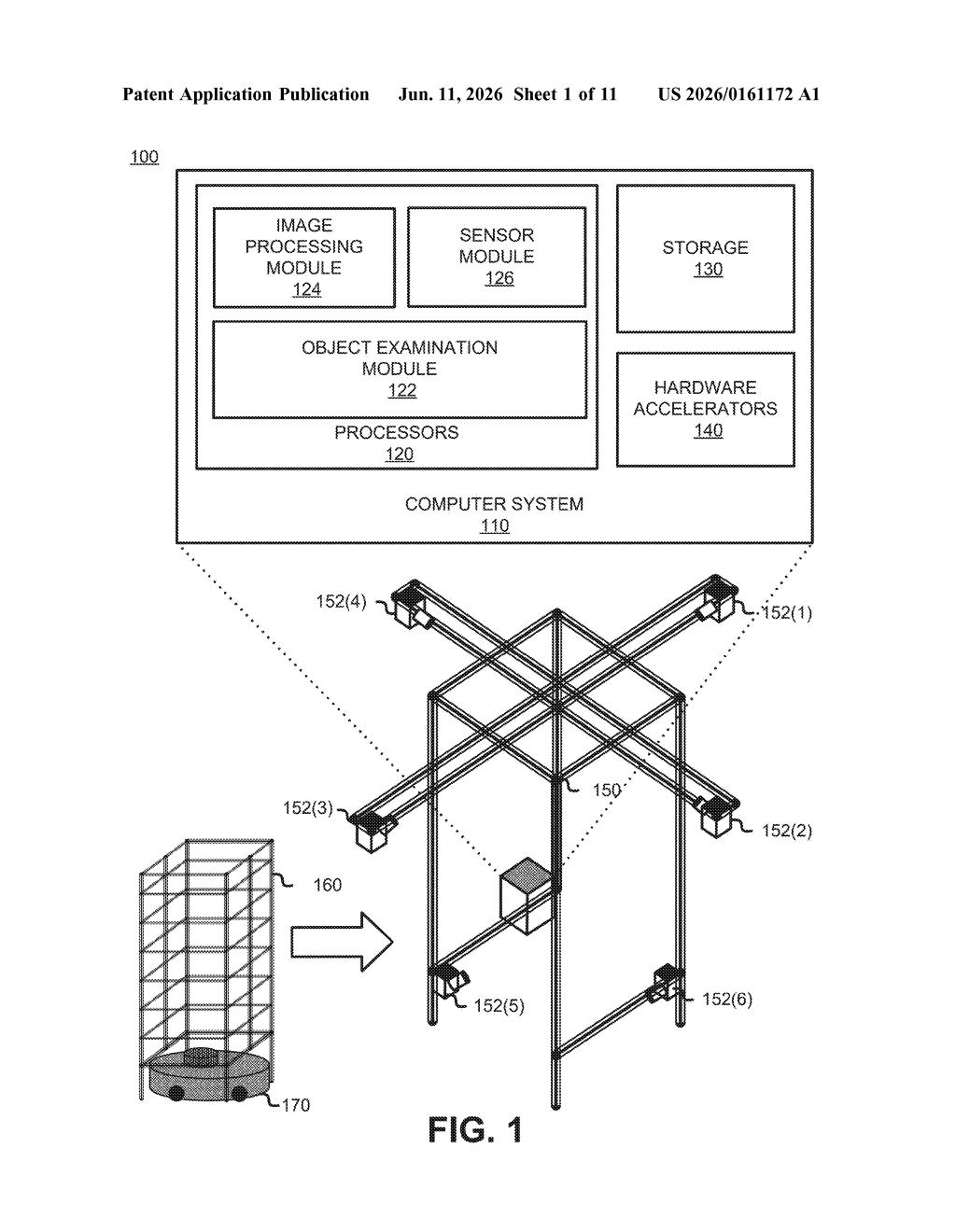
How Amazon's warehouse bot inspection system works
Picture the giant wheeled shelving units — called mobile storage units — that scoot around Amazon's fulfillment centers carrying products. They take a beating. Wheels get bent, shelves get warped, structural bits get loose. Right now, catching those problems requires someone to physically walk around and look.
Amazon's new patent describes a station where, the moment one of these units rolls into position, cameras mounted on all four sides fire simultaneously and capture it from every angle under bright, controlled lighting. An AI then analyzes those photos looking for specific features — think identifying a wheel hub, then using that as a reference point to measure whether the wheel itself is damaged.
The result is a simple pass/fail signal: the unit either goes back to work or gets pulled for repair. No human inspector required, no missed angles, no inconsistency between shifts.
How the neural network pinpoints defects across camera angles
The system is essentially an automated inspection booth. A network of cameras — positioned to cover at least four distinct sides of the object simultaneously — triggers the moment the unit rolls into a defined zone inside the station. Controlled lighting elements fire at the same time to eliminate shadows and ensure consistent image quality.
Once the images are captured, two neural network passes happen in sequence. First, the AI identifies a broad set of features — recognizable parts of the object like wheels, frames, or connectors. Second, it uses those identified features as reference points (essentially landmarks) to calculate precise coordinates for a finer set of features it needs to evaluate. This two-step approach — landmark-first, detail-second — helps the AI handle variation in how the unit is positioned without needing it perfectly centered.
The system then checks those precise feature coordinates against a list of criteria (for example: is this wheel within acceptable alignment tolerances? Is this bracket within expected dimensions?). Based on all criteria, it issues a binary pass-or-fail result.
Key components the patent describes:
- Multi-camera array capturing simultaneous multi-angle images
- Controlled lighting elements for consistent illumination
- First neural network pass for broad feature identification
- Second neural network pass for coordinate-level precision measurement
- Rule-based criteria evaluation against detected feature coordinates
What this means for Amazon's fulfillment center operations
Amazon operates hundreds of fulfillment centers globally, each packed with thousands of mobile storage units that log enormous mileage every day. Manually inspecting that fleet for wear and structural defects at scale is slow and prone to human error — a tired inspector on a night shift misses things that a camera array won't.
Automating this inspection step means defective units get caught before they fail mid-operation — a broken wheel on a loaded shelf unit in a busy warehouse aisle is a real safety and logistics problem. For Amazon's robotics and operations strategy, this kind of AI-driven quality gate fits squarely into the company's long-term push to reduce human labor in repetitive, physical monitoring tasks inside its warehouses.
This is unglamorous but genuinely useful engineering. Amazon isn't trying to impress anyone here — this is a practical, well-scoped solution to a real fleet-management problem at warehouse scale. The two-pass neural network design (landmarks first, precision second) is a sensible approach to handling real-world positional variation, and the pass/fail output keeps it operationally actionable rather than just academically interesting.
There are more where this came from
We read every patent application Big Tech publishes and send you the ones worth knowing. Plain English, free, every week.
Want this weekly breakdown for a company we don't cover? Patentlyze Pro →