
Sony Patent Restores Lost Touch Signals Using Physical and Perceptual Models
When you send a touch sensation over a network, some of it inevitably gets lost. Sony is patenting a way to fill in those gaps so the person on the receiving end still feels something close to what was intended.
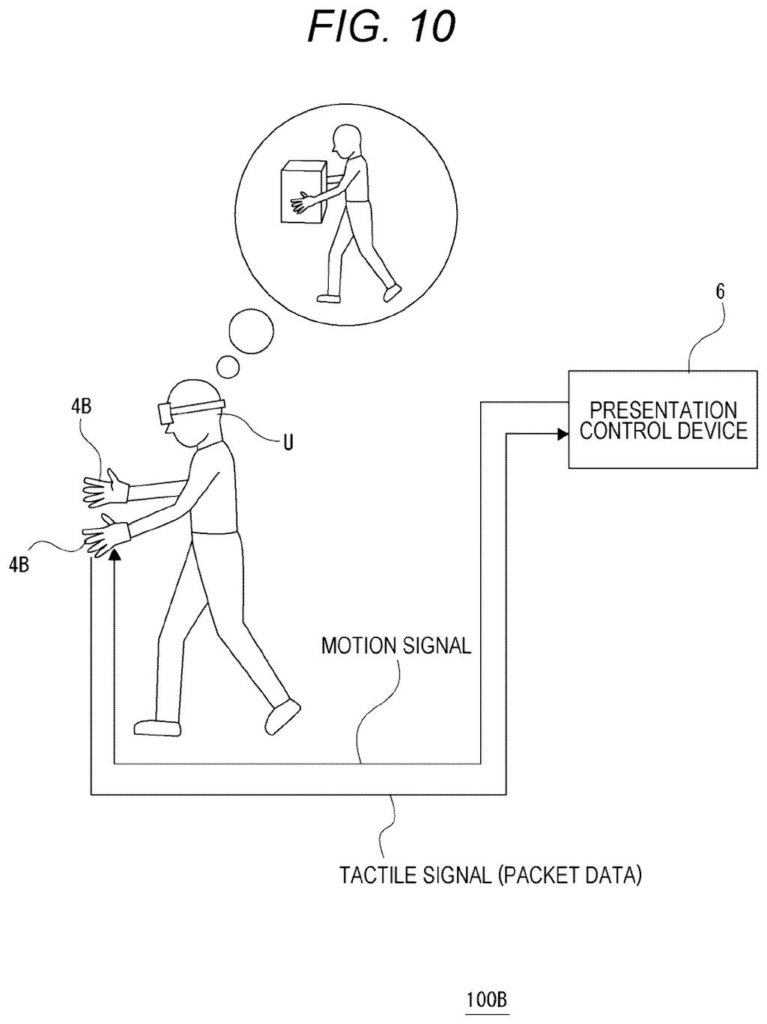
What Sony's tactile signal recovery actually does
Imagine you're using a remote-surgery robot, a haptic gaming glove, or a device that lets you "feel" a texture across the internet. The system has to transmit tiny signals that tell your hand exactly what kind of pressure, vibration, or resistance to simulate. But networks drop data all the time, and when a touch signal goes missing, the result is a jarring gap or a wrong sensation entirely.
Sony's patent describes a way to automatically rebuild those missing touch signals on the fly. Instead of just leaving a blank or repeating the last known data point, the system looks at the touch signals that arrived just before and just after the gap, then uses either a physics model (how real objects behave) or a model of how humans perceive touch to generate a reasonable stand-in for what was lost.
The practical result is that the haptic experience stays continuous and believable even when the network hiccups. You wouldn't feel a sudden dead spot or a weird jolt; the system patches the hole in a way that makes physical sense.
an interpolation signal generation unit that generates an interpolation signal based on a tactile signal in an adjacent section of a loss section and a physical model or a human perception model related to tactile sensation …
Translation: The device creates replacement touch data using nearby signals and how humans or physics expect it to feel.
How the system reconstructs missing haptic data
The patent describes a signal processing device built around what Sony calls an "interpolation signal generation unit." Interpolation here just means filling in missing values between known data points, the same concept a music app uses when it smooths out a scratchy recording.
The unit does this by looking at the tactile signals (the data encoding touch sensations) that arrived in the sections immediately surrounding the lost chunk. Think of it like autocomplete for touch: you know what came before and what came after, so you make an educated guess about the middle.
What makes this more than a simple average is the two types of models the system can draw on:
- Physical model: rules about how real-world objects behave mechanically, so reconstructed signals obey realistic friction, elasticity, or vibration patterns.
- Human perception model: rules about how people actually sense touch, accounting for the fact that our nervous systems don't notice very short gaps or subtle inconsistencies the same way our eyes do.
The claim is intentionally broad, covering any device that does this reconstruction, any method it uses, and any software program that implements it. That breadth is typical for a foundational patent meant to protect the core idea rather than one specific hardware product.
A signal processing device in the present technology includes an interpolation signal generation unit that generates an interpolation signal based on a tactile signal in an adjacent section of a loss section …
Translation: This hardware fills in missing touch feedback by looking at the good data right next to the gap.
What this means for remote touch and haptic tech
Haptic technology is still early-stage, and one of its biggest practical problems is network reliability. A video call with a brief freeze is annoying; a haptic surgery assist or a rehabilitation device that sends a wrong force signal at the wrong moment is a real problem. Sony's approach, patching gaps using physics and human-perception rules rather than just repeating the last reading, could make remote haptic systems far more dependable.
Sony has a long history in both gaming peripherals and professional haptics, so this filing fits neatly with hardware lines like PlayStation's DualSense controller and broader interests in medical and industrial robotics. The core idea here, that a system should understand how humans feel touch to reconstruct missing data correctly rather than just doing math, is the kind of foundational claim that shapes an entire product category, and it sits alongside a steady stream of new Big Tech patents pushing haptic and sensory transmission from a novelty into reliable infrastructure.
This is the 18th Sony filing we've tracked in input and haptics since May, a topic that already includes one on self-recalibrating analog sticks and one on magnetic force replacing springs.
When touch is sent over a network and some of that data goes missing, the person on the receiving end doesn't experience a neutral gap. They feel a wrong sensation, or a sudden nothing, that breaks whatever they were trusting their hands to tell them.
Sony's approach here is to predict what the missing sensation should have felt like, using either physical rules or a model of how human nerves actually process touch, and fill the gap with that. The distinction matters because a sensation that passes the body's own test feels continuous, while one that doesn't keeps pulling attention to itself.
For a surgeon steering a remote tool, a prosthetic user learning to grip, or someone practicing a physical skill in a simulation, this is the difference between trusting what their hands report and constantly second-guessing it.
Get our take in your Top Stories
Liked this breakdown? Add Patentlyze as a preferred source on Google, and our plain-English take shows up more often in your Top Stories the next time Sony patent news breaks.
There are more where this came from
We read every patent application Big Tech publishes and send you the ones worth knowing. Plain English, free, every week.
The drawings
18 drawing sheets from US 2026/0252174 A1 · click any drawing to enlarge


Show the other 10 sheets


Want this weekly breakdown for a company we don't cover? Patentlyze Pro →
Be the first to weigh in