
Apple
Apple · AR / VR · Filed Jul 13, 2026 · USPTO published Nov 12, 2026 · This week's release
Apple Patents Eye Calibration So Headset Cameras Keep Nearby Objects Sharp
Headsets that show you the world through cameras have a blind spot: anything held close to your face looks blurry. Apple's filing teaches the headset to measure your eyes first, then focus the cameras on whatever you are looking at.
- Publication number
- US 2026/0362002 A1(US20260362002A1)
- Applicant
- Apple Inc.
- Filed · Published
- Jul 13, 2026 · Nov 12, 2026
- Inventors
- Brett D. Miller, Bosheng Zhang, Kathrin Berkner Cieslicki, Stephane P. Bersot, Noah D. Bedard
- Status when we published
- Waiting for an examiner
- Document
- 20 claims
- US classification
- 348/349
- Parent application
- Continuation of 18/888,034 (filed Sep 17, 2024)(18888034)
What Apple's eye-calibrated headset camera does
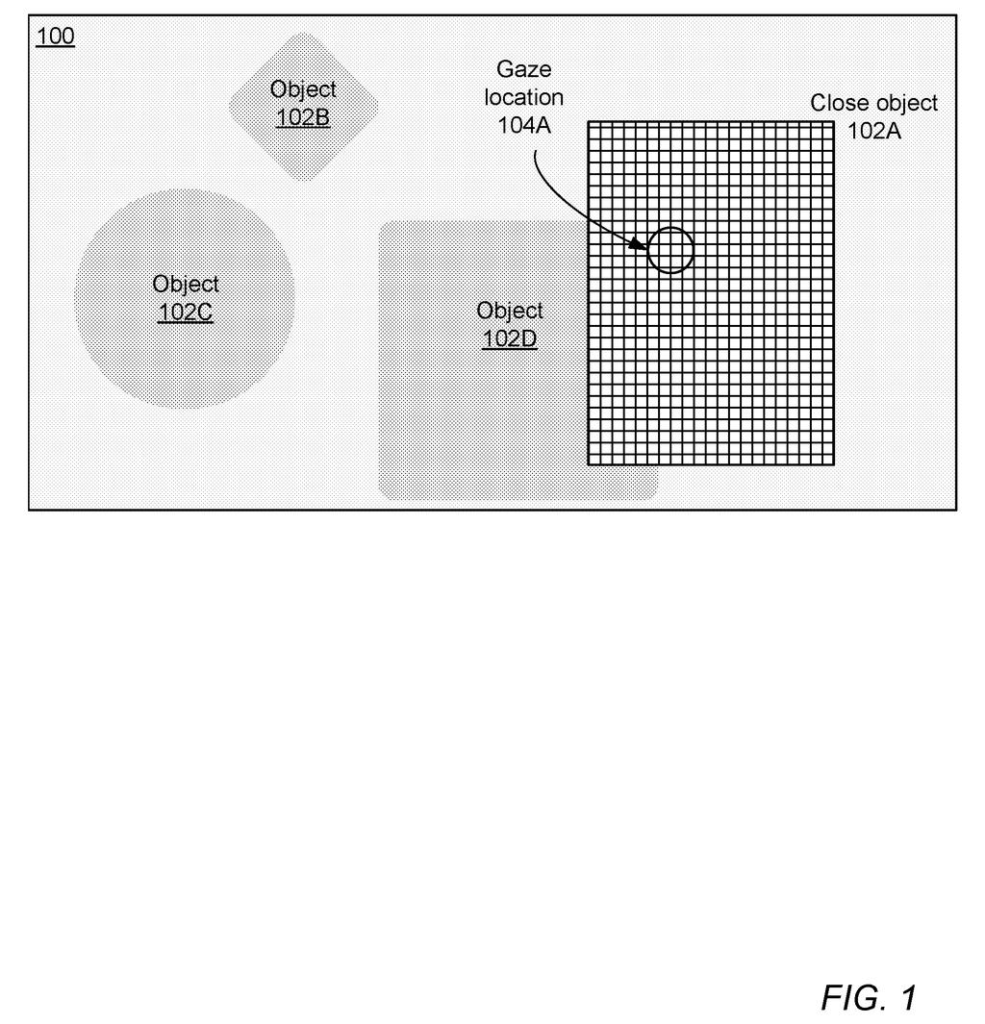
Every time you pull your phone out while wearing a headset that shows the world through cameras, there's a good chance it looks blurry. The cameras are fixed focus, so anything closer than about half a meter slips out of focus.
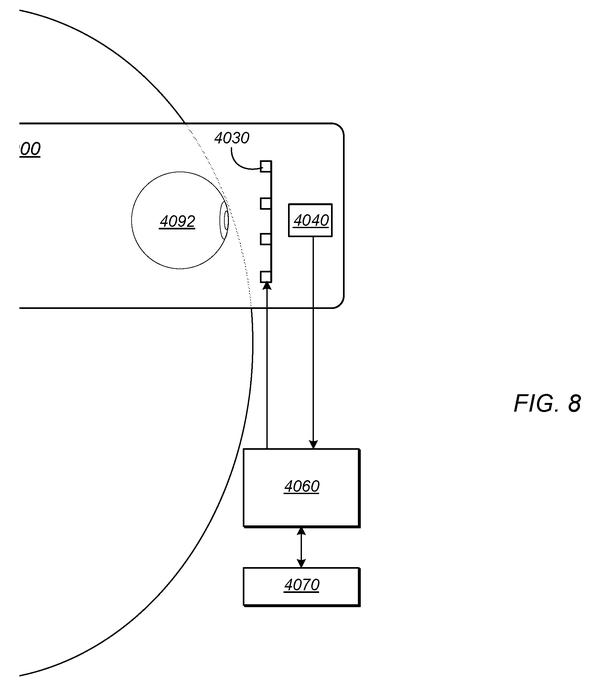
Apple's filing describes a camera that can change its focus, guided by where your eyes are pointed. The catch is that everyone's eyes are a little different. So the headset would first show you some dots at known spots and ask you to look right at them. It compares where your eyes say you're looking with where the dots really are, and remembers the difference.
From then on, the headset can turn your eye movements into a more accurate focus distance, so the thing you're looking at snaps into sharp view.
… compute intersection points of the left and right gaze vectors and compare the intersection points with the ground truth positions of respective targets; store results of the comparison as calibrated vergence information; and use the calibrated vergence information to determine a focus distance for the camera.
Translation: The headset checks where your eyes are pointing to figure out how to focus the passthrough cameras.
How the headset learns where your eyes converge
The patent's claims center on a calibration step for vergence. Vergence is the way your two eyes angle inward when you look at something close and relax outward when you look far away. If you draw a line of sight from each eye, the spot where the lines cross tells you roughly how far away the object is.
The trouble is that this estimate can be a bit off, and it differs from person to person. So the device shows one or more targets at known positions, asks you to fixate on them, and records the left and right gaze vectors (the direction each eye is pointing) from its gaze tracker. It computes where those lines cross, compares that with the target's true position, and stores the result as calibrated vergence information. That correction is then used to pick the focus distance for the world-facing camera.
The dependent claims add several options:
- The targets can be real objects in the scene or virtual objects the headset draws.
- The calibrated value can be blended with a depth map (a 3D layout of the room from depth sensors).
- The camera can take a test image and fine-tune focus using a sharpness score.
- Machine learning or a simple look-up table can turn the comparison results into the correction.
The description also covers a manual two-setting mode, with a near focus around 0.4 meters and a far focus around 0.7 meters, for people whose eyes don't suit gaze-driven focus.
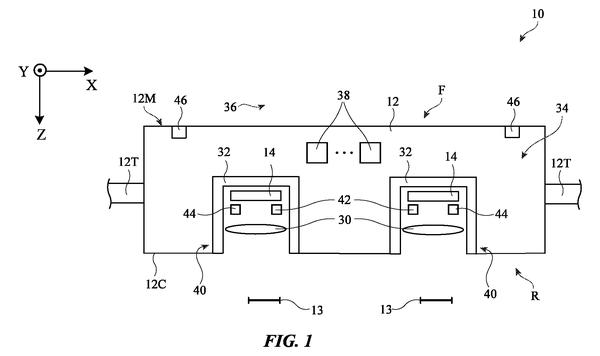
Methods and apparatus for camera focusing for video passthrough devices. Gaze information from a gaze tracking subsystem, either alone or along with depth information from a depth tracking system, may be leveraged to determine depths at which to focus.
Translation: The system uses eye tracking data to automatically decide what part of the real world needs to be in focus.
Why blurry close-ups matter for Apple's headsets
If you wear a video headset, the practical win is simple: the phone in your hand, the page you're reading or the object you're working on stays sharp instead of smearing. The filing itself says objects within about half a meter can look blurry on a fixed-focus camera, and that is exactly where people do close work.
It also shows how much depends on your eyes. Gaze-driven focus only works if the headset reads your eyes accurately, so a quick setup step could make the difference between a camera that follows you and one that hunts back and forth. The manual near/far option is a fallback for people the automatic methods don't suit.
Apple's 128th filing we've tracked in our AR glasses work since May adds to earlier ideas like anchoring virtual content to real spots and a sliding forehead pad.
Source: US 2026/0362002 A1 at the USPTO (PDF). Full patent text and figures are in the official publication.
Get our take in your Top Stories
Liked this breakdown? Add Patentlyze as a preferred source on Google, and our plain-English take shows up more often in your Top Stories the next time Apple patent news breaks.
Add Patentlyze on Google
One click.
There are more where this came from
We read every patent application Big Tech publishes and send you the ones worth knowing. Plain English, free, every week.
The drawings · 19 sheets
19 drawing sheets from US 2026/0362002 A1 · click any drawing to enlarge


Show the other 11 sheets


More from Apple
All 672 Apple patents →
More in AR / VR
All 690 AR / VR patents →
Apple
Apple Files Patent for Headset Images That Don't Lag When You Turn Your Head
Apple
Apple Files Patent for a Headset That Leaves Its Computer in Your Pocket
Apple
Apple Files Patent for a Headset Forehead Pad That Slides to Fit Your Face
Apple
No comments yet