
Apple Files Patent to Track Your Eyes Using the Same Lenses That Show the Picture
Apple's latest filing places an eye-tracking laser sensor right beside a display's pixels. One tiny steering part then both shows you the picture and watches your eyes.
What Apple's shared eye-tracking optics do
Imagine you're wearing a headset or a pair of AR glasses, and the screen needs to know exactly where your eyes are pointed so it can sharpen what you're looking at. Today that usually means small cameras aimed at your eyes, which drain battery and add bulk.
Apple's filing takes a different route. It puts a small laser sensor next to the display's red, green and blue pixels. A single movable steering part then aims both the picture and the sensor's invisible beam. The beam bounces off your eye and comes back along the same path, and the way it returns reveals how fast your eye is moving.
Because the sensor shares parts with the display, the tracking hardware doesn't need a whole separate light path of its own. Your device can then adjust what it draws based on how your eyes move.
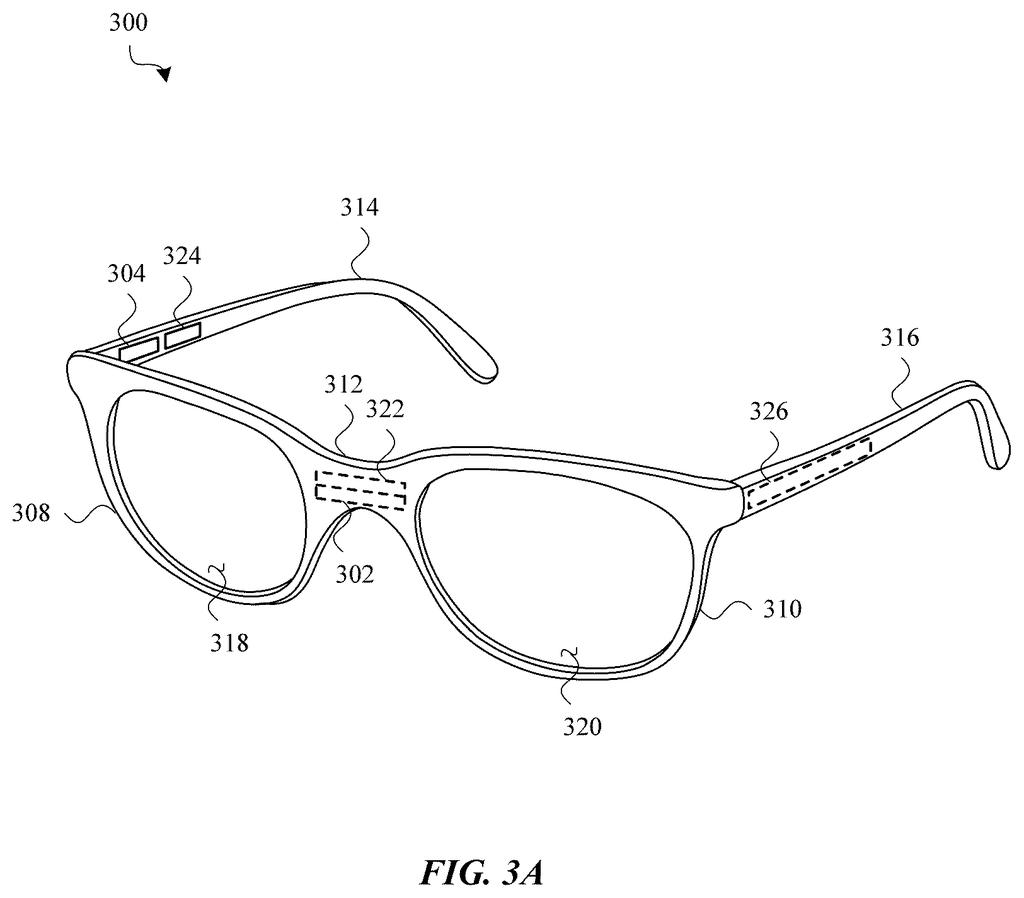
An eye tracking device includes a head-mountable frame, an optical sensor subsystem mounted to the head-mountable frame, and a processor. The optical sensor subsystem includes a set of one or more SMI sensors.
Translation: Headsets use special sensors and a computer processor to watch your eyes.
How one steering part serves screen and laser
The filing is the latest in a chain of continuation applications. Its claims cover a device with three key parts: a display made of tiny colored pixels, a self-mixing interferometry (SMI) sensor, and a movable beam steering component. An SMI sensor is a small laser that detects its own light bouncing back into it. The returning light changes how the laser behaves, and that change reveals how the reflecting surface is moving.
The steering component does three jobs:
- It directs the display's light so visible content is projected.
- It sends the SMI sensor's light toward an object, such as an eye.
- It guides the light that bounces back into the SMI sensor.
A processor reads the SMI signal and tracks the object's movement, which the dependent claims say can be an eye. That includes estimating angular velocity (how fast the eye is rotating) and working out a gaze vector (the direction you are looking). The device can also adjust how it renders content based on that movement.
The claims add options. Waveguides (channels that carry light, including optical fibers) can move the light around, and the SMI sensor can sit on the same base as the pixels, even between them. The pixels emit red, green and blue, while the sensor emits infrared or ultraviolet light.
direct first light emitted by the set of display pixels to project visible content; direct second light emitted by the SMI sensor toward an object; and direct a returned portion of the second light from the object toward the SMI sensor; …
Translation: The same lenses show the screen and bounce tracking light off your eyes.
Why eye tracking inside the display matters
If you wear a headset or glasses, eye tracking is what lets a screen know where you are looking. It can sharpen that spot, react to your gaze, or wake up when you open your eyes. The filing says camera-based tracking costs power, size and processing time, which are the things that make wearables heavy and short-lived.
By folding the sensor into the display's own light path, Apple's design could trim parts and draw less power. The description also mentions eye events, like a blink or a particular look, triggering actions such as answering a call or turning the display on or off. It is a patent filing, so nothing here promises a product.
That makes this Apple's 114th filing we've tracked since May in our Apple AR glasses watchlist, a group that includes applications like the headset fit alert and flat pages turned into rooms.
Sharing one steering part between the picture and the eye sensor saves room, and room is the scarcest thing inside a pair of glasses. The price is coordination. The same moving piece has to serve two jobs, so the display and the sensor must take turns or stay perfectly in step.
Aim is a second cost. The filing says the laser gives a good reading when it lands on the colored part or the white of the eye, and a poor one on the pupil or cornea. It describes using a camera now and then to check where the beam is landing, so a camera may stay in the picture after all.
For glasses where every gram and every minute of battery counts, the trade reads as worth it. The risk sits in the details of timing and aim, which a patent filing cannot prove either way.
Get our take in your Top Stories
Liked this breakdown? Add Patentlyze as a preferred source on Google, and our plain-English take shows up more often in your Top Stories the next time Apple patent news breaks.
There are more where this came from
We read every patent application Big Tech publishes and send you the ones worth knowing. Plain English, free, every week.
The drawings
14 drawing sheets from US 2026/0339096 A1 · click any drawing to enlarge


Show the other 6 sheets


Want this weekly breakdown for a company we don't cover? Patentlyze Pro →
Be the first to weigh in