
Apple's New Patent Lets You Control Real-World Objects With a Gesture
Apple is working on a system where pointing at or gesturing toward a real-world object — a door, a smart light, a poster — could trigger an action instantly, with no pop-up menu or button required.
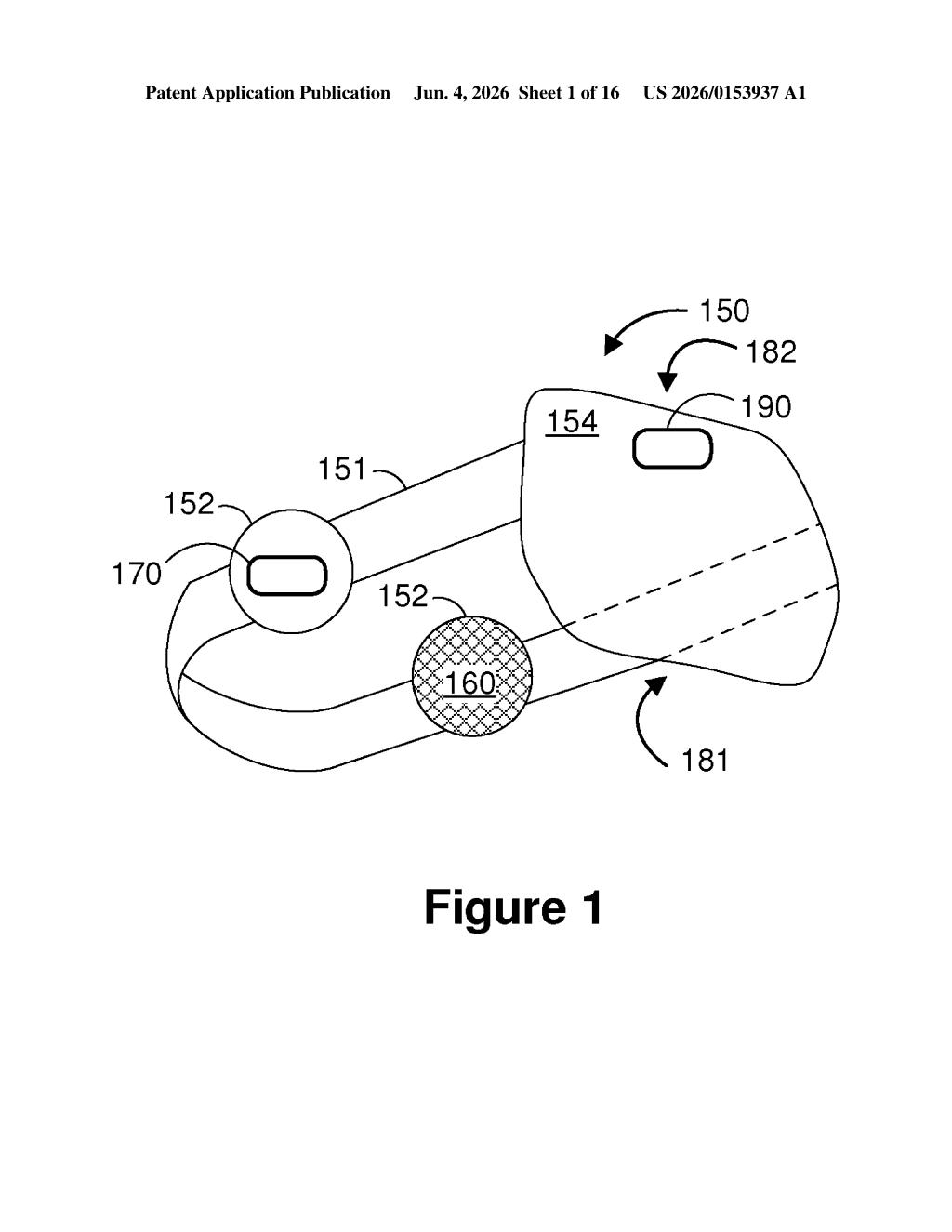
What Apple's gesture-direct action system actually does
Imagine you're wearing Apple's Vision Pro headset and you look at your smart thermostat. Instead of waiting for a floating button to appear on screen so you can tap it, you just make a quick pinch gesture at the thermostat itself — and it adjusts. No UI, no confirmation prompt, no detour through a menu.
That's the core idea in this Apple patent. The device's camera watches your environment, recognizes specific objects as actionable items — things it knows can do something — and then watches for a hand gesture aimed at that object. When it sees the right gesture, it fires the associated action immediately.
The key phrase in the patent is "without displaying a user interface element comprising a selectable control element." In plain English: no button ever appears. The gesture is the button. It's a meaningful step toward interfaces that feel less like operating a computer and more like interacting with the world.
How the device skips the UI and fires the action directly
The patent describes a device — most naturally a head-mounted display like Vision Pro, but potentially any camera-equipped device — that continuously analyzes images from its image sensor to find actionable items in the physical environment (real-world objects pre-mapped to specific actions).
When the system detects a selection hand gesture that targets one of those items, it executes the linked action directly. The critical design choice is what the patent calls the "without displaying" condition: the action fires without first rendering any on-screen UI control like a button, toggle, or confirmation dialog.
This is meaningfully different from how most spatial computing interfaces work today. Current AR/VR systems typically follow a "look → render UI → select" pipeline. Apple's patent short-circuits that to: "gesture at thing → thing happens."
What counts as an actionable item? The patent doesn't enumerate them, but the framework implies any real-world object the system has associated with a defined action — smart home devices, app icons projected onto surfaces, QR-like triggers, or contextually recognized objects (a phone, a TV, a document).
What this means for Vision Pro and future AR interfaces
For spatial computing, latency and friction are everything. Every extra step — waiting for a button to render, aiming at a small control, confirming an action — chips away at the feeling that you're actually in an environment rather than operating a floating computer. This patent is Apple's signal that it wants direct, gesture-native interaction to be a first-class paradigm on its spatial platform.
It also has implications beyond Vision Pro. Any device with a camera and hand-tracking — a future iPhone, an AR glasses product, even a smart display — could theoretically implement this. If Apple ships this in a consumer product, it could push the whole AR/VR industry toward less menu-heavy, more gesture-immediate interfaces.
This is a genuinely interesting UX patent, not a routine filing. The 'no UI element required' constraint is a deliberate architectural choice, not a feature gap — and it suggests Apple has thought carefully about what makes spatial interfaces feel fluid versus clunky. If this ships in a Vision Pro OS update or future hardware, it could be one of those quiet changes that makes the whole experience feel substantially more natural.
There are more where this came from
We read every patent application Big Tech publishes and send you the ones worth knowing. Plain English, free, every week.
Want this weekly breakdown for a company we don't cover? Patentlyze Pro →