
Apple Patents a Way for Devices to Recognize Each Other with Invisible Light Pulses
Apple is exploring a way for devices to quietly exchange information using light pulses that flicker too fast for any camera to detect — essentially a secret handshake made of invisible light.
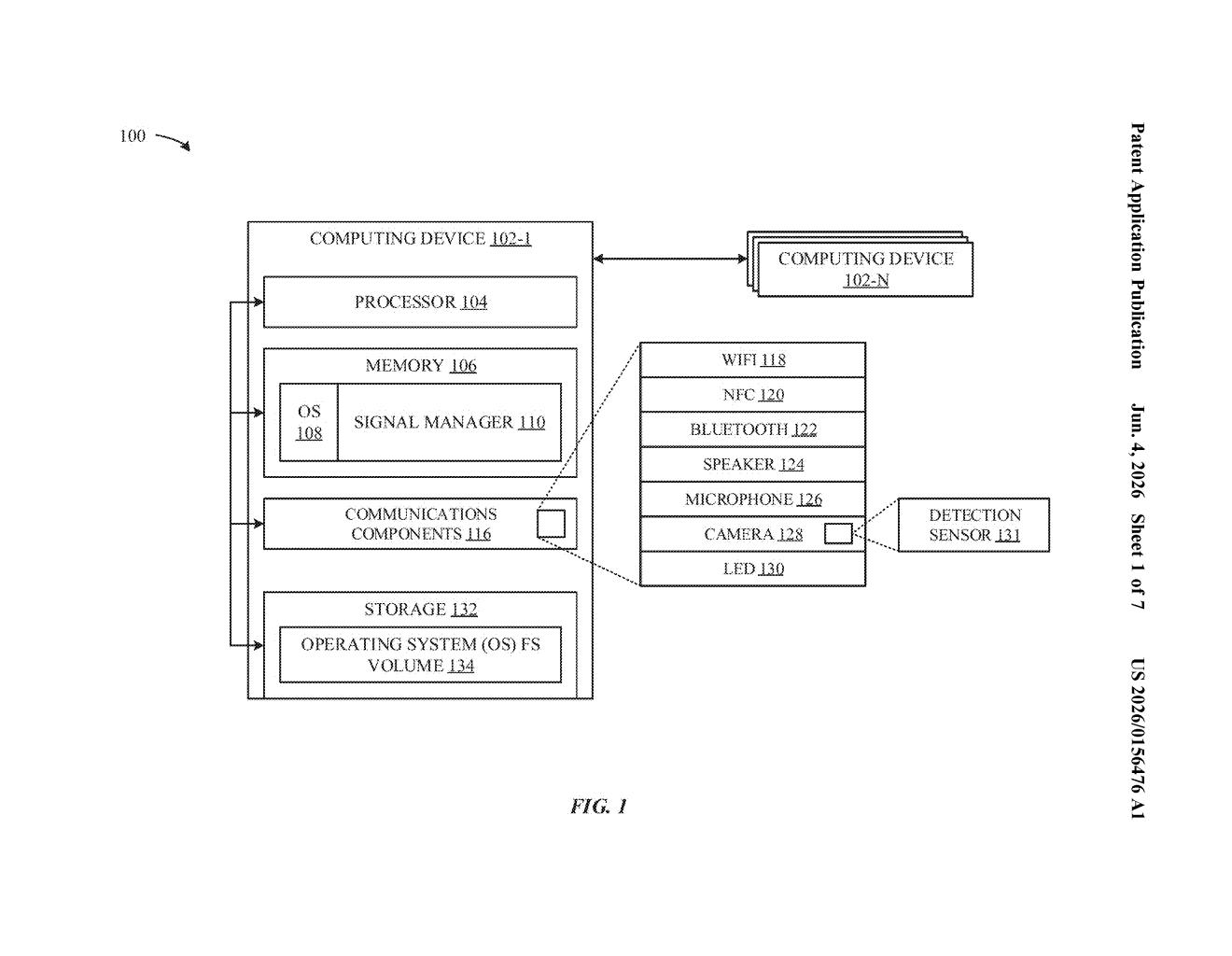
What Apple's invisible light communication actually does
Imagine your iPhone and a nearby accessory — say, a pair of glasses or a health monitor — need to confirm they're supposed to talk to each other. Right now that might mean Bluetooth pairing screens, QR codes, or NFC taps. Apple's new patent describes a different idea: the accessory flashes a light signal so fast that no camera can see it, but a dedicated sensor on your iPhone can.
The light blinks at a frequency above what any camera system can capture, which means it's effectively invisible to someone trying to record or intercept it with a phone camera. A special detection sensor — separate from the camera — picks it up instead.
The system can also send different information depending on context. If one set of conditions is met, the accessory sends one type of data; if a different set of conditions applies, it sends something else entirely. That flexibility hints at things like proximity-based authentication or device state signaling.
How the light encoding and detection system works
The patent describes a two-part system: a light output device (on the peripheral) and a detection sensor (on the main computing device, like an iPhone) that operates at frequencies above what a standard camera can resolve.
The core mechanic is frequency-gated communication — the light signal is transmitted at a rate high enough that camera sensors, which capture frames at fixed intervals, can't reconstruct the signal. Only a purpose-built photodetector tuned to that frequency range can decode it. This isn't infrared TV-remote territory; it's a deliberate design choice to keep the channel out of reach of casual interception via camera.
The claim structure is notably conditional: the peripheral device encodes different information into different light signals depending on which "set of criteria" is satisfied. That language suggests something like:
- Criteria set A (e.g., device is close but not authenticated): send basic identity data
- Criteria set B (e.g., device is authenticated and trusted): send richer or more sensitive data
The method also requires the peripheral to first detect the computing device within proximity before initiating any transmission — so the light channel only activates when a compatible device is nearby, reducing unnecessary broadcast.
What this means for device pairing and secure data transfer
For consumers, this could mean a much smoother and more secure way to pair accessories — particularly the kind of always-on wearables that Apple has been building toward. Instead of fumbling through Bluetooth menus or holding devices together for NFC, proximity alone could trigger a silent, camera-proof handshake.
The security angle is the more interesting long-term story. Using a channel that cannot be intercepted by a camera is a meaningful design constraint — it suggests Apple is thinking about environments where visual eavesdropping is a real concern. That's relevant for health devices transmitting biometric data, AR accessories exchanging scene information, or any scenario where you don't want a nearby phone camera passively capturing your device's broadcast.
This is a genuinely clever approach to a real problem: short-range device communication that's both frictionless and resistant to passive interception. The conditional encoding logic — send different data based on different trust states — suggests this isn't just a pairing trick but a broader secure-channel primitive. Whether it shows up in Apple Vision Pro accessories, next-gen AirPods, or something else entirely, it's worth watching.
There are more where this came from
We read every patent application Big Tech publishes and send you the ones worth knowing. Plain English, free, every week.
Want this weekly breakdown for a company we don't cover? Patentlyze Pro →