
Samsung Patents an AR Display That Anchors Virtual Objects to Real-World Depth
Mixing real and virtual visuals sounds easy until a virtual character appears to float in front of a wall that's actually five feet behind it. Samsung's new patent describes a system that measures the real distance to objects in your camera feed and snaps virtual counterparts to the exact right depth layer — so nothing looks like it's pasted on wrong.
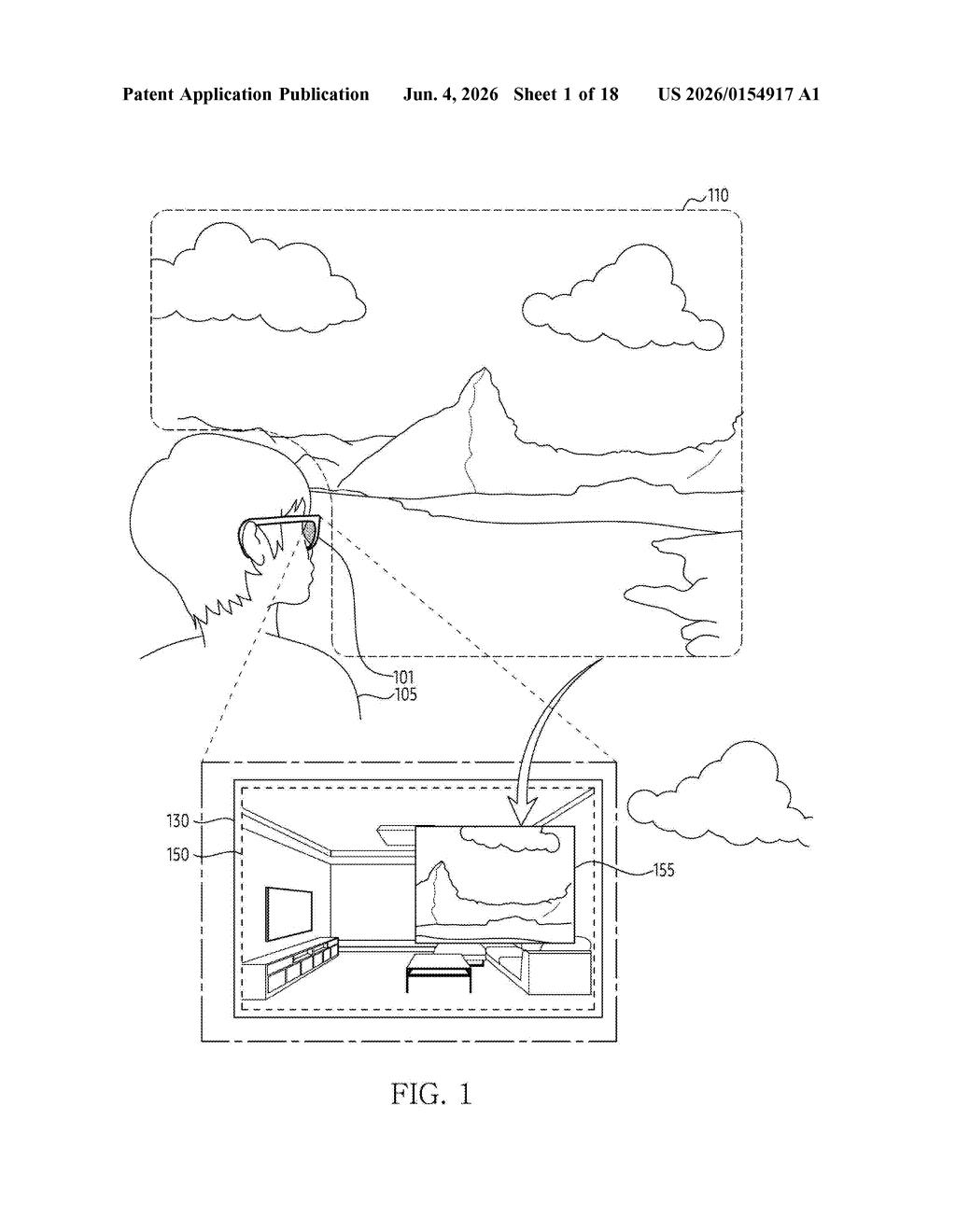
What Samsung's depth-matched AR overlay actually does
Imagine you're wearing a mixed-reality headset and you can see your living room blended into a virtual sci-fi scene. A real lamp sits on your table, but in the headset's view a glowing holographic version of it hovers at the wrong depth — either eerily close or weirdly far. That mismatch is one of the most immersion-breaking problems in AR today.
Samsung's patent describes a fix: the device uses a sensor (think a depth camera or lidar) to measure exactly how far away a real object is, then places a virtual twin of that object at a matching position inside the virtual scene. The system juggles two separate depth maps — one for where the real-world video feed is displayed, and one for where virtual objects are placed — and uses the distance measurement to reconcile them.
The result is that virtual objects appear anchored to their real counterparts rather than floating randomly. If you move closer to your lamp, the virtual version scales and shifts the way a real object would. It's a subtle but foundational improvement to how convincing a mixed-reality view can feel.
How two depth layers keep real and virtual objects aligned
The patent describes a pipeline with four main steps running on an electronic device — likely a headset or phone — that has a camera, a depth sensor, a display, and a processor.
- Step 1 — Capture the real world: While a virtual environment is being rendered on screen, the device's camera grabs a live image of the physical scene outside the headset.
- Step 2 — Composite at first depth: That real-world camera feed (or a portion of it) is inserted into the virtual scene using first depth information — essentially a z-position in the virtual space that decides where the passthrough video sits relative to virtual scenery.
- Step 3 — Measure real distance: The sensor independently measures the actual distance to a specific real-world object visible in that camera feed. This is separate from the camera image itself; think of it as a rangefinder layer.
- Step 4 — Place the virtual object at second depth: A virtual object corresponding to that real object is rendered at a position derived from the measured physical distance, governed by second depth information. The two depth values don't have to be the same, giving the system flexibility to layer real and virtual content independently.
The key insight is the deliberate separation of two depth information domains: where the passthrough video sits in the virtual scene, and where the virtual object counterpart sits. This lets the device handle occlusion and spatial consistency without locking the two layers together rigidly.
What this means for Samsung's XR headset ambitions
Mixed-reality depth consistency is one of the hardest unsolved UX problems in XR. When a virtual object appears at the wrong depth, your brain notices immediately — it's the same discomfort as watching a bad 3D movie where the parallax is off. A system that automatically anchors virtual objects to sensor-measured real distances would make passthrough AR far more comfortable for extended use, which matters a lot for productivity headsets.
Samsung is ramping up its XR hardware ambitions with the Galaxy XR headset platform, and this patent fits squarely into the foundational perceptual work that platform needs. You likely wouldn't see this as a feature toggle — it'd just be why the AR looks right.
This is solid, unglamorous plumbing work for mixed-reality displays — exactly the kind of depth-compositing logic that separates a headset that feels real from one that feels like a screen taped to your face. It's not a flashy AI story, but getting depth layering right is prerequisite infrastructure for any serious AR product. Samsung filing this now aligns with the timing of its rumored XR hardware push.
There are more where this came from
We read every patent application Big Tech publishes and send you the ones worth knowing. Plain English, free, every week.
Want this weekly breakdown for a company we don't cover? Patentlyze Pro →