
Nvidia
Aurora · Automotive · Filed Jul 27, 2026 · USPTO published Nov 19, 2026 · This week's release
Aurora Files Patent for Scoring Which Mistakes Matter When Self-Driving Vehicles Spot Objects
A 20 centimeter error in where a car is can be harmless at 200 meters and a real problem when that car is beside you. Aurora's new patent covers software that learns that difference when it grades a self-driving system.
- Publication number
- US 2026/0365201 A1(US20260365201A1)
- Applicant
- Aurora Operations, Inc.
- Filed · Published
- Jul 27, 2026 · Nov 19, 2026
- Inventors
- Davis Edward King
- Status when we published
- Waiting for an examiner
- Document
- 20 claims
- US classification
- 701/27
- Parent application
- Continuation of 18/969,437 (filed Dec 5, 2024)(18969437)
How Aurora decides which detection errors count
Imagine a self-driving truck that misjudges a parked car on the shoulder by a few inches. Nobody would care. Now imagine the same slip for a car in the lane right next to the truck. That one matters a lot.
Aurora's patent is about teaching software to tell those two situations apart. Before a self-driving system goes on the road, engineers test how well it spots objects by comparing what it saw against a human-checked answer key. Demanding a perfect match is impossible, and hand-writing rules for every case is a mess. So Aurora's system measures several kinds of difference (position, direction, speed and more), then uses learned weights to decide how much each one counts, based on things like how far away the object is and which lane it's in.
The output is a single score that says whether the detection was good enough.
… aggregating, into an aggregate divergence, the plurality of component divergence values based on a plurality of learned parameters that define an influence of the plurality of component divergence values on the aggregate divergence …
Translation: Combining different error measurements using learned weights to figure out how bad a mistake is.
How Aurora's learned weights build one score
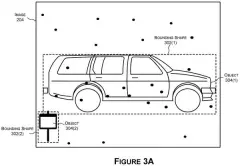
The filing describes an evaluation system: software that grades another piece of self-driving software. It takes an object the vehicle's sensors detected (say, a box drawn around a car) and compares it to a label, the human-checked answer for where that object really was.
Instead of one yes-or-no comparison, it computes several component divergence values, each measuring a different kind of miss, such as how the box is rotated or how far off its position is. A small learned model then combines them into one aggregate divergence score. The learned weights set how much each difference counts. They can be constrained so a weight never flips sign (for example, extra rotation error can never be treated as a reward).
Context adjusts the weights. A context metric might capture lane position, distance from the vehicle, or how hidden the object is, so the same rotation error counts more for a car in the next lane than for one parked on the shoulder.
The weights are fit using a bank of test pairs that people marked as good matches, bad matches, or spurious detections. The claims also cover the last step: updating the state of the system being tested, such as recording that it meets a benchmark level of performance.
… obtaining an object detection from a perception system that describes an object in an environment of the autonomous vehicle; (b) obtaining, from a reference dataset, a label that describes a reference position of the object in the environment …
Translation: Comparing what the self driving car sees against a correct reference dataset.
Why faster testing matters for self-driving
Self-driving systems have to be tested on huge numbers of scenes, and the hard part is the borderline cases, where someone must decide whether the system's guess was close enough. Aurora's filing describes automating that judgment, which it says could allow much higher test volume at far greater speed than manual review.
For you, the effect is indirect. Better testing is how a software update that makes things worse gets caught before it reaches the road. The filing also says the same scoring can run live, helping a vehicle decide whether a new detection matches an object it is already tracking or should be thrown out as spurious. That extends the grader from the test lab into the driving software itself.
Source: US 2026/0365201 A1 at the USPTO (PDF). Full patent text and figures are in the official publication.
Get our take in your Top Stories
Liked this breakdown? Add Patentlyze as a preferred source on Google, and our plain-English take shows up more often in your Top Stories the next time Aurora patent news breaks.
Add Patentlyze on Google
One click.
There are more where this came from
We read the new patents from Big Tech, carmakers and more and send you the ones worth knowing. Plain English, free, every week.
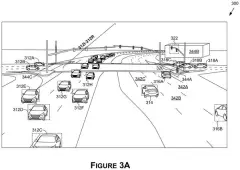
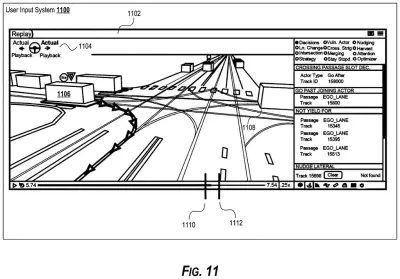
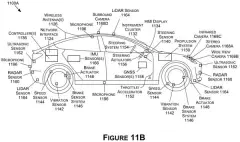
The drawings · 16 sheets
16 drawing sheets from US 2026/0365201 A1 · click any drawing to enlarge


Show the other 8 sheets


No comments yet