
Qualcomm
Qualcomm · Automotive · Filed Apr 7, 2026 · USPTO published Nov 19, 2026 · This week's release
Qualcomm Patents a Self-Driving AI That Learns How Much Room It Has to Move
Most AI drivers try to guess where every nearby car will go before they plan a move. A new Qualcomm patent application has the AI predict the safe gaps around itself instead.
- Publication number
- US 2026/0367634 A1(US20260367634A1)
- Applicant
- QUALCOMM Incorporated
- Filed · Published
- Apr 7, 2026 · Nov 19, 2026
- Inventors
- Richard Stephen SHAFFER, Vinay Kumar SENTHIL KUMAR, Pranav DESAI
- Status when we published
- Waiting for an examiner
- Document
- 18 claims
- US classification
- 701/48
- Parent application
- Claims priority from a provisional application 63806561 (filed May 15, 2025)
What Qualcomm's driving AI does about other cars
Every time you drive in traffic, you size up your space without thinking about it: how close you can get to the car ahead, how much room you have beside the truck in the next lane. Qualcomm has filed a patent application for a way to give a self-driving or driver-assist system that same instinct.
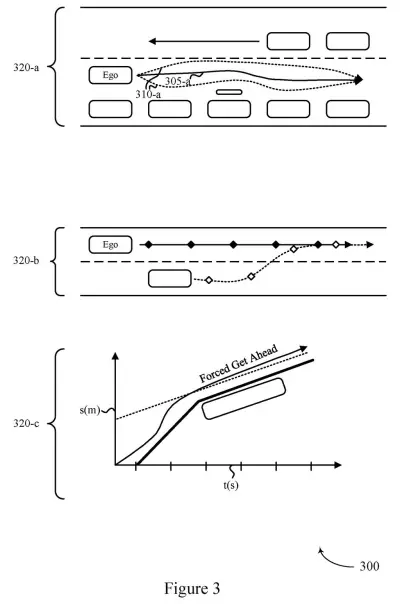
Most AI drivers work out their moves by first guessing where every nearby car and pedestrian will go, then planning around those guesses. That is a lot of math to run many times a second. In Qualcomm's version, the AI predicts its own path and, at the same time, the limits on that path: the closest it should get to the car ahead, the car behind, and objects on each side.
The idea is that your car spends less effort forecasting everyone else, so it can react faster and use less power. It learns those limits from recordings of real human driving.
… determine, via input of the data to an artificial intelligence or machine learning (AI/ML) model, a predicted trajectory of the vehicle and one or more predicted constraints for vehicle control …
Translation: The computer uses AI to figure out where the car should go and what physical limits it must respect.
How the model learns its gaps from real driving
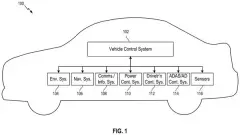
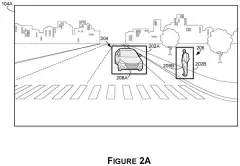
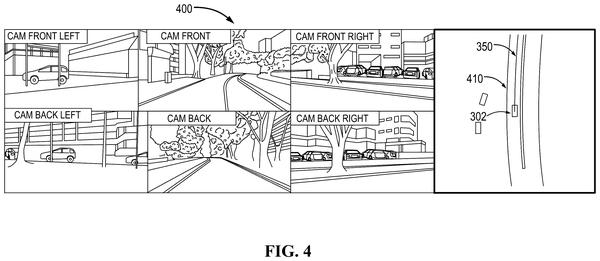
The filing describes a single AI model (or a few working together) that looks at sensor data about the car's surroundings, such as camera images, lane markings, signs, pedestrians and distances. From that it outputs two things: a planned path for the car, and a set of predicted constraints, meaning the boundaries the plan has to stay inside.
The constraints come in two directions. Lengthwise, they cover how close the car can get to a lead vehicle and a following vehicle, plus speed and acceleration limits. Sideways, they cover how near the car can be to objects or lane markers on its left and right. The filing says this adds just four extra numbers per point on the path, instead of full multi-second forecasts for every other vehicle nearby.
To train it, the system takes recordings of a human-driven trip, pulls out the next few seconds of the path the car actually took, and measures the real distances to the car ahead, the car behind and the sides at each moment. Those measurements become the answer key. A cost function (a score that penalizes mistakes) pushes the model's predicted limits toward the real ones.
The planned path and limits then go to a refinement step such as model predictive control (a standard routine that smooths a path while keeping it within set limits) before the car steers, accelerates or brakes.
… learning to jointly plan and produce time-varying constraints imposed by dynamic and static objects during the generation of the plan …
Translation: The system learns to figure out how moving and stationary obstacles limit its driving path over time.
Why cheaper driving math matters in your car
Driver-assist and self-driving systems have to make decisions many times a second on the limited computer hardware inside a car. The filing says that skipping the forecasting of every nearby vehicle's path should cut computing, energy use and delay, and make the car's responses quicker and more efficient. For you, that could mean smoother braking and merging with less lag.
The patent also points to a second benefit. Because the limits are an explicit output, engineers can see what the AI believes its boundaries are, which the filing calls interpretability. Keep in mind this is a patent application with no test results, and it does not name a specific product or car.
This is the 60th Qualcomm filing we've tracked in self-driving sensing since July, adding to work like one that explains overridden moves and one matching live data to maps.
Source: US 2026/0367634 A1 at the USPTO (PDF). Full patent text and figures are in the official publication.
Get our take in your Top Stories
Liked this breakdown? Add Patentlyze as a preferred source on Google, and our plain-English take shows up more often in your Top Stories the next time Qualcomm patent news breaks.
Add Patentlyze on Google
One click.
There are more where this came from
We read every patent application Big Tech publishes and send you the ones worth knowing. Plain English, free, every week.
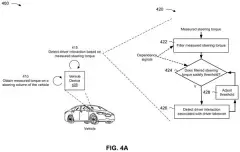
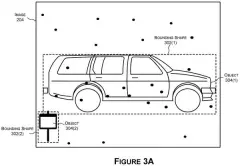
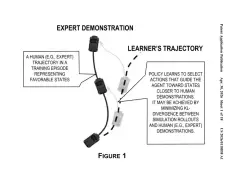
The drawings · 8 sheets
8 drawing sheets from US 2026/0367634 A1 · click any drawing to enlarge


More from Qualcomm
All 637 Qualcomm patents →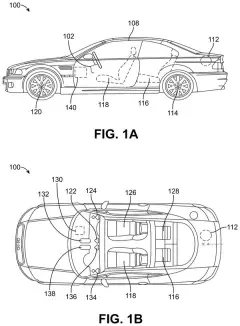
More in Automotive
All 377 Automotive patents →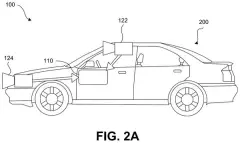
Mobileye (Intel)
Intel's Self-Driving Division Files Patent to Fix Gaps Between Digital Map Sections
Nvidia
Nvidia Files Patent to Help Self-Driving Cars Keep Track of the Same Pedestrian or Car
Nvidia
Nvidia Patents a Self-Correcting Training Loop for Self-Driving AI
Nvidia
No comments yet