
Amazon Patent Reveals Backup System With Two Emergency Modes for Self-Driving Cars
When a self-driving car's main computer fails, who takes over, and does it know enough to steer safely? Zoox's latest patent describes a backup system that keeps two different emergency plans ready, choosing the right one based on how much of the car is still working.
What Zoox's two-mode emergency system actually does
Imagine a pilot losing one engine over the ocean. The plane doesn't just shut down, it switches to a backup system and follows a simpler, safer flight plan. Zoox is building something similar for self-driving cars.
The patent describes a vehicle with three separate computer systems. The first plans where the car should go. The second actually drives it. The third is a standby backup that watches for problems and steps in if the second one fails. So far, that's fairly standard redundancy thinking.
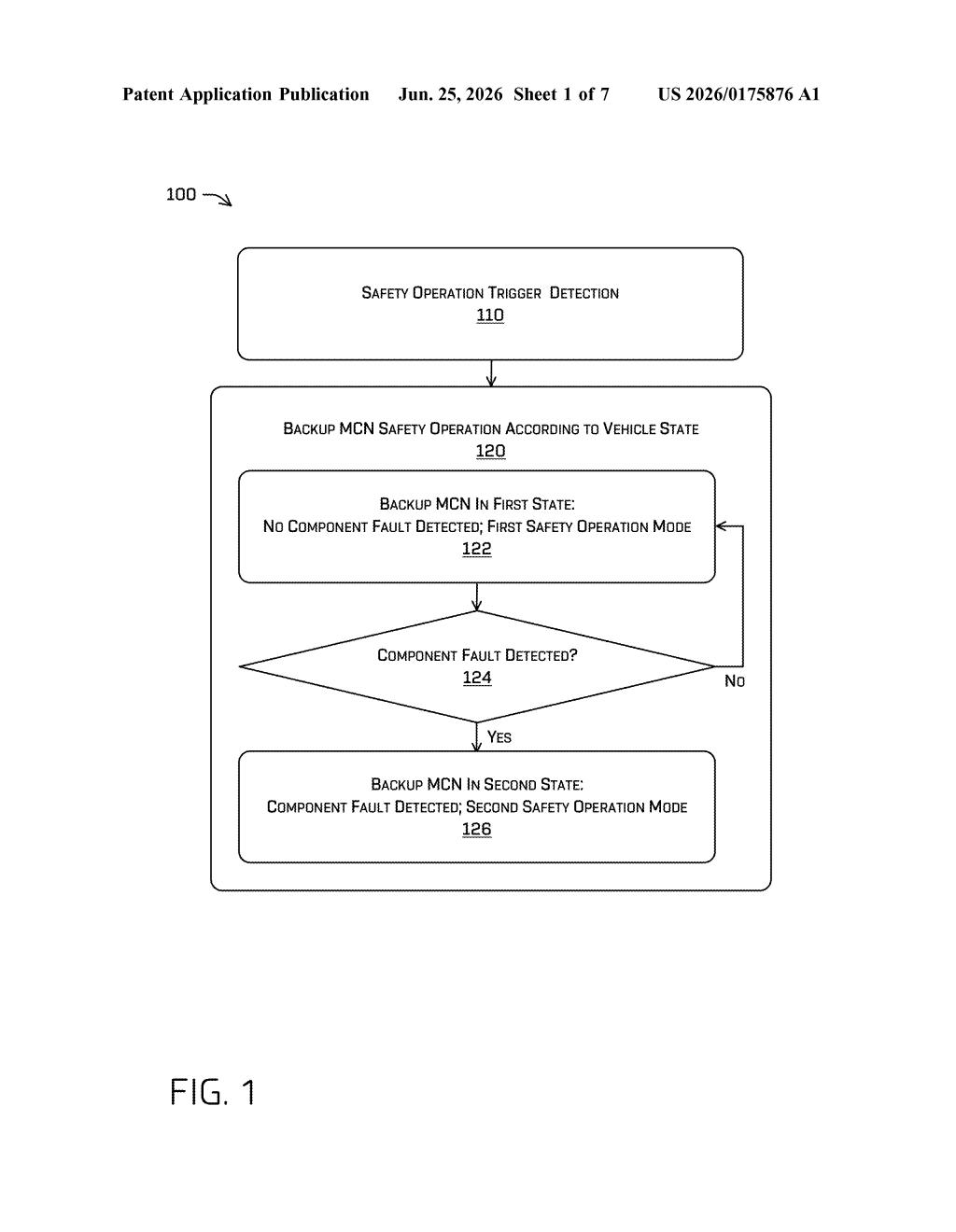
The interesting part is what the backup does when it takes over. If most of the car's sensors and hardware are still working, it runs a full emergency routine, calculating a careful path, applying moderate brakes, and steering the car to a safe stop. If the backup detects that more things are broken, it drops to a simpler fallback: preset braking and steering settings, no fancy calculations required. The backup always uses the approach that matches how much it can actually trust.
How the backup computer picks between the two safety modes
The patent outlines a three-computer architecture inside an autonomous vehicle. The first system, called the primary compute node, plans trajectories (the path the car should follow). The second, the primary motion compute node, translates those plans into actual steering and braking commands. The third, the backup motion compute node, sits idle, watching for faults.
When the primary motion compute node fails, a safety operation trigger fires and the backup takes over. But the backup doesn't operate blindly. It continuously monitors vehicle components in the background and has already decided which of two modes it will use:
- Mode 1 (full safety operation): The backup has enough working hardware to calculate a real-time emergency trajectory, including active steering and moderate braking, to bring the car to a controlled stop.
- Mode 2 (preset fallback): When the backup detects additional component faults (a sensor array gone dark, for example), it abandons dynamic calculations and falls back to fixed, pre-configured steering and braking settings that require minimal computation.
The key design choice is that the backup computer commits to a mode before a crisis hits. Rather than figuring out what's broken in the middle of an emergency, it has already assessed the car's health and chosen its plan. That pre-commitment is what the patent is really protecting.
What this means for self-driving car safety standards
For self-driving cars to earn regulatory approval and public trust, they need to handle failures in predictable, auditable ways. A system that tries to improvise during a multi-component failure is harder to certify and harder to trust. Zoox's approach, where the backup computer pre-selects its emergency mode based on real-time health monitoring, gives safety engineers a cleaner story: the car always knows which plan it's on.
Zoox builds purpose-built robotaxis and is an Amazon subsidiary, so this kind of safety architecture work is directly tied to its path toward commercial deployment. Whether or not this specific patent matters to competitors, the underlying idea, that a backup system should degrade gracefully and predictably rather than just trying its best, is the right way to think about autonomous vehicle safety.
This is solid, unsexy safety engineering. It won't generate headlines about AI or robots, but it's exactly the kind of layered fault-tolerance work that determines whether a self-driving car company gets its operating permits renewed or loses them after an incident. Worth paying attention to if you follow AV regulation.
There are more where this came from
We read every patent application Big Tech publishes and send you the ones worth knowing. Plain English, free, every week.
Want this weekly breakdown for a company we don't cover? Patentlyze Pro →