
Samsung
Samsung · AR / VR · Filed Feb 13, 2026 · USPTO published Jun 25, 2026 · Jun 25 release
Samsung Patents a Wearable That Carries Your Avatar Into Any App
Every virtual world you enter on a Samsung wearable could soon use the same digital version of you, even if that world never built one for you specifically.
- Publication number
- US 2026/0178122 A1(US20260178122A1)
- Applicant
- Samsung Electronics Co., Ltd.
- Filed · Published
- Feb 13, 2026 · Jun 25, 2026
- Inventors
- Hoyoung SEO, Moonyong JEONG
- Status when we published
- Waiting for an examiner
- Document
- 20 claims
- US classification
- 715/743
- Parent application
- Continuation of PCT/KR2024/095917 (filed Jul 11, 2024)(PCTKR2024095917)
What Samsung's cross-app avatar system actually does
Imagine you put on a mixed-reality headset and jump between apps throughout your day. One app has your custom avatar, the next one doesn't. Right now, that second app might show a generic placeholder or nothing at all.
Samsung's patent describes a fix. The wearable keeps a "task bar" that holds your chosen avatar from a dedicated avatar app. When you open a new virtual environment, the device checks whether that environment has its own avatar set up for you. If it does, great. If it doesn't, the headset automatically drops your existing avatar into that world instead.
The result is that your digital self travels with you across apps, rather than disappearing every time you step into unfamiliar virtual territory. It's a small quality-of-life detail, but one that matters a lot once you're spending real time in a headset.
How the device picks which avatar to show
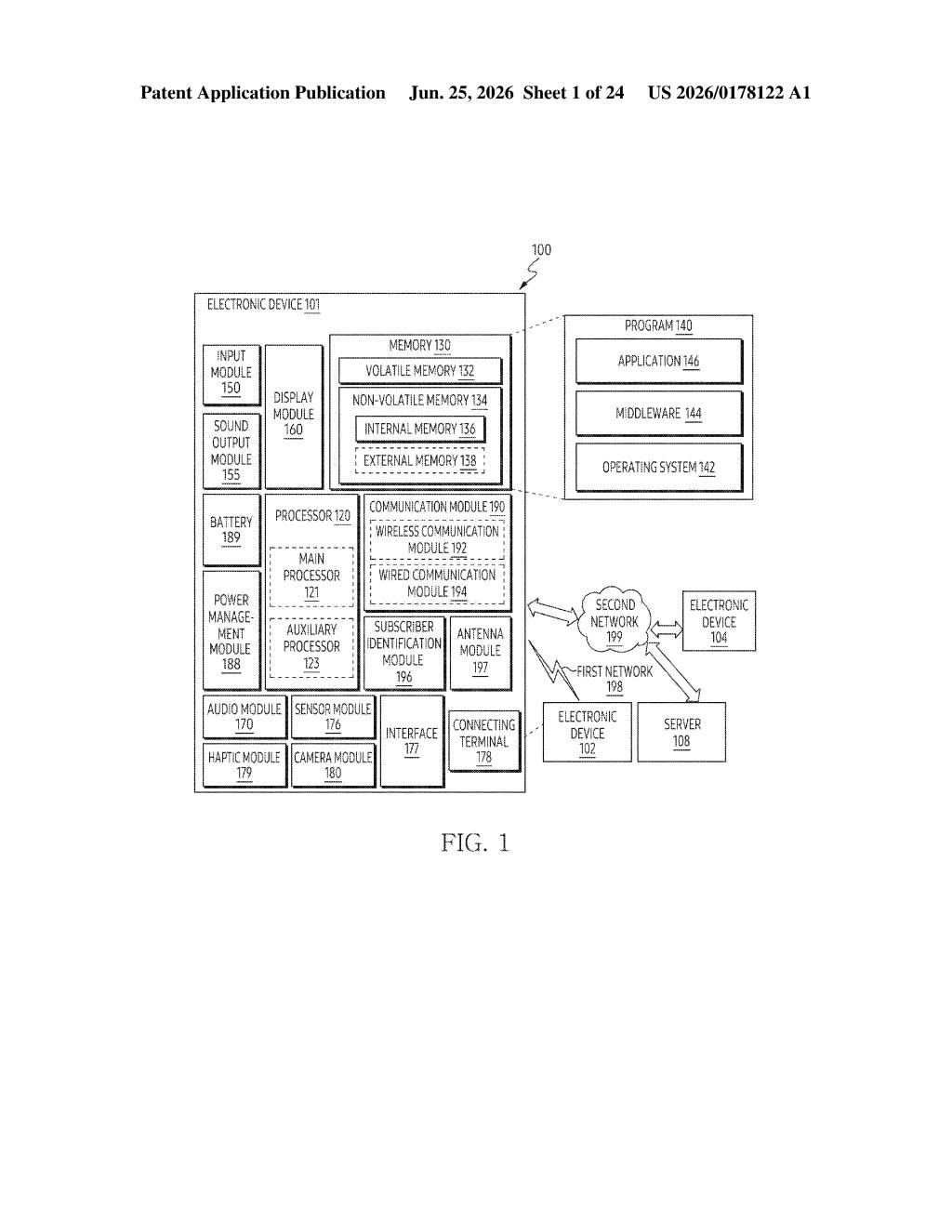
The patent covers a wearable device (most likely a mixed-reality headset) that manages avatars from multiple different apps through a single, persistent interface.
Here's the basic flow the patent describes:
- A first application acts as a central avatar manager, collecting avatars from several installed apps and surfacing them in a task bar as small visual icons.
- When you launch a second application that includes a virtual environment, the device runs a quick check: does that app have a dedicated avatar already assigned for use inside it?
- If the answer is no, the device pulls your avatar from the first (manager) app and renders it inside the new virtual environment automatically.
The key technical piece is the confirmation step before display. Rather than always overriding an app's own avatar or always ignoring your default, the device makes a conditional decision at launch time. That conditional logic is what the patent is actually protecting, not the idea of avatars in general.
The "task bar" framing also suggests this is meant to feel like a persistent system-level feature, similar to the taskbar on a desktop OS, sitting underneath all individual apps.
What this means for Samsung's XR headset plans
Samsung is expected to compete directly with Apple's Vision Pro in the spatial computing space, and avatar continuity is one of those details that separates a polished experience from a frustrating one. If your digital self vanishes or resets every time you open a new app, the headset feels disconnected. A system-level fallback avatar solves that without requiring every developer to build their own avatar pipeline.
For you as a user, this would mean less setup friction when trying new apps inside a headset. For developers, it lowers the bar to ship a virtual environment because the platform handles the avatar problem for them if they choose not to.
Source: US 2026/0178122 A1 at the USPTO (PDF). Full patent text and figures are in the official publication.
Get our take in your Top Stories
Liked this breakdown? Add Patentlyze as a preferred source on Google, and our plain-English take shows up more often in your Top Stories the next time Samsung patent news breaks.
Add Patentlyze on Google
One click.
There are more where this came from
We read every patent application Big Tech publishes and send you the ones worth knowing. Plain English, free, every week.
More from Samsung
All 1,629 Samsung patents →

More in AR / VR
All 690 AR / VR patents →
Qualcomm
Qualcomm Patents a Permission System for Sharing Your AR Avatar in Live Calls
Apple
A New Patent Builds Your 3D Avatar Gradually Through Camera Scans
Apple
Apple Patents a System That Adjusts Avatar Quality Based on Where You're Looking
Qualcomm